PART 2 — THE WOMAN WHO FED A STRANGER KNEW MORE ABOUT HIS PAST THAN HE REALIZED
PART 2 — THE WOMAN WHO FED A STRANGER KNEW MORE ABOUT HIS PAST THAN HE REALIZED
The woman watched Harlon finish his second plate.
Then she placed another piece of bread beside his cup.
“You eat like a man who’s been running from something.”
Harlon stopped chewing.
“Been running from winter.”
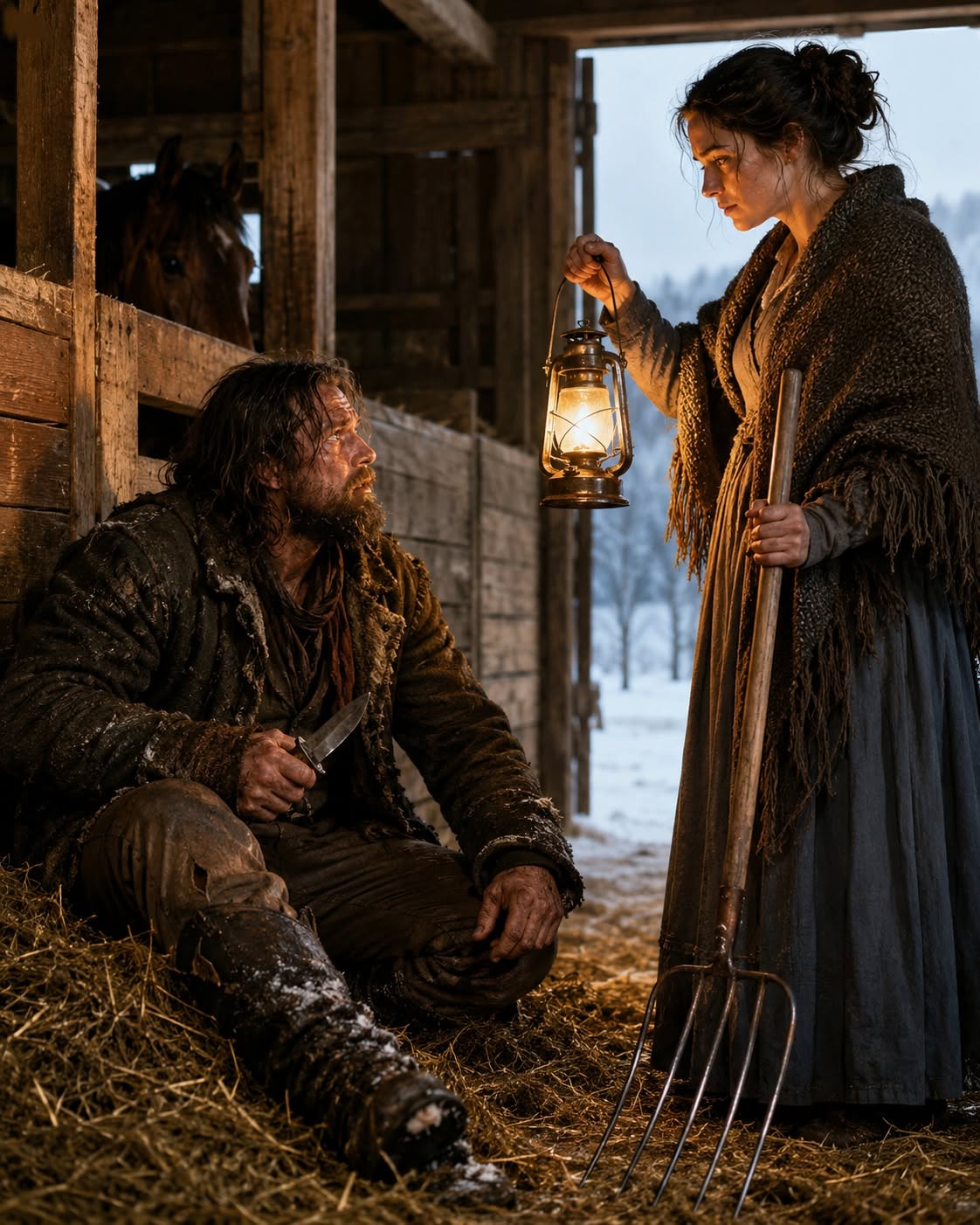
“Winter doesn’t usually carry a hunting knife.”
His eyes moved toward the blade resting beside his coat.
“Didn’t mean to frighten you.”
“You didn’t.”
She said it so calmly that he almost believed her.
Almost.
She pulled out the chair opposite him and sat down. The lantern between them cast long shadows across the walls.
“My name is Ada,” she said. “Ada Whitlock.”
Harlon swallowed.
“Harlon.”
“Just Harlon?”
He nodded.
“Well, Just Harlon, you can sleep in the barn tonight. There’s a cot in the tack room. I’ll bring you another blanket.”
“I’ll be gone by morning.”
“People always say that when they’re ashamed to need something.”
He looked at her.
She was perhaps thirty-five, though the tiredness around her eyes made her seem older. A thin silver chain rested against her throat. There was no wedding ring on her finger.
But there was a pale mark where one had been.
“Your husband?” Harlon asked.
Ada glanced at the empty chair near the stove.
“ᴅᴇᴀᴅ.”
He lowered his eyes.
“Sorry.”
“Eight months ago.”
The words struck him harder than they should have.
Eight months.
He had not spoken to another human being since the same season.
Ada stood and gathered his empty plate.
“He was a good man. Stubborn as a mule. Thought every problem could be fixed with enough rope and a hammer.”
Harlon almost smiled.
Almost.
“What happened?”
“Mountain accident.”
The room seemed to grow colder.
Ada carried the dishes to the washbasin.
“They found his horse three days later. Never found him.”
Harlon stared at the table.
“What’s his name?”
She turned.
“Caleb.”
The tin cup slipped from Harlon’s fingers.
It struck the floor.
Coffee spread across the boards.
Ada hurried forward.
“Are you hurt?”
Harlon didn’t answer.
He was staring at a small framed pH๏τograph on the mantel.
A young man stood beside a dark-haired woman, one arm around her shoulders. His smile was crooked. His left eyebrow had a small scar.
Harlon knew that scar.
He had watched blood run from it.
He had watched Caleb Whitlock disappear beneath a collapsing wall of snow.
“Harlon?”
His lips moved.
But no sound came.
Ada followed his gaze.
“You knew him?”
Harlon stood so quickly his chair toppled backward.
“I—”
His throat тιԍнтened.
“Where?”
She stepped closer.
“Where did you know my husband?”
He reached for his coat.
Ada’s expression changed.
“Don’t you dare walk out of here without answering me.”
Harlon froze.
For eight months, he had escaped every question by disappearing deeper into the mountains.
But this woman had given him food before she knew his name.
He could not leave her with another unanswered question.
“I was with him.”
Ada went completely still.
“When?”
“Last March.”
Her face drained of color.
“You were with Caleb when he disappeared?”
Harlon nodded.
She gripped the edge of the table.
“Then you know what happened.”
He looked at the floor.
“Yes.”
A long silence followed.
Then Ada whispered, “Is he ᴅᴇᴀᴅ?”
Harlon closed his eyes.
“I believe so.”
She sat down.
Not because she wanted to.
Because her legs could no longer hold her.
For months, she had imagined Caleb lost somewhere in the mountains. She had pictured him injured, trapped, waiting for someone to find him.
Now a stranger had walked into her house and brought the one answer she had feared most.
“Tell me,” she said.
Harlon shook his head.
“Not tonight.”
“Why?”
“Because I can’t.”
Ada looked at him for a long moment.
Then she noticed his hands trembling.
She had seen that kind of trembling before.
Not from cold.
From guilt.
“You don’t have to tell me everything tonight,” she said quietly. “But you will tell me the truth.”
Harlon nodded.
It was the only promise he could make.
Ada gave him a room above the kitchen.
He did not sleep.
He lay beneath a thick quilt, staring at the ceiling while the wind pressed against the shutters.
Eight months earlier, he had been guiding a small supply party through the northern pᴀss.
Caleb had hired him to help transport flour, tools, and medicine to a settlement beyond the ridge.
The weather changed without warning.
A wall of snow broke loose above them.
 Harlon remembered the sound.
The ground trembling.
Men shouting.
Caleb pushing him toward a narrow rock shelter.
Then the mountain coming down.
When Harlon woke, his left shoulder was crushed beneath a fallen beam. Caleb was beside him, bleeding badly.
Harlon had tried to lift the timber.
Caleb had stopped him.
“Get out, Harlon.”
“I ain’t leaving you.”
“You will if you want someone to remember what happened.”
Then Caleb had pressed something into his hand.
A silver pocket watch.
“Give this to Ada.”
Harlon had fought to stay awake.
But another section of the mountain collapsed.
When he crawled free hours later, Caleb was gone.
He searched for three days.
Then five.
Then seven.
He found torn fabric, broken equipment, and blood on the snow.
But no body.
He had returned to his shelter alone.
And from that day forward, every time he tried to speak, he heard the mountain falling again.
So he stopped trying.
Until a woman with a pitchfork asked whether he had eaten.
A little after midnight, Harlon came downstairs.
Ada sat by the stove, mending a child’s wool mitten.
He stared at it.
“Have a child?”
“No.”
She turned the mitten over.
“My sister’s boy. Daniel. He lives in town with his grandmother. Comes here when the weather permits.”
Harlon nodded.
Ada placed the mitten beside her sewing basket.
“You knew Caleb well?”
“Three years.”
“He talked about a mountain man named Harlon once. Said he trusted him with his life.”
Harlon’s jaw тιԍнтened.
“He shouldn’t have.”
Ada looked up.
“Why would you say that?”
He could not answer.
She studied his face.
“Caleb was a good judge of people.”
Harlon reached into the pocket of his coat and touched the small silver watch.
He had carried it for eight months.
He had intended to deliver it to Ada.
But each time he imagined standing before her, he saw Caleb’s final moments.
He had convinced himself that silence was kinder than the truth.
Now he understood how cruel silence could be.
“Tomorrow,” he whispered.
Ada’s needle stopped.
“What?”
“I’ll tell you tomorrow.”
She nodded.
“Then tomorrow it is.”
For the first time in eight months, Harlon went back upstairs without feeling the need to run.
Morning brought a clear sky and a bitter wind.
Ada was splitting kindling when she heard a horse approaching.
A broad man in a black coat rode through the gate without waiting to be invited.
“Morning, Mrs. Whitlock.”
Ada set down the axe.
“Mr. Barlow.”
Harlon watched from the barn doorway.
The rider glanced at him.
“Who’s this?”
“A guest.”
Barlow laughed.
“Didn’t know you were taking in strays.”
“He’s working for his breakfast.”
Barlow dismounted.
“I’m here about the mortgage.”
Ada’s expression тιԍнтened.
“I paid last month’s installment.”
“Not enough.”
“You said I had until spring.”
“Plans change.”
Barlow pulled a folded paper from his coat.
“The bank has decided to call the note. You have ten days to pay the remaining balance or surrender the property.”
Ada stared at him.
“That isn’t what we agreed.”
“Your husband signed the agreement.”
“My husband is ᴅᴇᴀᴅ.”
“Then you should have thought about that before keeping his debts.”
Harlon stepped forward.
“Leave her alone.”
Barlow looked at him.
“And who are you supposed to be?”
“Someone telling you to get off her land.”
Barlow’s hand moved toward his belt.
Harlon’s eyes went cold.
For the first time in eight months, the mountain man felt something other than grief.
Anger.
Barlow noticed it.
He climbed back onto his horse.
“Ten days, Mrs. Whitlock. And I’d advise you not to let strangers interfere in business that doesn’t concern them.”
He rode away.
Ada watched until he disappeared beyond the trees.
Then she turned toward Harlon.
“You shouldn’t have done that.”
“Why?”
“Because men like Barlow don’t forget being embarrᴀssed.”
Harlon looked toward the distant mountains.
“Neither do I.”
And beneath his coat, the silver watch seemed suddenly heavier.
He knew what he had to do.
But before he could give Ada the truth about Caleb, he would have to tell her why he had carried that watch for eight months without coming home.