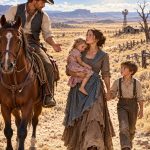
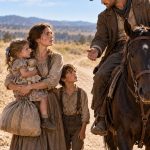
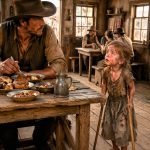
PART 3: HIS OWN MOTHER WANTED HIS CHILDREN AND HIS RANCH — BUT THE WOMAN WHO ARRIVED WITH BREAD HAD ONE FINAL SECRET
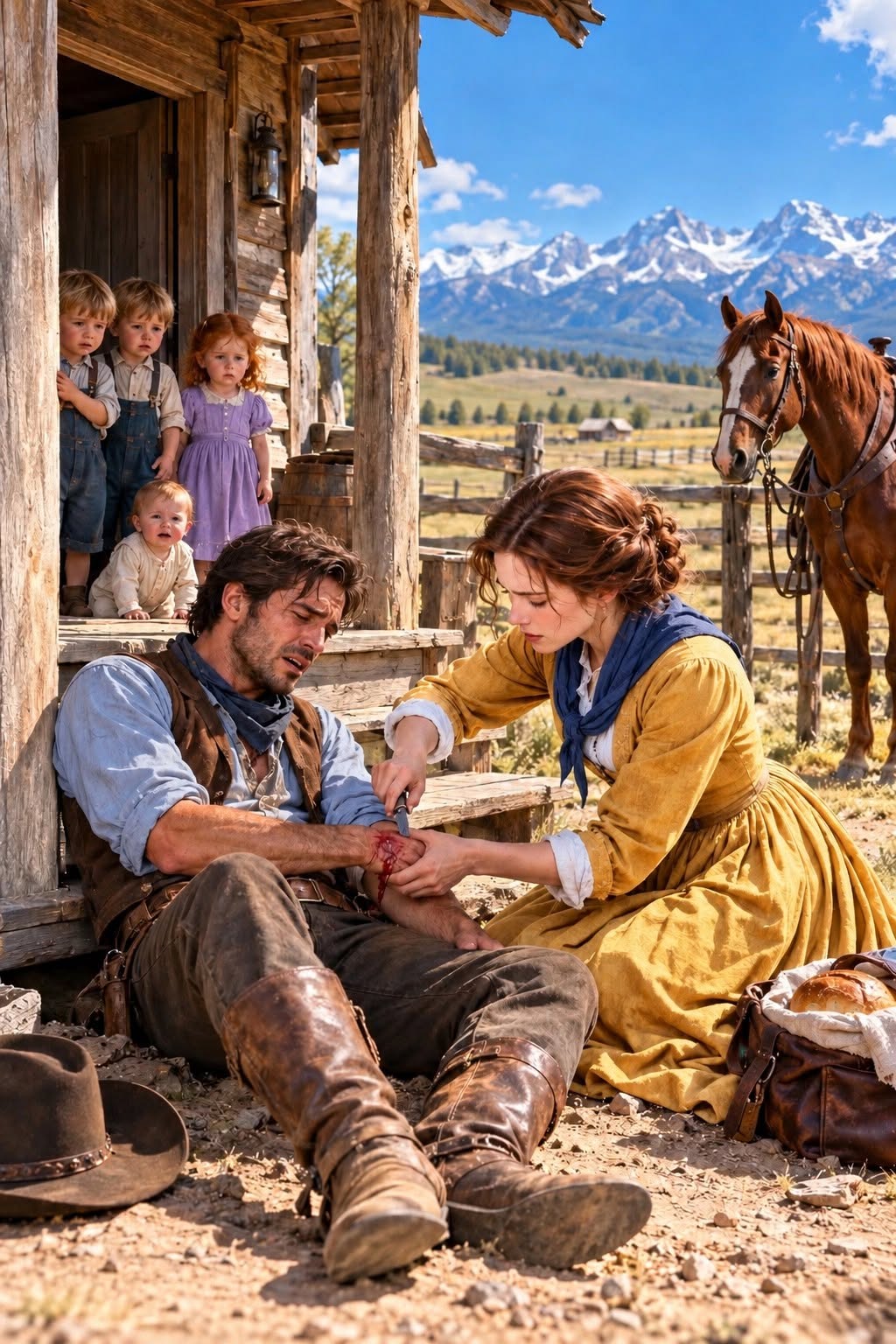
PART 3: HIS OWN MOTHER WANTED HIS CHILDREN AND HIS RANCH — BUT THE WOMAN WHO ARRIVED WITH BREAD HAD ONE FINAL SECRET
Margaret snatched the document from Clara’s hands.
“That is a family matter.”
Clara didn’t move.
“Then perhaps you should explain why Mr. Vance’s name appears on it.”
Daniel stared at his mother.
“Mother?”
Margaret’s lips тιԍнтened.
“You don’t understand how much trouble you’ve gotten yourself into.”
“Then explain it.”
She looked away.
For years, Ezekiel Vance had wanted the Whitfield ranch.
Its grazing land bordered a valuable stretch of river, and the property contained a natural spring that supplied several neighboring farms.
Daniel had refused every offer.
After Susannah died, Margaret had begun corresponding with Vance.
He promised to pay off Daniel’s debts if she could persuade him to surrender the property.
But Daniel had never agreed.
So Vance devised another plan.
If Daniel died, Margaret could peтιтion for control of the children and claim authority over their inheritance.
The ranch would eventually pᴀss into her hands.
And she had already promised Vance that she would sell it.
Daniel stared at the woman who had raised him.
“You were willing to take my children away?”
Margaret’s eyes filled.
“I thought I was protecting them.”
“No. You were protecting your bargain.”
The room fell silent.
Clara stepped between them.
“The children are not property, Mrs. Whitfield. And neither is this ranch.”
Margaret turned toward her.
“You have no right to interfere.”
 Clara’s expression remained calm.
“I had no intention of interfering. I came here carrying bread. But when I found a dying father and four frightened babies, I couldn’t simply ride away.”
Margaret left without another word.
Two days later, Dr. Wallace announced that Daniel was out of immediate danger.
His recovery would take weeks, but he would live.
When Clara told him, he wept openly.
That afternoon, he asked her to sit beside him.
“Why did you come to my ranch that morning?”
Clara smiled.
“I told you. Mrs. Pruitt mentioned you needed help.”
“But why the bread?”
She looked down at her hands.
“My mother used to say that a warm loaf could make a stranger feel less alone.”
Daniel studied her.
“Your mother sounds like a remarkable woman.”
“She was.”
Clara paused.
“She died when I was twenty.”
Daniel gently touched her fingers.
“I’m sorry.”
For a moment, neither spoke.
Then Clara told him something she had never shared with anyone in Harmony.
Her father had been a physician in Boston. When he died, she discovered that his medical practice had been left deeply in debt.
Her relatives blamed her for the financial trouble and insisted that a woman with no husband had little chance of building a respectable life.
She had taken the teaching position in Wyoming because she wanted somewhere to begin again.
“I thought I’d spend my life teaching children to read,” she said. “I never expected to become responsible for four of them before my first week was over.”
Daniel smiled weakly.
“They seem to have taken quite a liking to you.”
“They’re wonderful children.”
He looked toward the window.
“Susannah would have liked you.”
Clara’s eyes softened.
“I wish I could have known her.”
“She would have loved that bread.”
They both laughed quietly.
But the greatest surprise came a week later.
Sheriff Collins arrived at the ranch carrying a warrant for Ezekiel Vance.
An investigation had uncovered forged property documents, illegal transfers, and several attempts to acquire ranches from widows and grieving families.
Margaret had cooperated with him, believing she would receive a share of the profits.
But the evidence against Vance was overwhelming.
He was arrested before he could leave the territory.
Margaret was forced to withdraw her claim, and Daniel’s property was legally protected.
When she came to see him one final time, she looked older than he remembered.
“I thought I was doing what was best,” she whispered.
Daniel remained quiet.
Then he said, “If you want to be part of your grandchildren’s lives, you must first learn that they are not something to bargain over.”
Margaret nodded.
For the first time, she had no argument.
Spring arrived slowly.
The snow melted from the Wyoming hills, the grᴀss returned, and sunflowers began appearing beside the farmhouse.
Daniel returned home with Clara and the children.
He still needed help with the heavier work, but every day brought him closer to his old strength.
Clara continued teaching at Harmony School.
Yet she spent most afternoons at the Whitfield ranch.
Micah followed her everywhere.
Matthew insisted she read him the same story every evening.
Sadie began calling her Mama Clara.
And little Caleb had developed a habit of falling asleep whenever she sang.
One evening, Daniel found Clara sitting beneath the cottonwood tree where Susannah was buried.
She held a small bundle of sunflower seeds.
“Planning something?” he asked.
She nodded.
“Susannah loved these, didn’t she?”
Daniel sat beside her.
“More than anything.”
“Then I thought we could plant some.”
He looked at her for a long moment.
“Clara, I need to tell you something.”
She turned.
“I know I can’t ask you to replace Susannah. I wouldn’t want that. Nobody could.”
Clara lowered her eyes.
“But you’ve brought something back into this house that I thought was gone forever.”
“What?”
“Hope.”
He took a slow breath.
“I don’t know when it happened. Perhaps that first morning. Perhaps when you sat beside my bed all night. But I know I don’t want to imagine this ranch without you anymore.”
Clara’s eyes filled.
“Daniel…”
“I won’t ask you to become a mother to my children unless that’s what you truly want. And I won’t ask you to give up your own dreams.”
He reached for her hand.
“But if you could ever imagine building a future with a stubborn cowboy and four very demanding little children, I’d be the luckiest man in Wyoming.”
Clara looked toward the farmhouse.
Through the open window, she could hear Micah and Matthew laughing.
Sadie was singing to Caleb.
For the first time in years, she felt that she had finally found the place where she belonged.
“I think,” she whispered, “I might have brought that loaf of bread for myself as much as for you.”
Daniel smiled.
“Then perhaps we should bake another.”
She laughed through her tears.
And beneath the cottonwood tree, he kissed her hand.
They married the following autumn in a small ceremony at Harmony Church.
There was no grand celebration.
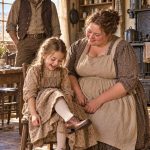
Just neighbors, friends, four beautifully dressed children, and a table overflowing with homemade food.
Micah and Matthew carried the rings.
Sadie scattered sunflower petals.
And Caleb, now a healthy little boy, slept in Clara’s arms throughout the ceremony.
Years later, people in Harmony would still tell the story of the schoolteacher who rode up to a dying rancher with nothing but a loaf of bread.
They would remember how she saved four children from losing their father, exposed a land scheme, and helped rebuild a broken family.
But Daniel remembered something different.
He remembered the first morning Clara arrived.
The sun was shining.
The rattlesnake was hiding beneath the porch.
And he had been certain that his children would soon be orphans.
He had no idea that the stranger carrying bread would become the woman who filled their home with laughter again.
Every June, when the sunflowers bloomed beside Susannah’s grave, Daniel brought four little bouquets.
One for each child.
And Clara always placed a fifth beside them.
For the woman who had loved those children first.
Because Clara understood that loving Daniel did not mean replacing his past.
It meant helping him build a future.
And sometimes, the greatest miracles don’t arrive with thunder or angels.
Sometimes they arrive on horseback.
Carrying a warm loaf of bread.
And refusing to leave a family behind.