PART 2 — THE SECRET BEHIND THE THREE DOLLARS
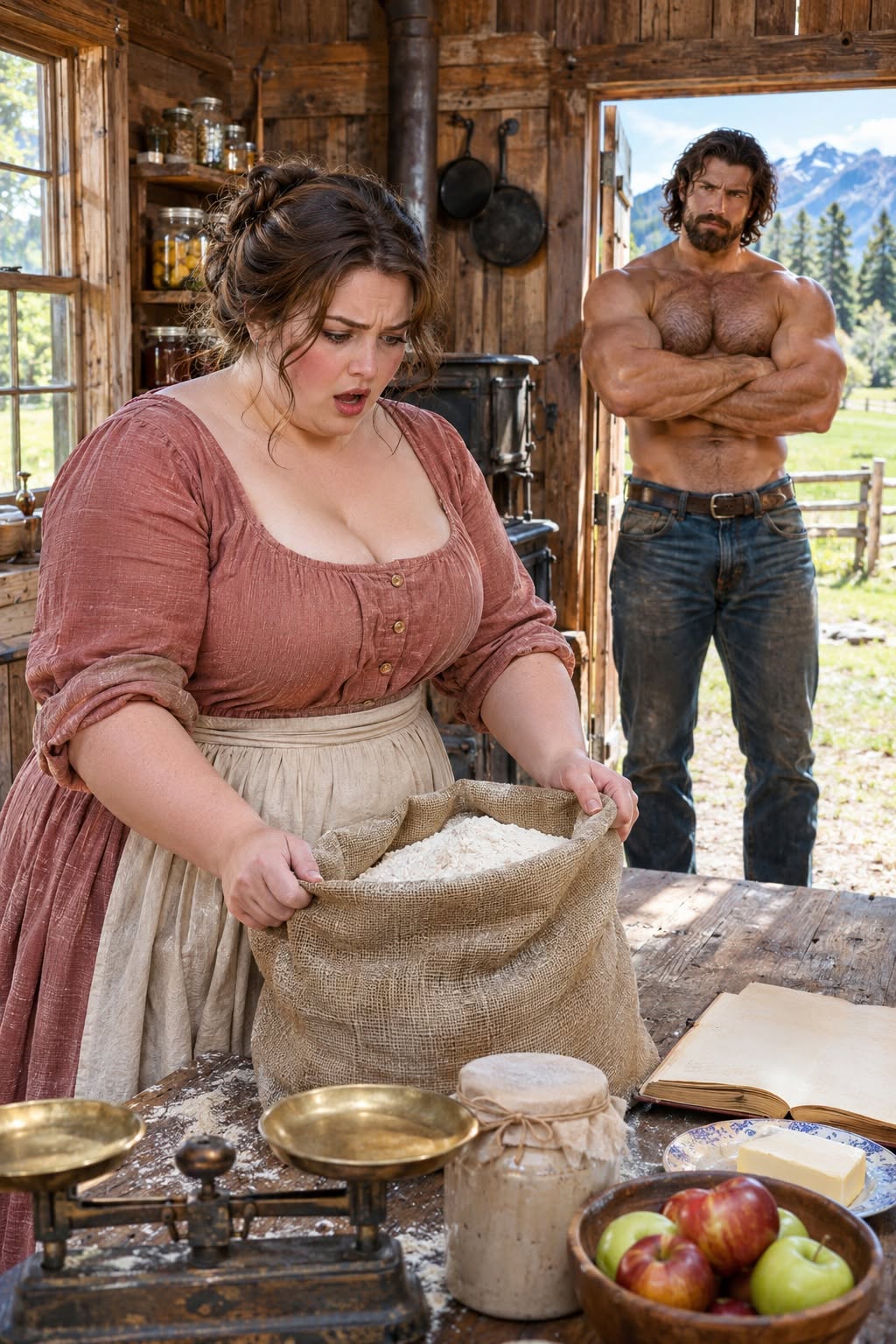
PART 2 — THE SECRET BEHIND THE THREE DOLLARS
“Before you turn me down,” Benjamin said, “there’s something you ought to know.”
Rebecca wiped the flour from her hands.
“I’m listening.”
“My daughter hasn’t eaten a proper meal in eleven days.”
Rebecca blinked.
Benjamin looked toward the window, where the morning light fell across the empty road.
“Her name is Annie. She’s eight. Her mother died last winter, and since then, the child has hardly spoken to anyone. The ranch hands try to be kind, but they don’t know what to say. My cook was the only person who could get her to sit at the table.”
“And now he’s injured.”
Benjamin nodded.
“Yesterday, Annie pushed away every plate we offered. This morning, she asked whether the new cook would be another stranger who planned to leave.”
Rebecca studied him.
“You want me to cook for your daughter?”
“I want you to run my kitchen. The men need feeding, and Annie needs someone who knows how to make a meal feel like home.”
Rebecca folded her arms.
“Mr. Ward, I’m a widow, not a miracle worker.”
“I know.”
“And I won’t be hired to entertain your daughter or pretend to replace her mother.”
“I wouldn’t ask that of you.”
“Then why did you buy my quilt?”
Benjamin paused.
“Because I saw the work in it. Every sтιтch was even. The edges were finished properly. The pattern was difficult, and you didn’t take shortcuts. Three dollars was a fair price.”
Rebecca frowned.
“People were laughing at me.”
“I heard them.”
“And you said nothing until they started making jokes about my size.”
Benjamin lowered his eyes.
“You’re right. I should have spoken sooner.”
That answer surprised her more than any excuse could have.
He reached into his coat and placed a folded paper on the counter.
“Six weeks. Fair wages, a room of your own, and a written agreement. If you decide to leave before then, I’ll pay you for every day you’ve worked.”
Rebecca read the amount.
It was more than she’d earned in months.
“Why so much?”
“Because good work is worth paying for.”
She looked at him carefully.
“And if I don’t get along with your daughter?”
“Then we’ll figure something else out. But I won’t blame you for a child who’s hurting.”
Rebecca thought of her own husband, Thomas, and the lonely months after his death. She remembered the neighbors who had brought cᴀsseroles for a week, then gradually stopped visiting. She remembered how quickly sympathy turned into gossip when a woman had to work to survive.
She had no desire to become dependent on another man’s generosity.
But she also knew what it meant to have no one waiting at the supper table.
“I’ll take the job,” she said at last. “Six weeks. And I expect to be treated like an employee, not a charity case.”
Benjamin offered his hand.
“You have my word.”
The next morning, Rebecca arrived at Black Elk Ranch with two dresses, a small trunk, and her old recipe book.
The ranch was enormous. Its barns stretched across a broad valley, and dozens of cattle grazed beneath the distant hills. Men moved between the stables and the bunkhouse, carrying feed sacks and tools.
They stopped to stare when Rebecca stepped down from the wagon.
One cowboy whispered something to another.
Rebecca pretended not to hear.
Benjamin met her on the porch.
“Kitchen’s through that door. Pantry is stocked. You’ll find the flour in the second cupboard.”
“Where’s Annie?”
He hesitated.
“Upstairs.”
Rebecca set down her trunk.
“Then I’ll make breakfast.”
An hour later, the smell of fresh biscuits, fried apples, and bacon filled the house.
The ranch hands came in first. They ate quickly, praised the food, and went back outside.
Benjamin appeared near the end of the meal.
“Annie?”
“Still upstairs.”
Rebecca placed a small plate on a tray.
Two warm biscuits. A little honey. Sliced apples.
She carried it upstairs and knocked gently.
“I’m not hungry,” came a small voice.
“That’s all right. I didn’t bring you a whole breakfast.”
Silence.
“I brought two biscuits. You don’t have to eat them. I just thought they might like some company.”
The door opened a few inches.
A thin-faced girl with dark braids peered out.
“Are you the new cook?”
“I am. My name is Rebecca.”
“Papa said you were going to make me eat.”
Rebecca looked down at the tray.
“Your papa must have misunderstood me. I came to make breakfast. Eating is your decision.”
Annie studied her suspiciously.
“Will you be here tomorrow?”
“If I’m still employed.”
The girl almost smiled.
Rebecca placed the tray on a small table just inside the room.
“There’s honey if you like it. I used to eat mine with extra honey when I was your age.”
“Did your mother make them?”
Rebecca’s smile faded for a moment.
“No. I learned after I married. My husband liked them warm.”
Annie looked down.
“Mine liked cinnamon apples.”
“Then I’ll make some tomorrow.”
The girl opened the door a little wider.
“Really?”
“Really.”
That evening, Rebecca found a small bowl on the kitchen counter. It was empty except for a trace of honey.
Benjamin noticed it too.
“Did she eat?”
“Two biscuits.”
 He closed his eyes briefly, as if someone had handed him a gift.
“Thank you.”
“Don’t thank me yet. Tomorrow she may throw the plate at me.”
For the first time, Benjamin laughed.
Over the next several days, Rebecca settled into the rhythm of the ranch. She baked bread before sunrise, prepared hearty meals for the hands, and kept the pantry accounts with a precision that impressed even the ranch foreman.
Annie began appearing in the kitchen.
At first, she only watched.
Then she started helping Rebecca peel potatoes. A few days later, she asked to stir the biscuit dough.
One afternoon, Annie found Rebecca mending the edge of a flour sack.
“Can you sew quilts too?” she asked.
Rebecca looked up.
“I can.”
“Can you teach me?”
“Of course.”
Annie ran upstairs and returned with a small bundle of faded cloth.
“My mama used to make little squares from old dresses. She said every piece had a story.”
Rebecca unfolded the cloth.
A blue square.
A yellow one.
A tiny piece of red fabric embroidered with a white flower.
She recognized the sтιтching immediately.
It was the same delicate pattern she’d seen on the quilt Benjamin had purchased.
“Where did your mother learn this?” Rebecca asked.
Annie shrugged.
“She said an old friend taught her. She used to call it the morning star sтιтch.”
Rebecca went still.
“My mother taught me that sтιтch.”
Annie looked up.
“Your mother?”
Rebecca nodded slowly.
“Her name was Margaret Hail.”
The little girl frowned.
“Mama’s name was Elizabeth Ward.”
“I know. But did she ever mention a woman named Margaret?”
Annie thought for a moment.
Then she hurried to a small wooden chest near the bed and pulled out an envelope.
“Mama told me to keep this. She said it was for the woman who knew the morning star.”
Rebecca took the envelope with trembling fingers.
On the front, written in faded ink, were four words:
For Margaret’s daughter.
Her heart began to pound.
She opened it carefully.
Inside was a short letter.
Dear Margaret,
If this letter ever reaches your daughter, please tell her I never forgot what she did for me. I would have found her myself, but life has a way of closing doors before we can walk through them.
I hope she knows that the little girl who once shared her lunch with me grew up, found a home, and learned to make a family of her own.
With love,
Elizabeth.
Rebecca read it twice.
Then a third time.
She knew the name Elizabeth.
Not from the letter.
From a story her mother had told her many years ago.
A girl from a poor family who had come to live with them one winter after losing her parents. Margaret had shared her bed, her clothes, and her meals with that girl until relatives came to take her away.
Rebecca looked at Annie.
“Your mother knew my mother?”
Annie nodded.
“She said she had a sister who wasn’t really her sister.”
Rebecca’s eyes filled.
At that moment, Benjamin appeared in the doorway.
He looked at the letter in Rebecca’s hand.
“Annie found it?”
Rebecca turned toward him.
“Why didn’t you tell me?”
“I didn’t know what it said. Elizabeth kept it in that chest. She told me it belonged to someone from her childhood, but she never explained.”
Rebecca held the letter against her chest.
“Your wife was the little girl my mother took in.”
Benjamin nodded.
“I believe so.”
For a moment, the room seemed to grow very quiet.
Then Rebecca noticed something else.
At the bottom of the letter, Elizabeth had written a final sentence in smaller handwriting.
There is something I never told Margaret. Something that could have changed both our lives.
Rebecca looked up.
“What does this mean?”
Benjamin’s face changed.
He looked toward the hallway, making certain Annie was out of earsH๏τ.
“There’s another letter,” he said quietly. “One I found after Elizabeth died.”
“Where is it?”
“In my study.”
“Then I want to read it.”
Benjamin hesitated.
“Rebecca, I don’t think you understand what it says.”
“Then let me decide what I understand.”
He looked at her for a long moment.
Finally, he nodded.
And as they walked toward his study, neither noticed the figure standing just outside the kitchen door.
Miles Pike had come to the ranch with a delivery wagon.
He had heard every word.
And he was already thinking about how much money a secret like that might be worth.