The Baby Born With an Unusually Large Tongue and Abnormal Body Growth
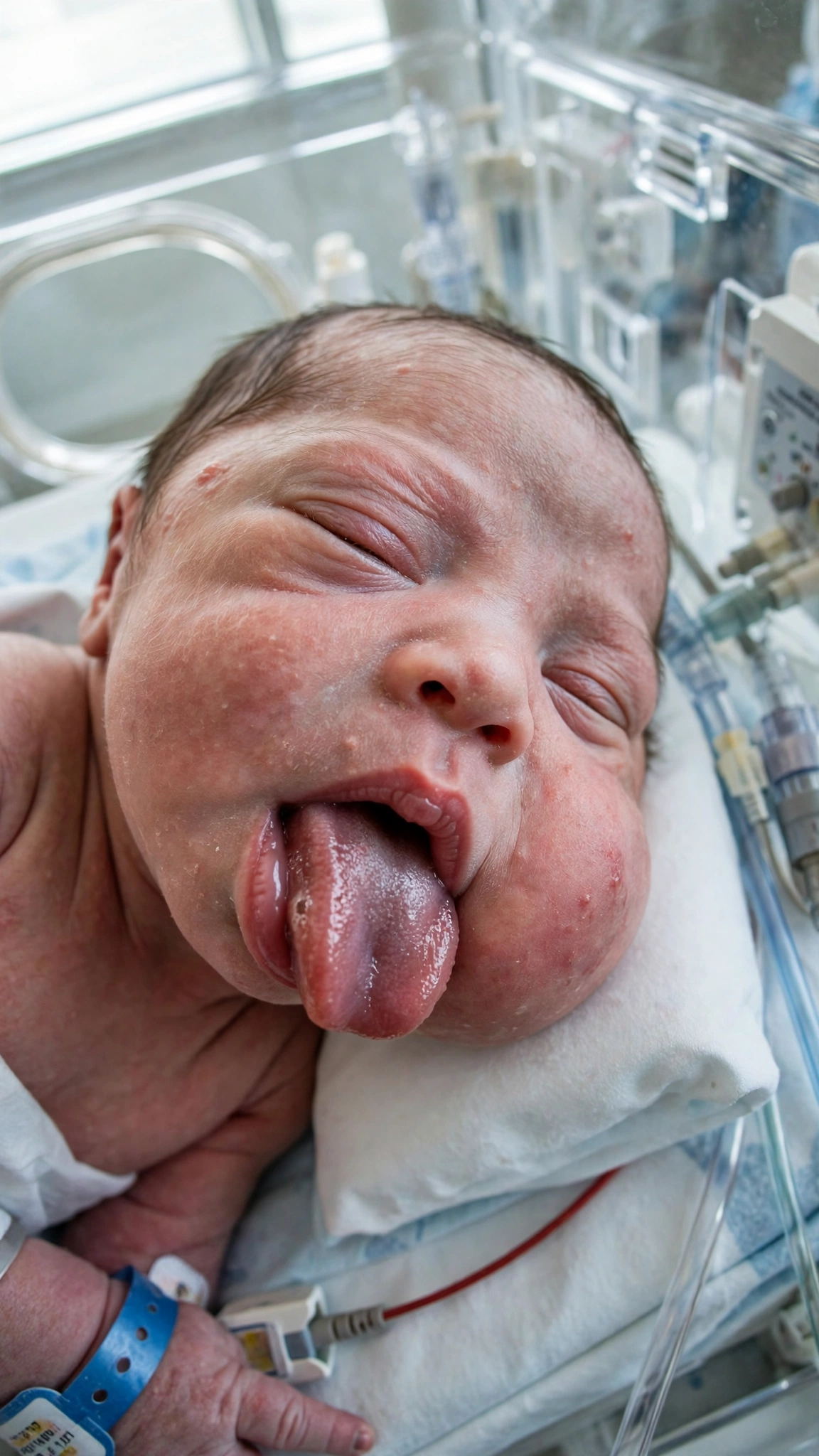
When little Amelia was born, doctors immediately noticed that her body looked noticeably different from that of most newborn babies.
Her overall body size was unusually large, and several parts of her body showed signs of excessive growth. One side of her body appeared significantly larger than the other, creating a visible difference in the size and proportions of her arms, legs, and surrounding tissues.
However, one of the most striking features was her tongue. It had grown unusually large, extending beyond her lips and frequently protruding from her mouth. Because of its size, Amelia could have difficulty keeping her tongue inside her mouth. This condition can also interfere with normal feeding, swallowing, and breathing.
Doctors also discovered an abnormality involving her abdominal wall. A portion of her internal organs could protrude through an opening in the muscles and tissues of her abdomen. This type of congenital defect requires careful medical evaluation because the exposed organs may need surgical protection and correction.
Following a series of medical examinations, imaging studies, and genetic testing, Amelia was diagnosed with Beckwith-Wiedemann syndrome, a rare congenital overgrowth disorder.
Beckwith-Wiedemann syndrome is a genetic condition that affects the regulation of growth in different parts of the body. Children with this disorder may develop an unusually large tongue, excessive body growth, differences in the size of their limbs or other body parts, and abdominal wall defects such as omphalocele.
Another serious complication is neonatal hypoglycemia, which occurs when a newborn’s blood sugar level drops dangerously low. If left untreated, severe hypoglycemia can cause seizures and potentially lead to neurological complications.
Amelia requires specialized medical care and regular monitoring to manage the condition. Depending on the severity of her symptoms, treatment may include blood sugar monitoring, nutritional support, surgery to repair abdominal wall defects, and medical procedures to reduce the size of an enlarged tongue when it interferes with essential functions.
Although Beckwith-Wiedemann syndrome can present significant challenges during infancy, early diagnosis, careful monitoring, and appropriate treatment can help affected children manage complications and achieve healthier development.