The Baby Born With Fused Fingers and an Unusual Head Shape: Understanding Apert Syndrome
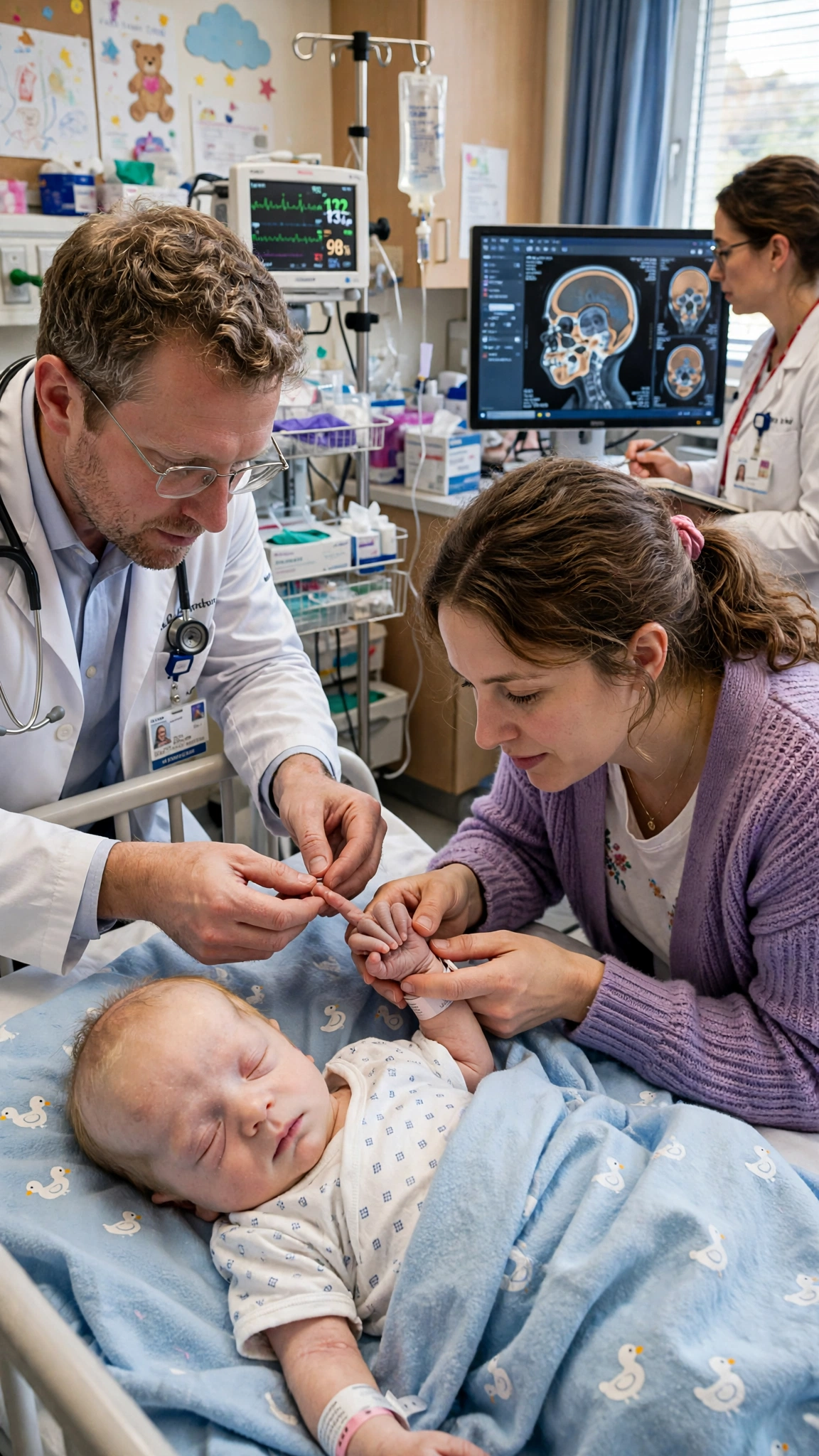
When little Oliver was born, his parents noticed several unusual physical features.
His head had an abnormal shape, his forehead appeared prominent, and his eyes seemed more widely spaced than those of most newborn babies.
However, one of the most noticeable differences was in his hands.
Several of his fingers were joined together, creating a connected structure that limited their independent movement. His parents initially did not understand why his hands had developed this way or whether the condition would affect his ability to grasp objects and perform everyday activities as he grew older.
Following detailed physical examinations, imaging studies, and genetic testing, doctors diagnosed Oliver with Apert syndrome, a rare congenital genetic disorder that affects the development of the skull, face, hands, and feet.
What is Apert syndrome?
Apert syndrome is a rare genetic condition most commonly ᴀssociated with changes in the FGFR2 gene. This gene plays an important role in regulating bone development.
In Apert syndrome, altered FGFR2 signaling can cause certain bones of the skull to fuse prematurely. This process is known as craniosynostosis.
When skull sutures close too early, the skull may not grow normally in the affected directions. This can result in an unusual head shape and, in some cases, increased pressure inside the skull.
Children with Apert syndrome may also have distinctive facial features, including a prominent forehead, widely spaced eyes, and underdevelopment of the middle part of the face. The degree of these features varies between individuals.
Why are the fingers joined together?
One of the characteristic features of Apert syndrome is syndactyly, which means that two or more fingers or toes are connected.
In some children, the fingers are joined mainly by soft tissue. In others, the underlying bones may also be fused or unusually shaped.
This can affect how the hands develop and function. Depending on the structure of the fingers, children may have difficulty gripping objects, separating their fingers, or performing tasks that require precise hand movements.
The hands and feet can vary considerably in appearance, even among children with the same diagnosis.
Possible medical complications
Apert syndrome can affect more than the appearance of the skull and hands. Children may require monitoring for several medical concerns, including:
- Craniosynostosis: Premature fusion of skull bones can affect skull growth and may increase pressure inside the head.
- Midface underdevelopment: Changes in the development of the middle part of the face can contribute to dental problems, sleep-disordered breathing, or airway obstruction.
- Eye problems: Shallow eye sockets and widely spaced eyes may be ᴀssociated with eye exposure, visual difficulties, or other ophthalmological concerns.
- Hearing difficulties: Some children experience hearing loss or recurrent ear problems.
- Hand and foot differences: Complex syndactyly can affect movement, coordination, and the development of fine motor skills.
- Developmental challenges: Some children experience developmental delays, although the extent and nature of these difficulties vary.
Not every child with Apert syndrome experiences all of these complications. Their medical needs depend on the severity and specific features of their condition.
Diagnosis and treatment
Diagnosis usually involves a combination of physical examination, imaging studies, and genetic testing. Testing for changes in the FGFR2 gene can help confirm the diagnosis.
Treatment is individualized and often involves a multidisciplinary team that may include craniofacial surgeons, neurosurgeons, plastic surgeons, orthopedic or hand surgeons, pediatricians, eye specialists, and hearing specialists.
Depending on the child’s needs, treatment may involve:
- Cranial surgery to address premature skull fusion and support normal brain growth.
- Procedures to separate joined fingers and improve hand function.
- Monitoring and treatment for breathing difficulties.
- Dental, orthodontic, vision, and hearing care.
- Developmental support, occupational therapy, and physical therapy when needed.
Some children require more than one operation as they grow. Regular follow-up is important because their skull, face, hands, and other structures continue to develop.
Growing up with Apert syndrome
For Oliver’s parents, receiving the diagnosis brought uncertainty about the future. They knew that their son might need specialized medical care, surgical procedures, and long-term monitoring.
Every appointment brought new information and decisions. They had to learn about a condition they had never expected to encounter and understand how it might affect their child’s development.
Yet Oliver’s diagnosis did not change the person he was.
When he wrapped his little joined fingers around his mother’s hand, she saw more than a medical condition. She saw her baby, whose life deserved the same love, encouragement, and opportunities as any other child’s.
With appropriate medical care, developmental support, and ongoing monitoring, many children with Apert syndrome can make meaningful progress and participate in everyday activities.
Every child’s experience is different, but a diagnosis does not define the entirety of a child’s future.