The Baby Whose Eyes Looked Different: Understanding Congenital Glaucoma
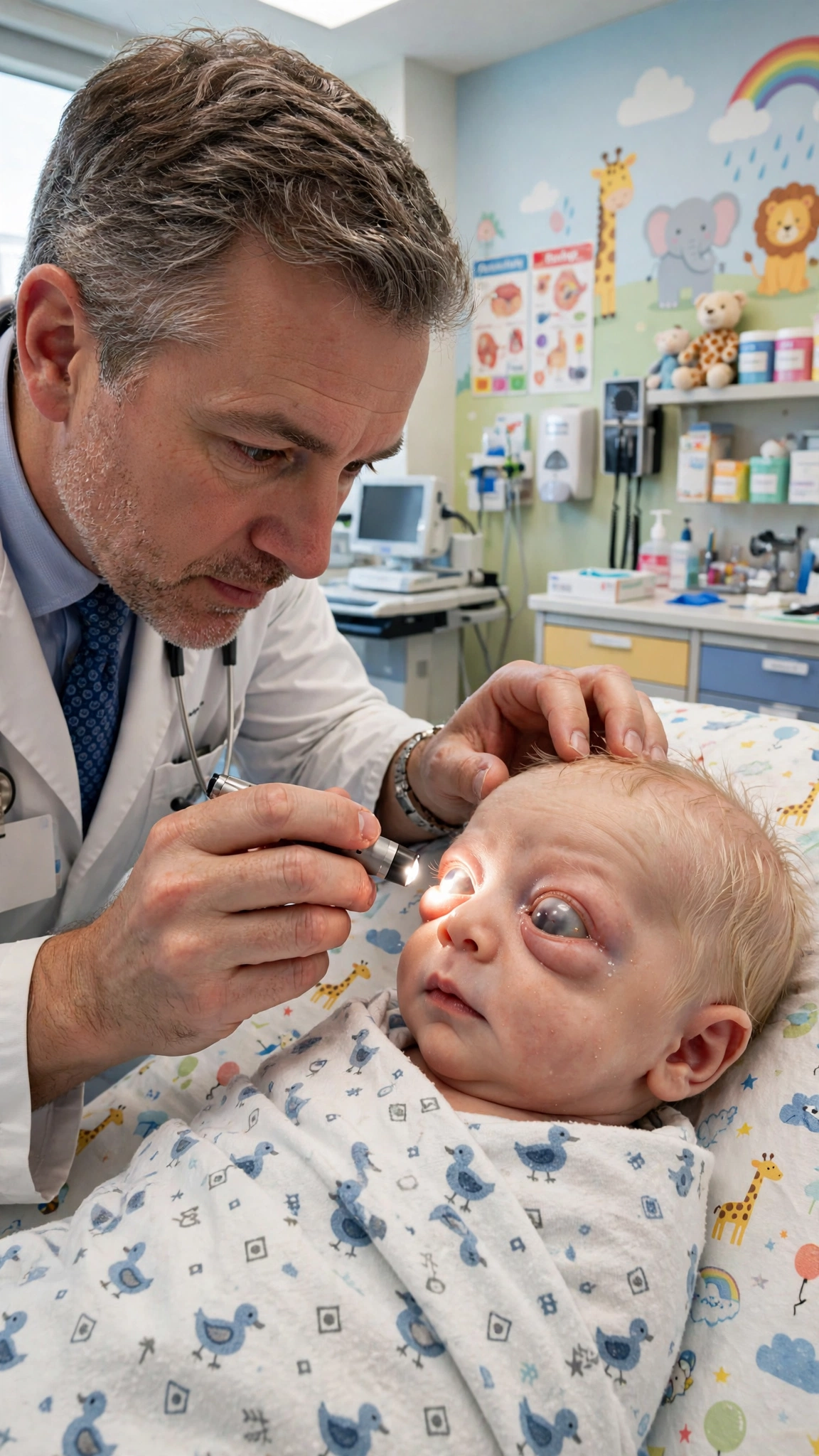
When little Ethan was born, his parents noticed something unusual about his eyes.
Unlike most newborn babies, whose eyes appeared relatively proportionate to their small faces, Ethan’s eyeballs looked unusually large and prominent. His eyelids appeared stretched, and the front surfaces of his eyes seemed more exposed.
At first, his parents did not know whether this difference was simply part of his natural appearance or an indication of an underlying medical condition.
However, as they observed him more closely, their concerns increased. They decided to seek specialized medical attention to understand why their newborn son’s eyes looked so different.
After a detailed ophthalmological examination, doctors identified signs consistent with congenital glaucoma, a potentially sight-threatening condition that can affect babies during infancy.
What Is Congenital Glaucoma?
Congenital glaucoma is a rare eye condition that occurs when the normal drainage system inside the eye does not develop properly.
The eye continuously produces a clear fluid called aqueous humor. This fluid helps maintain the eye’s shape and provides nutrients to certain structures.
Under normal circumstances, the fluid drains through a specialized network of tissues. When this drainage system is abnormal, fluid can accumulate and increase the pressure inside the eye.
In babies, the developing eyeball is more flexible than an adult’s eye. Because of this, elevated intraocular pressure can stretch the tissues and cause the eyeball to become unusually enlarged.
This enlargement is known as buphthalmos.
It is one of the characteristic signs ᴀssociated with primary congenital glaucoma.
Why Do the Baby’s Eyes Look So Large?
One of the most noticeable features of congenital glaucoma in infants is the unusual enlargement of the eyeballs.
As pressure increases inside the eye, the flexible outer structures may gradually stretch. This can make the eyes appear disproportionately large compared with the baby’s face.
Other symptoms may include excessive tearing, sensitivity to light, frequent blinking, and involuntary eyelid squeezing.
In some cases, the normally transparent cornea becomes cloudy because of changes caused by elevated pressure. Parents may notice that the baby’s eyes look hazy rather than clear.
These symptoms should never be ignored. An infant with unusually enlarged eyes, persistent tearing, or marked light sensitivity needs prompt evaluation by an ophthalmologist.
The Risk to the Baby’s Vision
For Ethan, the greatest concern was not simply the appearance of his eyes. It was the possibility of permanent vision damage.
When pressure inside the eye remains elevated, it can injure the optic nerve.
The optic nerve plays a critical role in vision because it transmits visual signals from the retina to the brain.
If significant damage occurs, a child may develop reduced vision or, in severe untreated cases, permanent blindness.
The extent of damage depends on several factors, including how early the condition is diagnosed, how high the pressure becomes, and how effectively it is controlled.
This is why early diagnosis and treatment are especially important in babies with suspected congenital glaucoma.
Diagnosis and Specialized Eye Examinations
Ethan needed a series of specialized ophthalmological ᴀssessments.
Doctors evaluated the size and clarity of his corneas, measured intraocular pressure, examined the drainage structures of his eyes, and ᴀssessed the appearance of his optic nerves.
Depending on the baby’s age and clinical condition, some examinations may need to be performed under anesthesia to obtain accurate measurements and a complete evaluation.
These examinations help specialists determine the severity of the condition and select the most appropriate treatment.
Because congenital glaucoma can progress and affect developing vision, regular monitoring is essential.
Treatment: Protecting Vision Through Early Intervention
Treatment for congenital glaucoma is focused on reducing eye pressure and protecting the optic nerve.
In many cases, surgery is the primary treatment. Procedures such as goniotomy or trabeculotomy aim to improve the drainage of fluid from inside the eye.
The choice of procedure depends on the structure of the eye, the severity of the condition, and the specialist’s ᴀssessment.
Some children may also need pressure-lowering eye drops or additional surgical procedures if the initial treatment does not adequately control the pressure.
Even when treatment is successful, regular follow-up appointments remain necessary.
Doctors monitor intraocular pressure, corneal clarity, optic nerve health, eye growth, and visual development as the child gets older.
Some children may also need glᴀsses or other visual rehabilitation support.
Growing Up With a Long-Term Eye Condition
For Ethan’s parents, receiving the diagnosis was an emotionally difficult experience.
They worried about their son’s future and wondered how his vision might develop. Simple milestones that many families take for granted, such as recognizing faces, following moving objects, and exploring the surroundings, suddenly became especially meaningful.
They learned that congenital glaucoma is not always cured by a single procedure. Some children require long-term treatment and repeated examinations throughout childhood.
However, they also learned that early medical intervention can make an important difference in protecting a child’s remaining vision.
With specialized ophthalmological care, appropriate treatment, and consistent monitoring, children with congenital glaucoma may have opportunities to develop useful vision and participate in everyday activities.
Ethan’s parents continued attending every appointment and following the recommendations of his medical team.
They understood that his journey might involve challenges, but they remained committed to giving him the strongest possible support.
A Future Filled With Hope
Ethan’s unusually large eyes were the first sign that something was different. But they were not the only thing that would define his childhood.
He was still a little boy who deserved to be held, protected, encouraged, and given every opportunity to experience life.
His family hoped that early diagnosis and appropriate treatment would help preserve his vision and allow him to grow with confidence.
They knew that the road ahead might be long, but they were determined to face each step together.
Because for every parent, the greatest wish is simple: to see their child healthy, happy, and able to discover the beautiful world waiting beyond their hospital room.
Ethan’s story is a reminder that unusual eye enlargement in a newborn should never be dismissed as a cosmetic difference. Early specialist ᴀssessment can be essential in protecting a child’s vision.