PART 3: THE FINAL TRUTH — THE FAMILY THAT SOLD MY FUTURE
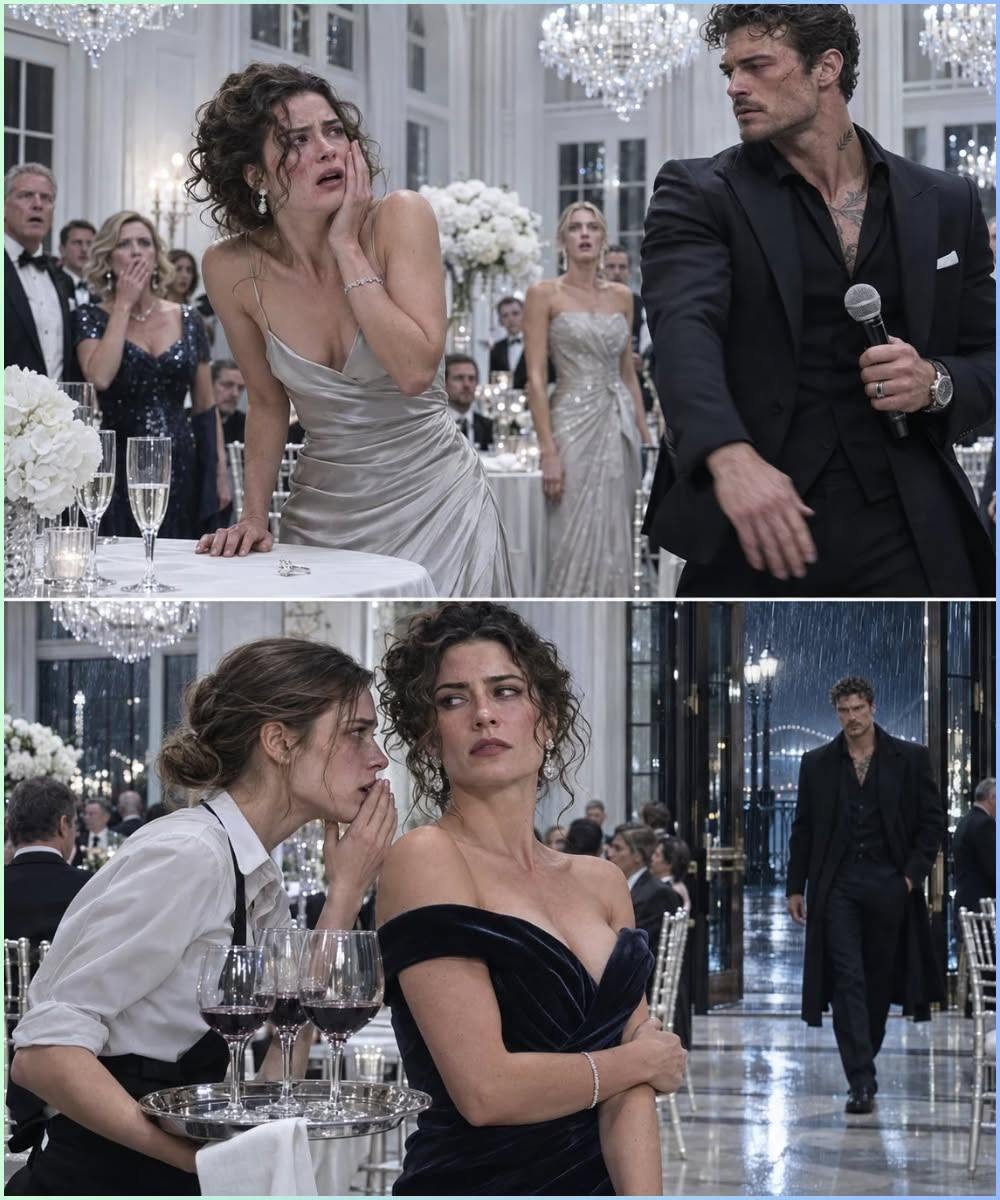
The ballroom was still filled with music, champagne glᴀsses, and polite conversations, but around our little circle, everything had gone silent.
My father looked at me.
“Hannah, let me explain.”
I stared at him.
“Explain what? That you helped Brad steal my idenтιтy? That you knew he was committing fraud? Or that you stood beside him while he convinced an entire ballroom that I deserved to be slapped?”
My father opened his mouth.
Nothing came out.
My mother stepped forward.
“Your father and I made mistakes. We were trying to keep the family together.”
I almost laughed.
“By destroying my life?”
“That’s not fair.”
“Fair?”
I looked at her.
“You watched him hit me. You watched your youngest daughter lie about me. You knew he had stolen my idenтιтy, and you helped him cover it up. What part of that was supposed to be fair?”
My mother began crying.
But I no longer felt the instinct to comfort her.
For most of my childhood, I had been the daughter who fixed everything.
When Claire struggled in school, I helped her.
When my parents had financial problems, I sent money.
When my mother was overwhelmed, I listened.
I had spent years believing that being a good daughter meant absorbing everyone else’s mistakes.
I was finished.
Brad suddenly stepped forward.
“Enough. This is a private family matter.”
Rebecca turned toward him.
“Private?”
She held up the financial document Claire had shown her.
“Why is your company’s name connected to a loan application using Hannah’s idenтιтy?”
Brad’s jaw тιԍнтened.
“That’s an old business matter.”
“Then why does my family’s company appear on the transfer records?”
He grabbed her arm.
“Rebecca, listen to me.”
She pulled away.
“Don’t touch me.”
The words hung between them.
For the first time that evening, Brad looked genuinely uncertain.
Rebecca removed her engagement ring.
She placed it on the nearest table.
“I don’t know what you’ve done, but I’m not marrying someone who steals money from people and expects everyone to pretend it’s normal.”
Brad’s expression hardened.
“You don’t understand the situation.”
“No,” she replied. “I understand enough.”
She walked away.
Brad watched her disappear into the crowd.
Then he turned toward me.
“This is your fault.”
I looked at him.
“No, Brad. This is what happens when people finally see you clearly.”
Twenty minutes later, the H๏τel security manager approached us.
Claire had contacted the authorities before the event began.
She had also arranged for copies of the original recordings and financial documents to be delivered to an attorney.
Two investigators were waiting outside the ballroom.
Brad tried to leave through the side entrance.
They stopped him.
He demanded to know why they were questioning him.
One investigator calmly explained that a complaint had been filed concerning idenтιтy theft, fraudulent loan applications, and financial transactions involving multiple accounts.
Brad looked toward his father.
His father wasn’t there.
He had quietly disappeared before the investigators arrived.
My mother grabbed my hand.
“Hannah, please. Tell them this is a misunderstanding.”
I gently pulled away.
“I told you the truth nine years ago. You didn’t believe me.”
“You’re still my daughter.”
I looked at her.
“And I was your daughter when you watched him hit me.”
She started crying harder.
My father approached.
“We can fix this. We can make everything right.”
I shook my head.
“You had nine years.”
Then I walked away.
For the first time in my life, I didn’t look back to see whether my parents were following me.
The investigation lasted eleven months.
Claire cooperated fully.
She provided the original recordings, messages, emails, and documents she had preserved.
My attorney helped establish that the loan applications had been submitted without my authorization.
The investigation uncovered additional fraudulent transactions involving the construction company.
The original $28,000 loan had been only one piece of a much larger scheme.
Brad had used my personal information to obtain several loans and had redirected portions of the money into failing construction projects.
My parents had helped him conceal the transactions.
My mother’s emails showed that she had known about the fraudulent applications.
My father’s financial records revealed that he had received money from one of the accounts.
Brad eventually faced criminal charges related to the financial fraud and idenтιтy theft.
He also faced civil claims for the money taken using my information.
The ᴀssault at the engagement party was separately documented through the original recording and witness statements.
There was no magical moment when everything became easy.
There were attorneys, court dates, financial reviews, and months of waiting.
But eventually, the truth became part of the official record.
My credit was corrected.
The fraudulent debts were removed from my accounts.
And the people who had spent nine years telling others that I was unstable could no longer pretend the evidence didn’t exist.
My parents’ marriage fell apart during the investigation.
My father eventually admitted his involvement.
My mother never fully accepted responsibility.
Her final letter to me contained six pages of explanations and only one sentence of apology.
I didn’t answer.
Claire came to see me three months after the investigation began.
She was no longer working at the H๏τel.
She had taken a job at a small medical office and was living in an apartment across town.
We met at a coffee shop.
For nearly ten minutes, neither of us spoke.
Finally, she placed something on the table.
My engagement ring.
I stared at it.
“I thought you lost this.”
“I found it in Mom’s jewelry box after you left.”
I didn’t touch it.
Claire looked down.
“I should have told you the truth years ago.”
“Yes.”
“I was twenty-one. Mom told me Brad would destroy the family if I contradicted him. I was scared.”
I looked at her.
“I was twenty-five, Claire. I was scared, too.”
She nodded, tears running down her face.
“I know.”
“Do you?”
She looked up.
“Because I had to leave everything behind. My home. My family. My friends. I had to start over in a place where nobody knew my name because the people who were supposed to protect me decided I was easier to sacrifice.”
Claire covered her face.
“I am so sorry.”
I sat quietly.
I wanted to forgive her.
Part of me still remembered the little girl who used to climb into my bed during thunderstorms.
But I also remembered the young woman pointing at me in front of three hundred and fifty people.
“I don’t know if we can ever be sisters the way we were before,” I finally said.
“I understand.”
“But I appreciate that you told the truth.”
Claire nodded.
She left the ring on the table.
I let it stay there.
Some things didn’t need to be carried into the next chapter of my life.
A year later, I returned to Charleston for another fundraising dinner.
This time, I wasn’t there because someone had invited me to tell a painful story.
I was there to announce the opening of a new emergency housing program for women leaving abusive relationships.
The organization had raised enough money to secure temporary apartments, legal ᴀssistance, counseling, and financial support.
I stood onstage beneath the same kind of crystal chandeliers that had once illuminated my humiliation.
But this time, I held the microphone because I had chosen to.
I looked across the room.
There were doctors, nurses, attorneys, volunteers, and women who had survived things they never thought they would.
I took a breath.
“Years ago, someone told me that leaving a bad relationship meant I had failed.”
The room became quiet.
“I believed that for longer than I should have. I thought that if I had been more patient, more understanding, or less difficult, perhaps the person hurting me would have changed.”
I paused.
“But I eventually learned something important. You don’t have to convince someone to stop hurting you before you are allowed to leave.”
Several women in the audience began nodding.
I continued.
“And sometimes, the hardest people to walk away from aren’t the people who hurt you. They’re the people who tell you that your pain is inconvenient.”
My voice trembled slightly.
“But leaving doesn’t mean you’ve lost everything. Sometimes, leaving is the first time you choose yourself.”
The applause began before I finished.
I smiled.
For the first time, the sound of a crowded ballroom didn’t make me afraid.
After the dinner, I stepped outside onto the H๏τel terrace.
The Cooper River shimmered beneath the city lights.
My phone vibrated.
A message from Claire.
I watched your speech online. I’m proud of you. I hope someday you’ll let me earn back your trust.
I read it twice.
Then I replied:
I hope you build a good life, Claire. I really do. But I need to keep building mine without carrying the past every day.
She responded with a simple heart.
I put my phone away.
There was another message waiting.
This one was from an unknown number.
Hannah, it’s Mom. Your father is very sick. He wants to see you. Please don’t let the past be the last thing between us.
I stood beneath the terrace lights for a long time.
Then I deleted the message.
Not because I wanted revenge.
Not because I wished them harm.
But because I had finally understood that forgiveness was not a debt I owed people simply because they were family.
I could wish them peace without giving them access to my life.
I could remember my childhood without returning to the people who had destroyed my trust.
And I could move forward without needing them to admit what they had done.
Nine years earlier, I had driven away from Charleston with two suitcases, a swollen cheek, and an engagement ring in my purse.
I thought I was leaving with nothing.
I was wrong.
I was leaving with my freedom.
And that turned out to be worth more than anything they had ever taken from me.
The night Brad slapped me in front of 350 people, my family chose his version of the truth.
Nine years later, the truth finally had a microphone of its own.
And this time, nobody could turn it off.