PART 3 — THE SECRET IN THE SEWING BOX
PART 3 — THE SECRET IN THE SEWING BOX
For a long time after the visitors disappeared, Clara stood motionless beside the kitchen table.
Harlon closed the door.
“Do you know that man?”
She nodded.
“His name is Mr. Pritchard. He keeps Cutler’s accounts.”
“And what did he mean about your father?”
Clara looked down at her hands.
“I don’t want to talk about him.”
Harlon pulled out a chair.
“You don’t have to. But if those men return, I need to understand what they’re trying to do.”
Clara hesitated before sitting.
“My father owned a little farm near Elk Creek. It wasn’t much, but we had a garden, chickens, and a small house. He taught me to sew when I was six.”
Her voice softened.
“He used to say a woman who could mend a coat could save a man through winter.”
Harlon listened without interrupting.
“When he died, I was twenty-two. The farm was supposed to become mine. But Mr. Cutler said Father had borrowed money from him. He showed me papers with Father’s name on them.”
“Did you see your father sign them?”
“No.”
“Did anyone explain the papers?”
She shook her head.
“They said I couldn’t keep the farm unless I paid everything immediately. I didn’t have the money. They told me I could work off the debt.”
“And that’s how you ended up in Coffin Rock?”
“Yes.”
Harlon leaned back.
“Did you ever see a lawyer?”
Clara shook her head again.
“Cutler said lawyers cost money. He said no one would believe a poor girl against a respectable businessman.”
Harlon glanced toward the door.
“Cutler isn’t respectable.”
A faint, tired smile touched her face.
“No. I know that now.”
“Why didn’t you tell me?”
“Because I thought you’d send me away.”
Harlon looked at her for a long moment.
 “Clara, you don’t have to tell me everything today. But you deserve to know whether those papers are real.”
He stood and reached for his coat.
“There’s a settlement clerk in Pine Hollow. I’ll take you there tomorrow.”
Her eyes widened.
“You would do that?”
“I would.”
“But what if Cutler comes back?”
“Then he’ll find the door closed.”
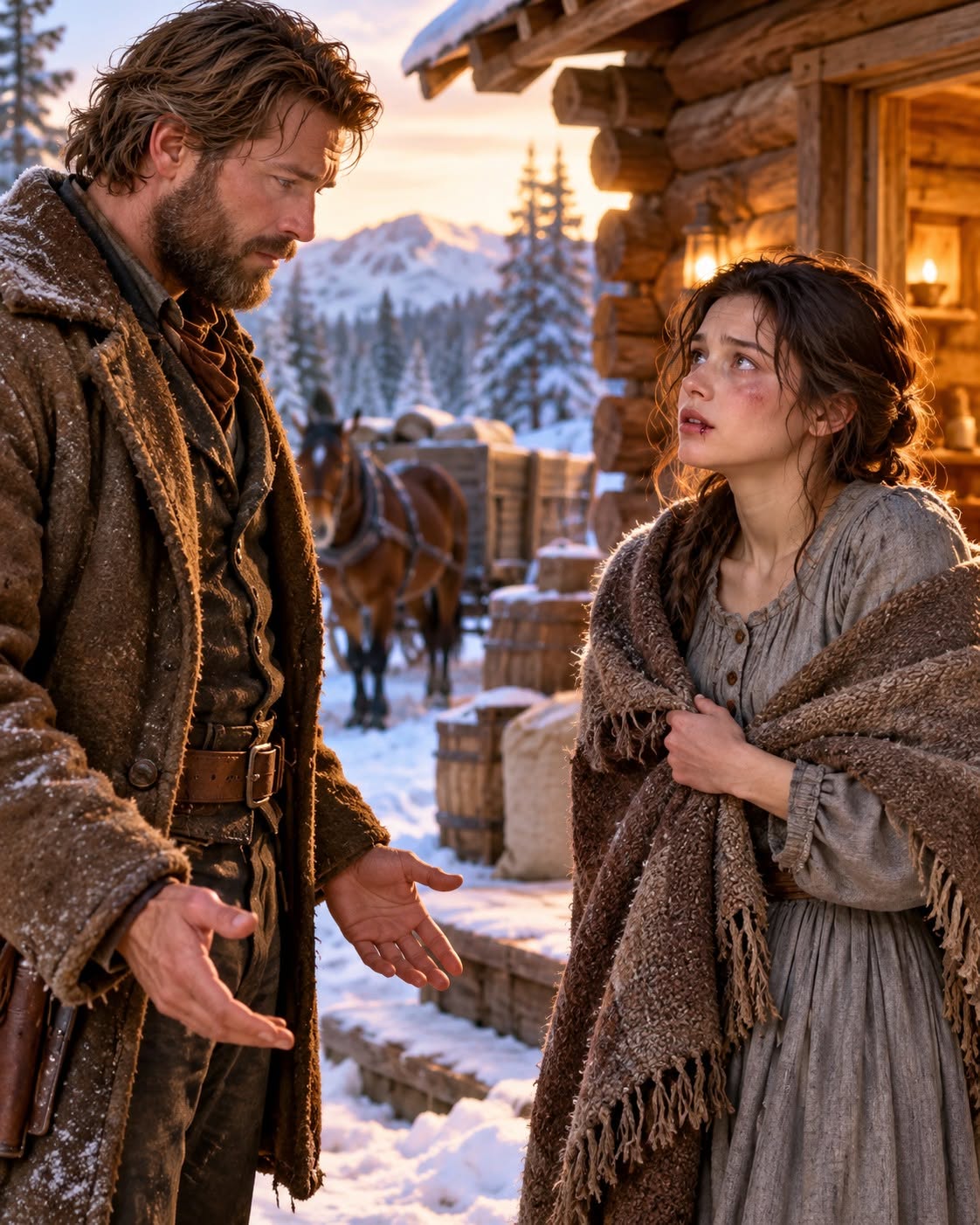
The following morning, Harlon hitched the mule to the wagon.
Clara wore a borrowed wool coat and carried a small sewing box. It was the only possession she had managed to keep from her old home.
The journey to Pine Hollow took nearly three hours.
At the settlement office, an elderly clerk named Mr. Bell listened carefully as Clara explained what had happened.
He asked to see the debt papers.
Clara had none.
“Mr. Cutler kept them,” she explained.
Mr. Bell frowned.
“Did your father leave a will?”
“I don’t know.”
“Did he have a bank account?”
“I remember a small savings book.”
“Where is it?”
Clara looked toward Harlon.
“He took everything after the funeral.”
Mr. Bell removed his spectacles.
“Miss Clara, a debt cannot simply be declared because someone says it exists. And no one can sell your labor or claim ownership of you.”
Clara sat very still.
“Then why did everyone let him?”
The old clerk sighed.
“Because frightened people are often made to believe they have no choices.”
He asked her father’s full name.
“Samuel Whitaker.”
The clerk’s expression changed.
“Samuel Whitaker of Elk Creek?”
Clara nodded.
Mr. Bell stood and walked to a tall cabinet.
He searched through several drawers before pulling out a dusty ledger.
“Your father came here shortly before he died,” he said.
Clara gripped the edge of the desk.
“What did he want?”
“He registered a property transfer.”
“To whom?”
“To you.”
The clerk turned the ledger around.
There it was.
Her name.
And beneath it, the description of the farm, the orchard, the livestock, and the small savings account.
Clara stared at the page as if the words might disappear.
“But Cutler said Father owed him everything.”
Mr. Bell shook his head.
“According to this record, the farm was free of debt when your father died.”
Harlon leaned forward.
“Can you prove that?”
“I can provide a certified copy. But I need the original registration file from the county office.”
He paused.
“There’s something else.”
He opened another ledger.
“Your father also filed a complaint against a man named Elias Cutler.”
Clara’s face drained of color.
“What kind of complaint?”
“Forgery. Unlawful collection of debts. And an attempt to seize property using false documents.”
Harlon looked at Clara.
“Your father knew.”
Mr. Bell nodded.
“He may have suspected what was happening. But the complaint was never completed. Your father died before he could appear before the county judge.”
Clara’s eyes filled.
“Why didn’t anyone tell me?”
“Perhaps no one knew where to find you.”
On the ride home, Clara held the certified record against her chest.
She did not speak for nearly an hour.
Finally, she asked, “What happens now?”
“We go to the sheriff,” Harlon replied.
“And if Cutler denies everything?”
“Then we show him the records.”
“What if he tears them up?”
Harlon glanced at the document.
“We’ll make copies.”
Clara looked at him.
“You think of everything.”
“No,” he said. “I just know that a man who lies once usually expects everyone to believe him twice.”
When they reached the cabin, they found a horse tied to the porch railing.
A folded note had been pushed beneath the door.
Harlon read it first.
His expression darkened.
“What is it?” Clara asked.
He handed it to her.
The message was brief.
Return the Whitaker property documents to Mr. Cutler. Bring the girl to Coffin Rock by sundown. If you refuse, the sheriff will be informed that you are harboring a stolen woman.
Clara’s fingers began to tremble.
“He’ll come for me.”
“He can try.”
“No, Harlon. You don’t understand. Cutler knows people. He pays men. He can make a lie sound like the truth.”
Harlon folded the note.
“Then we’ll make sure the truth has witnesses.”
That afternoon, they rode back toward town with the documents safely tucked inside Harlon’s coat.
But they never reached the sheriff’s office.
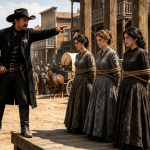
At the edge of Coffin Rock, they saw a crowd gathered outside the courthouse.
A man stood on the steps holding a paper.
It was Mr. Pritchard.
Beside him stood Cutler.
And between them was a woman Clara recognized immediately.
Her former neighbor, Mrs. Weller.
The woman who had once promised to help her.
The woman who had turned away when Cutler dragged her through the street.
Mrs. Weller looked directly at Clara.
Then she raised her hand and pointed.
“That’s her!” she shouted. “That’s the girl who stole her father’s money!”
Clara felt the world tilt.
Cutler smiled.
“Now, Miss Whitaker, perhaps you’d like to explain yourself.”
But Harlon noticed something the others had missed.
Mrs. Weller was clutching a small envelope.
And written across its front, in unmistakable handwriting, were four words:
Samuel Whitaker’s Last Letter.
Harlon leaned toward Clara.
“Your father may have left more than a farm.”
Clara stared at the envelope.
For the first time in years, she felt something stronger than fear.
Hope.
Then Mrs. Weller stepped down from the courthouse stairs and whispered:
“Clara, your father didn’t die owing that man money. He died because he discovered what Cutler was planning.”
And before she could explain, Cutler seized her arm and dragged her back toward the courthouse doors.