PART 2: THE MAN WHO BUILT EVERYTHING EXCEPT A HOME
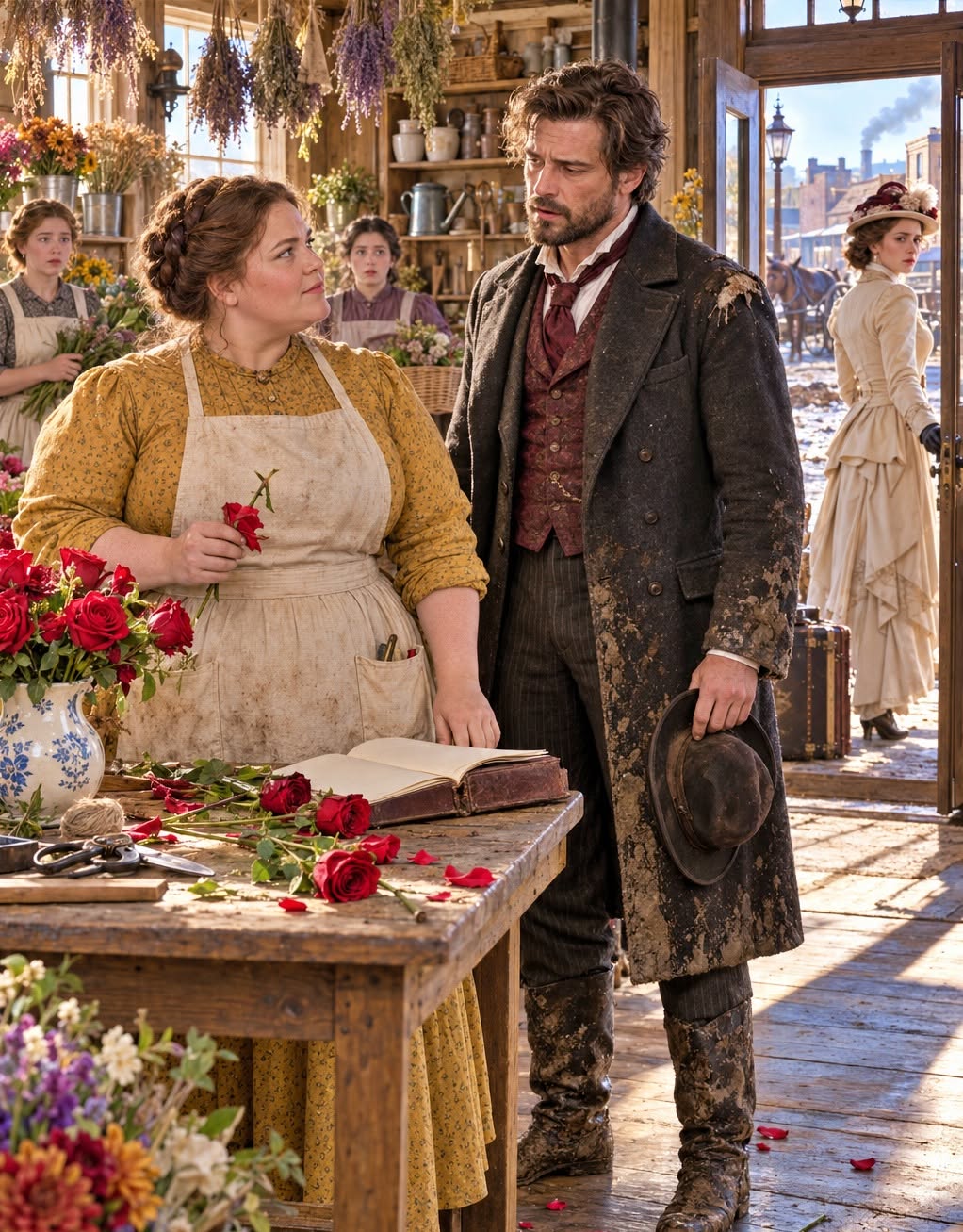
PART 2: THE MAN WHO BUILT EVERYTHING EXCEPT A HOME
Julian stared into his coffee.
For a long moment, Sarah thought he might refuse to answer.
Then he said, “Because my father died believing he had failed.”
Sarah put down her cup.
Julian leaned forward, resting his elbows on his knees.
“He started with one freight wagon and a contract to carry timber between two small towns. He worked until his hands couldn’t close properly. He believed the railroad would give his family something permanent.”
“Did it?”
“Eventually. But not before he lost almost everything.”
Julian paused.
“When I was seventeen, a winter storm destroyed a section of track. Three freight wagons went off the line. My father had borrowed heavily to expand, and the losses nearly ruined us. He spent the next five years trying to recover.”
Sarah listened without interrupting.
“He died before the western spur was approved. His last words to me were that I had to finish what he started.”
“And you decided that meant never stopping?”
Julian gave a tired smile.
“Something like that.”
“That sounds like a terrible inheritance.”
“It was the only one I knew how to accept.”
Sarah looked at him carefully.
“Your father wanted you to finish the railroad. Did he ever say he wanted you to sacrifice your whole life for it?”
Julian didn’t answer.
She continued, gently but firmly.
“There’s a difference between honoring someone and spending every day trying to prove you deserved to be their son.”
He looked at her.
“Have you always spoken like that?”
“Only when someone needs to hear it.”
“And do you always know what people need?”
“No. But I know what happens when a person works so hard for approval that they forget they are allowed to be happy.”
Julian lowered his eyes.
For a while, neither spoke.
Then he said, “Evelyn used to tell me I was married to the railroad.”
Sarah stirred her coffee.
“Perhaps she was tired of competing with something that never slept.”
“She wasn’t wrong.”
“No. But neither were you wrong to care about your work.”
He looked up.
“You’re not going to tell me she was a fool?”
“Why would I? She wanted a different life. You wanted the one you had built. Sometimes two people can be good people and still want different things.”
Julian leaned back.
“I wish someone had said that before I spent three years trying to convince her.”
Sarah smiled faintly.
“Then perhaps you should stop asking people to agree with you and start listening when they tell you what they need.”
He looked at her for a long moment.
“Is that what you need?”
The question caught her off guard.
“What?”
“Someone who listens.”
Sarah glanced toward the window.
“I need someone who doesn’t mistake my kindness for an invitation to take advantage of me. Someone who doesn’t look at my size and decide what I can or cannot do. Someone who understands that I built this shop with my own hands, and that I don’t need rescuing.”
 Julian nodded slowly.
“That seems reasonable.”
“It is.”
“And what do you want?”
She gave a small laugh.
“That’s a much more difficult question.”
“Why?”
“Because wanting something means admitting you might not get it.”
Julian’s expression softened.
“Perhaps you should try anyway.”
Sarah looked at him.
For the first time, she wondered whether the railroad baron who had walked into her shop for quiet was beginning to understand what it meant to be seen.
But before she could answer, someone pounded on the front door.
Three hard knocks.
Sarah rose.
“Who would be out in this weather?”
Julian stood too.
When she opened the door, a young railway messenger stumbled inside, his coat covered in snow.
“Mr. Thorne! I’ve been looking everywhere for you.”
Julian recognized him immediately.
“What happened?”
“The western freight spur. There’s been an accident near the river crossing. A support beam shifted, and part of the temporary platform gave way.”
“Anyone hurt?”
“Two men were taken to the doctor’s office. They’re alive, but one has a broken leg.”
Julian reached for his coat.
“Have they stopped the work?”
The messenger hesitated.
“Mr. Bell says no. He says the line has to open tomorrow or the company will lose the government freight contract.”
Julian’s face hardened.
“Who authorized work to continue?”
“Mr. Bell, sir.”
Sarah noticed the change in him.
The tired man who had been sitting beside her disappeared. In his place stood the railroad baron everyone in Cheyenne knew.
“Tell Bell to stop every crew immediately. Nobody goes back onto that crossing until an independent engineer examines it.”
“But, sir, the contract—”
“I heard you.”
Julian pulled on his gloves.
“Tell the doctor the company will cover every expense for the injured men. And send a telegram to Denver. The opening is postponed.”
The messenger nodded and hurried out.
Sarah watched Julian reach for the door.
“You’re going out in that storm?”
“Those men need to know the company hasn’t forgotten them.”
“Then take a lantern.”
He turned.
She handed him one.
“Also, Julian?”
“Yes?”
“Don’t make another promise you can’t keep just because you’re frightened of disappointing someone.”
He held her gaze.
“I won’t.”
Then he disappeared into the snow.
The following morning, Sarah opened the shop to find a folded newspaper pushed beneath the door.
The headline read:
THORNE RAILROAD SPUR DELAYED AGAIN — INVESTORS QUESTION THE BARON’S JUDGMENT
Beneath it was a smaller paragraph claiming that Julian had ignored safety concerns and allowed dangerous work to continue.
Sarah read the article twice.
It was an ugly piece, filled with accusations but very few facts.
She folded the paper.
By ten o’clock, Mrs. Whitcomb had arrived for her weekly bouquet.
“Have you heard about Mr. Thorne?” she asked.
“I can read.”
Mrs. Whitcomb leaned closer.
“People say he’s losing control of his company. Perhaps that woman in Chicago knew what she was doing after all.”
Sarah placed three white chrysanthemums in the arrangement.
“Perhaps people should wait until they know the truth.”
“You’re defending him?”
“I’m defending the injured workers. They deserve better than gossip.”
Mrs. Whitcomb pursed her lips.
“You’ve become rather interested in Mr. Thorne.”
Sarah’s hands stopped.
“He’s a customer.”
“Of course.”
The older woman paid and left.
Sarah stood quietly behind the counter.
She didn’t like the way the conversation had made her feel.
Julian was not hers to defend. He had never asked her to be anything more than a florist who sold him flowers and offered him a quiet chair.
But she knew something the newspaper didn’t.
She knew he had postponed the opening despite the cost.
She knew he had sent help to the injured men.
And she knew he had finally begun making decisions that were not dictated by fear.
That afternoon, a carriage stopped outside the shop.
A tall man in a fine black coat stepped down.
Sarah recognized him from the newspaper pH๏τographs.
Edward Bell, Julian’s chief operating partner.
He entered without removing his gloves.
“Miss Jenkins?”
“Yes.”
“I’m looking for Mr. Thorne.”
“He’s not here.”
Bell looked around the shop.
“Then perhaps you can tell me where he is.”
“Perhaps I can. But I don’t know why I should.”
His eyes narrowed.
“Mr. Thorne has been spending an unreasonable amount of time here.”
Sarah set down her shears.
“That sounds like a matter between you and Mr. Thorne.”
“His personal judgment has become a concern for the company.”
“Then speak to him about it.”
Bell took a step closer.
“You’re a practical woman, Miss Jenkins. You must understand that a man in his position cannot afford distractions.”
Sarah looked directly at him.
“Flowers are not distractions. Neither are meals, sleep, or conversations with people who aren’t asking him for money.”
Bell’s expression darkened.
“You’re becoming familiar with a man who has a great deal to lose.”
“And you’re becoming familiar with a woman who doesn’t frighten easily.”
For a moment, they stared at one another.
Then Bell adjusted his gloves.
“Be careful. Mr. Thorne has enemies. You may find yourself caught in something you don’t understand.”
Sarah opened the door.
“Good afternoon, Mr. Bell.”
He left without another word.
But Sarah watched his carriage until it disappeared around the corner.
Something about the conversation troubled her.
Not because Bell had threatened her.
Because he had sounded less concerned about Julian’s reputation than about Julian’s decisions.
Two evenings later, Julian returned.
His face was tired, and a faint line of worry had settled between his eyebrows.
Sarah was arranging winter greenery near the window.
“How are the men?” she asked.
“Both are recovering. The doctor says the older one will need several weeks before he can return to work.”
“And the crossing?”
“An independent engineer found that the temporary support was improperly installed. We would have had a much worse accident if the crews had continued.”
Sarah set down the greenery.
“Then you did the right thing.”
Julian gave a humorless laugh.
“Tell that to the investors.”
“Are they injured?”
“No.”
“Then they can wait.”
He looked at her.
“You’re remarkably good at making complicated things sound simple.”
“Most people make things complicated because they don’t want to admit what matters.”
Julian took off his coat and sat near the stove.
“Bell is furious. He says I’ve made the company look weak.”
“Did you?”
“No. But I may have cost us the freight contract.”
“Would you rather have a contract or two men who can return home to their families?”
Julian stared into the fire.
“Sometimes I think I built this company so I would never have to feel powerless again.”
Sarah sat across from him.
“And now?”
“Now I wonder whether I’ve spent so long controlling everything that I don’t know how to live when I can’t.”
Sarah was quiet for a moment.
Then she asked, “Have you eaten?”
He smiled.
“Not since breakfast.”
“That’s not an answer. That’s a confession.”
She disappeared into the back room and returned with a bowl of beef stew and a thick slice of bread.
Julian accepted it.
“You’re going to make a habit of feeding me?”
“Only until you learn to do it yourself.”
He took a spoonful.
“Sarah?”
“Yes?”
“Would you have dinner with me tomorrow?”
She looked up.
“At the H๏τel?”
“No.”
“The governor’s residence?”
He shook his head.
“Somewhere quiet. Somewhere without an orchestra or people trying to discover how much money I have.”
Sarah raised an eyebrow.
“That sounds suspiciously like a request for a date.”
“It is.”
She considered him.
“Why?”
“Because I like talking to you. Because you tell me the truth when everyone else tells me what they think I want to hear. And because I would like to know what you’re like when you’re not working.”
Sarah looked down at her hands.
“Julian, I don’t want to become another woman you try to fit into the life you’ve already built.”
He set down his spoon.
“I don’t want you to.”
“And I won’t compete with your railroad.”
“I wouldn’t ask you to.”
“Nor will I be hidden away because someone thinks a florist isn’t suitable company for a railroad baron.”
Julian’s expression became serious.
“I would never ask that of you.”
Sarah studied him.
“Then dinner tomorrow. But I’m choosing the place.”
He smiled.
“Agreed.”
“And I’m paying for my own meal.”
“Sarah—”
“That wasn’t a question.”
He laughed.
“Agreed.”
For the first time in many years, Julian left the flower shop looking forward to something that had nothing to do with the railroad.
But someone across town had been watching.
And that person had no intention of allowing Sarah Jenkins to become part of Julian Thorne’s future.
END OF PART 2