PART 3 — THE SECRET IN THE PANTRY THAT COULD SAVE BROKEN MESA
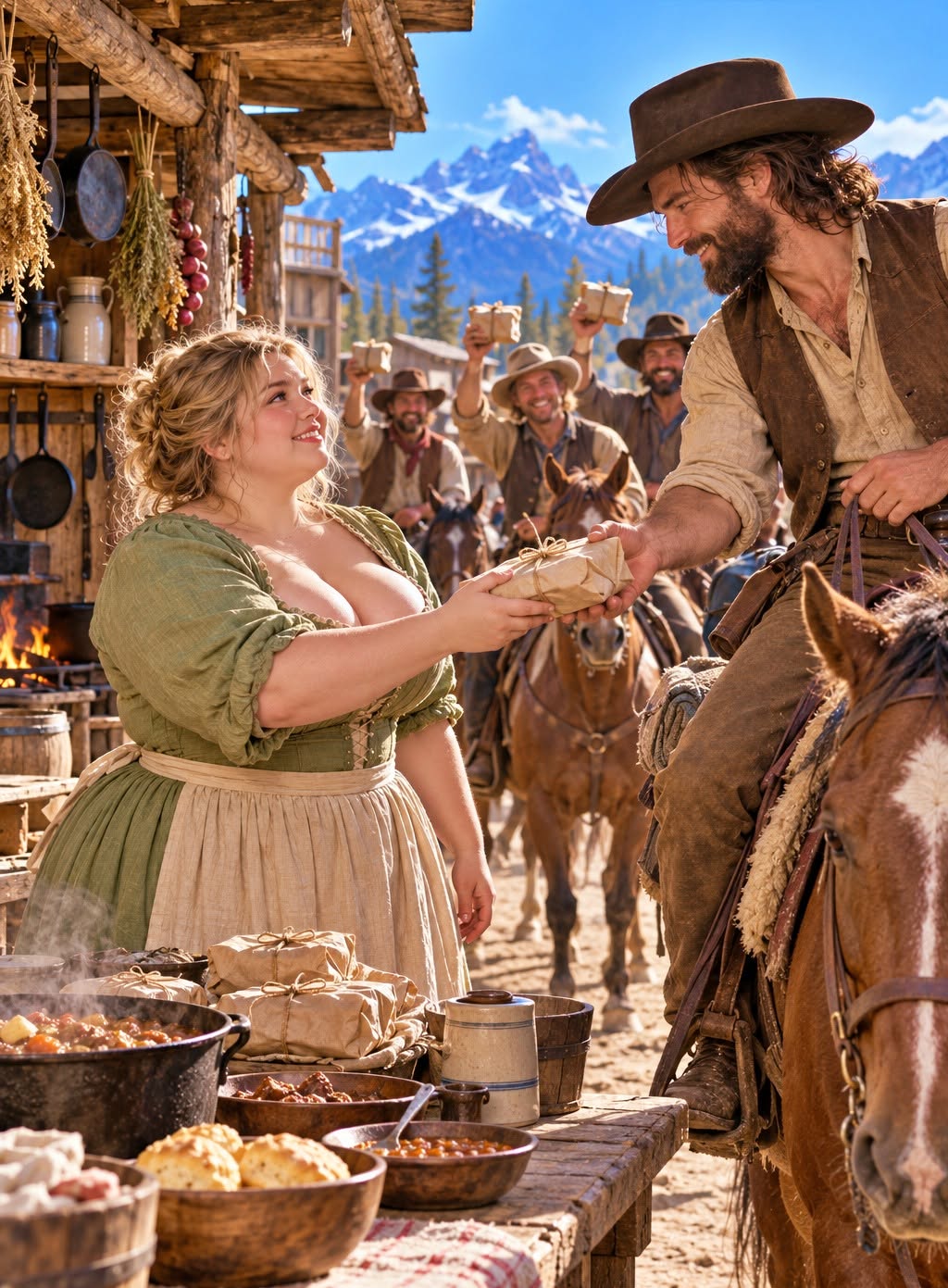
PART 3 — THE SECRET IN THE PANTRY THAT COULD SAVE BROKEN MESA
Silas Mercer read the account book three times.
The first time, he was confused.
The second time, he was angry.
By the third, he had stopped speaking altogether.
Mabel stood across the desk, waiting.
She had never seen a grown man look so completely defeated by a handful of papers.
“Did you sign these invoices?” she finally asked.
Silas shook his head.
“No.”
“Then someone used your name.”
He ran a hand over his forehead.
“Apparently.”
“Can the bank see this book?”
Silas looked up.
“They already have copies of some of the invoices. That’s part of the debt they’re demanding.”
Mabel glanced at the pages.
“Then you need to show them the original records.”
“It’s not that simple.”
“Why not?”
“Because the man who submitted those invoices has been doing business with this ranch for years. He knows every account, every delivery, every agreement. And the bank trusts his company.”
“Do you?”
Silas did not answer.
That was answer enough.
The next morning, Mabel found Hank sitting on the cookhouse steps, sharpening a pocketknife.
“Where’s Mr. Mercer?” she asked.
“Been riding since dawn.”
“Did he say where?”
Hank shook his head.
“Just said he had business in town.”
Mabel looked toward the road.
“Has he been worried about the ranch for long?”
Hank stopped sharpening.
“Longer than he’ll admit.”
 He told her that the ranch had belonged to Silas’s father before him. Years earlier, Broken Mesa had been a prosperous cattle operation. But after his father’s death, several bad seasons had left the ranch with more bills than money.
Silas had sold part of the herd to keep the workers employed.
Then came the strange supply charges.
Then the bank notices.
“He won’t sell,” Hank said. “Not because he thinks the place is worth a fortune. Because this was his father’s last wish.”
Mabel looked at the distant hills.
“Then we ought to help him keep it.”
Hank gave a tired smile.
“That’s easy to say.”
“Perhaps. But I know something about feeding seventeen hungry men with almost nothing. It teaches you not to surrender just because the cupboard looks empty.”
Hank laughed.
“You make it sound like fighting a bank is the same as cooking beans.”
“No,” Mabel replied. “But both require knowing exactly what you have and refusing to waste it.”
Silas returned late that afternoon.
His coat was dusty, and his expression was grim.
Mabel had prepared supper, but she did not bring it to him immediately.
Instead, she placed a clean sheet of paper on the table.
“I made a list.”
Silas stared at it.
“Of what?”
“Every outside meal we’ve sold since the first cattle buyer came.”
He picked it up.
There were dates, names, quanтιтies, and payments.
Mabel had also recorded the ingredients used, the cost of each meal, and the amount left over.
Silas looked at the final total.
“Where did you get this money?”
“From the travelers and cattlemen who ate here.”
“All of it?”
“Every cent.”
He studied the figures.
The cookhouse had earned more than he expected.
Mabel explained that the word had spread along the cattle trails. Men traveling between towns were now asking specifically for Broken Mesa’s kitchen.
One cattle buyer had even suggested that she prepare meals for a gathering of ranch owners the following month.
“They’re coming here?” Silas asked.
“If we agree to feed them.”
Silas set down the paper.
“Mabel, this is a ranch, not a restaurant.”
“People still need to eat, Mr. Mercer.”
He looked at her.
“And you believe you can turn a cookhouse into a business?”
“I believe the men are already coming. We might as well charge them fairly.”
For a long moment, Silas said nothing.
Then he looked at the account sheet again.
“How much would you need?”
“Fresh supplies, a larger oven, and two extra hands on busy days.”
“Anything else?”
“A sign.”
Silas raised an eyebrow.
“A sign?”
“People need to know where they’re going.”
For the first time that week, Silas laughed.
It was brief and unexpected, but it changed the room.
“Very well. What will it say?”
Mabel thought for a moment.
“Broken Mesa Kitchen.”
Within ten days, the old cookhouse had changed completely.
Silas repaired the roof and replaced the broken windows. Hank and Everett built a long serving counter. Two ranch hands helped Mabel construct shelves and a proper storage room.
A painted wooden sign appeared above the door.
BROKEN MESA KITCHEN — H๏τ MEALS, FRESH BREAD, AND A WELCOME TABLE.
The first Sunday after it was hung, twelve travelers arrived.
The following Sunday, there were twenty-eight.
By the third, wagons lined the road.
Men rode in from neighboring ranches, some traveling half a day for Mabel’s beef pie and cinnamon rolls.
A family pᴀssing through Texas stopped for lunch and stayed until sunset.
One ranch owner ordered food for an entire crew.
Another asked Mabel whether she would prepare meals for a cattle auction in San Antonio.
The cowboys were delighted.
Hank began calling her “the queen of Broken Mesa.”
Mabel told him she would rather be called by her name.
He obeyed for exactly two days.
Then he returned to calling her the queen.
But the money coming into the cookhouse was not enough to settle the ranch’s entire debt.
Silas knew that.
And Mabel knew it, too.
The false invoices still threatened everything.
One afternoon, Reverend Danner arrived with a letter from the county bank.
Silas opened it in the main house.
The bank had scheduled a meeting to review the ranch’s debt. If Silas could not provide proof that the disputed charges were fraudulent, the bank intended to begin foreclosure proceedings.
The meeting was set for the following Friday.
Silas read the letter twice.
Then he folded it carefully.
Mabel was standing near the doorway.
“Can I help?”
Silas shook his head.
“You’ve already done more than I expected.”
“But the account book—”
“I’ll take care of that.”
He tried to sound confident.
He did not succeed.
That night, Mabel found him sitting in the dark cookhouse.
The fire had burned low, and the tables were empty.
“Why are you sitting here?” she asked.
Silas looked toward the stove.
“My father built this place with his own hands. He used to say that a ranch could survive a bad season, a poor harvest, or a fall in cattle prices. But it couldn’t survive a man who stopped believing in it.”
Mabel sat across from him.
“Then don’t stop believing.”
Silas gave a weary smile.
“Belief doesn’t pay the bank.”
“No. But honest records might.”
He looked at her.
She opened the account book and pointed to a series of entries.
“Look at these delivery dates. The invoices claim that the goods were delivered on Tuesdays. But the ranch diary says your cattle crew was away on every one of those dates.”
Silas leaned closer.
“How do you know?”
“Because the previous cook recorded how many men were present for each meal. I found her old kitchen notes behind the flour shelves.”
She turned another page.
“On these dates, only three men were here. Yet the company charged you for enough food to feed thirty.”
Silas stared at the notes.
Mabel continued.
“And here, the delivery driver signed the receipt. But the name is different from the driver listed in your stable records.”
Silas took the book.
He read every line.
Then he stood abruptly.
“Where are those kitchen notes?”
“In the pantry.”
“Bring them.”
The next morning, Silas rode to town with the account book, the old kitchen notes, and the original delivery receipts.
He did not go alone.
Hank accompanied him, carrying the ranch diary.
And Mabel came too.
She had never imagined she would enter a bank carrying a stack of kitchen records, but she had learned that a person should not leave important work unfinished merely because the room was unfamiliar.
The bank manager, Mr. Pritchard, received them in a small office.
Caleb Dorsey was already there.
He stood beside the window, wearing a clean suit and a confident expression.
When he saw Mabel, his eyebrows lifted.
“Is the cook joining the meeting?”
Silas placed the account book on the desk.
“She found the records.”
Dorsey smiled.
“Then perhaps she can explain how a woman who arrived here six weeks ago knows more about the ranch’s accounts than its owner.”
Mabel said nothing.
Mr. Pritchard opened the first ledger.
For nearly an hour, the room remained quiet except for the turning of pages.
The bank manager compared the invoices with the ranch diary and the kitchen notes.
Then he looked at Dorsey.
“Mr. Dorsey, these deliveries appear to have been charged to Broken Mesa, but the ranch records indicate that several never arrived.”
Dorsey’s smile faded.
“Your records must be incomplete.”
“Perhaps. But these signatures also appear inconsistent.”
Dorsey leaned forward.
“I’ve done business in this county for twenty years. I won’t have my reputation questioned over a few missing sacks of flour.”
Mabel finally spoke.
“They weren’t a few sacks.”
Everyone turned toward her.
“There were hundreds of pounds of food charged to this ranch. If it had arrived, I would have found it. I cleaned every shelf, every cabinet, and every storage room when I first came here. There was not enough food to feed seventeen men for a week.”
Dorsey looked irritated.
“You’re a cook. You know nothing about business.”
Mabel met his eyes.
“I know exactly how much flour is needed to make bread for seventeen men. And I know when forty sacks are missing.”
The bank manager looked down at the documents again.
Then he closed the ledger.
“I will suspend the foreclosure review until these charges can be investigated.”
Silas let out a breath he seemed to have been holding for months.
Dorsey gathered his papers.
“This isn’t finished.”
“No,” Silas replied. “It isn’t.”
When they returned to Broken Mesa, the cowboys were waiting outside the cookhouse.
Hank had heard the news through a friend in town.
“Did we keep the ranch?” he called.
Silas looked at Mabel.
Then he smiled.
“For now.”
The men cheered.
Mabel tried to return to the kitchen, but Hank blocked the doorway with a freshly baked apple pie.
“Not so fast, Your Majesty.”
“Move, Hank.”
“Not until you accept this.”
She laughed and took the pie.
That evening, the cookhouse stayed open later than usual.
The cowboys ate beneath the lanterns, and Silas sat at the end of the long table.
For the first time in months, he looked like a man who could imagine a future.
But the trouble was not over.
Three days later, a messenger arrived carrying a sealed envelope from the county clerk.
Inside was a notice that the bank had received a new claim against Broken Mesa Ranch.
The document named the Red River Cattle and Land Company.
And attached to it was a contract bearing Silas Mercer’s signature.
A contract he had never seen.
Silas read the first page, then the second.
His face turned pale.
The document claimed he had agreed to sell the northern pasture and the creek frontage months earlier.
If accepted, the company could take possession of the most valuable part of the ranch—even if the bank’s investigation proved the supply invoices were false.
Mabel looked at the signature.
Then she noticed something.
The date was wrong.
She reached for the paper.
“Mr. Mercer, look here.”
Silas leaned closer.
Mabel pointed to the date written beneath his name.
It was the same Tuesday on which the ranch diary recorded that Silas had been more than a hundred miles away.
And suddenly, the secret in the pantry seemed much bigger than missing food.
Someone had been preparing to take Broken Mesa long before Mabel ever arrived.
But who had been forging Silas’s name—and what else had they hidden inside the ranch’s old records?