Surveillance footage from CVS and ThreeV reportedly helped investigators trace Patrick Clancy’s movements on January 24.
Investigators had already obtained some of the clearest pieces of the January 24 timeline from businesses miles away from the Clancy home, because CVS surveillance showed Patrick shopping for the medicine Lindsay requested while ThreeV cameras later documented him arriving to collect the family’s takeout order.
Those recordings became important because they independently corroborated Patrick’s movements outside the house during the period when Lindsay remained home with Cora, Dawson, and Callan, allowing investigators to compare his testimony with timestamps that did not depend entirely on anyone’s memory.
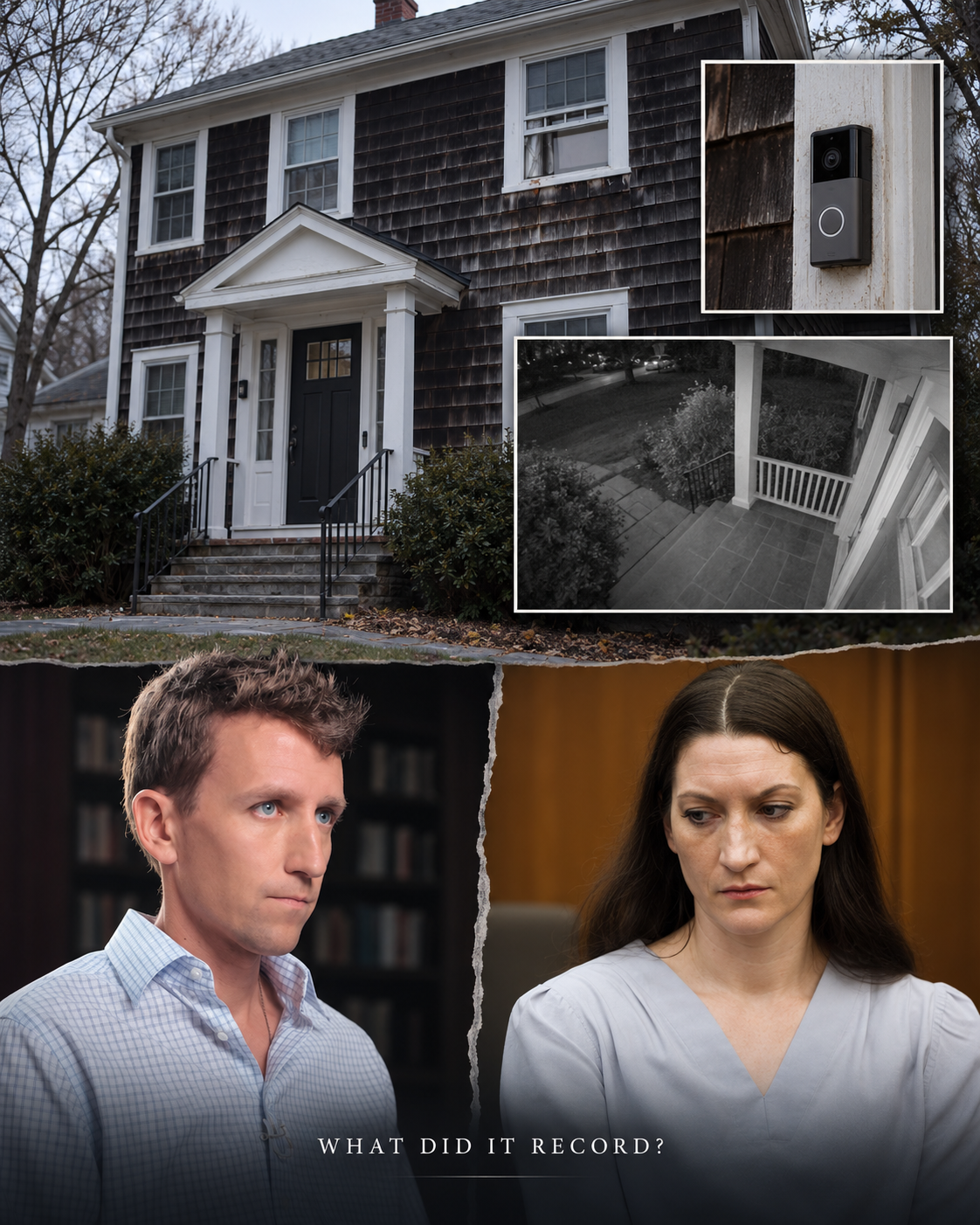
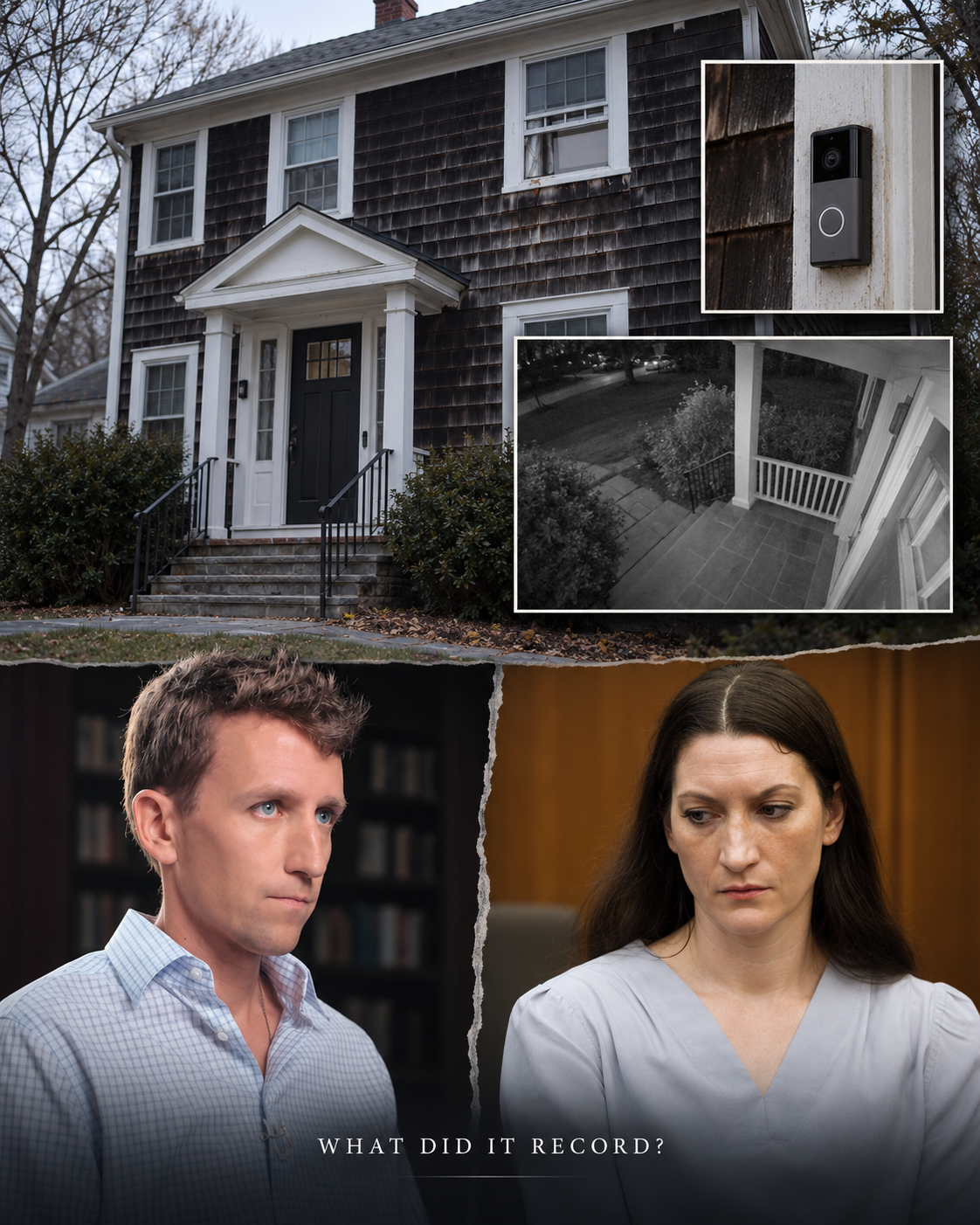
But when the search-warrant inventory from 47 Summer Street was examined, another category of evidence appeared that seemed potentially even more important, because police had seized multiple pieces of home-surveillance equipment rather than relying only on cameras located at stores and restaurants.
The inventory included a Google camera with a cord, a Ring camera, a Google Nest camera, and a baby monitor, creating the obvious question of whether one of those devices had recorded the crucial period inside the house while Patrick was away.
The answer, however, was far less dramatic than the equipment list initially suggested, because the publicly presented trial record established that investigators seized those devices but did not establish that any home camera captured the killings themselves.
The Search Warrant Listed More Cameras Than Most People Realized
The search of the Clancy residence produced a lengthy inventory covering phones, computers, medications, writings, exercise bands, biological evidence, and several electronic devices that investigators believed could potentially preserve information relevant to what occurred inside the home.
Among those items were three separately identified camera devices, including a Google camera with its cord, a Ring camera, and a Google Nest camera, while police also collected a baby monitor that could potentially contain or transmit information depending on its configuration.
That inventory immediately creates a different impression from the familiar public timeline, because discussions of January 24 usually focus on Lindsay’s phone, Patrick’s movements, CVS surveillance, ThreeV surveillance, Apple-device data, and the emergency response rather than on cameras located inside the family property.
The existence of surveillance equipment does not automatically mean usable recordings existed, however, because many cameras record only when triggered, overwrite earlier material, depend on cloud subscriptions, point toward limited areas, or may simply not have been operating during the relevant period.
That difference between possessing a camera and possessing a recording became essential, because the evidence list could establish that hardware was physically seized without establishing that investigators recovered video showing what happened to the children.
Officers Specifically Went Looking for a Nest Camera
Trial testimony confirmed that investigators were aware of at least one Nest camera inside the residence, because Lieutenant Joseph Rabbitt testified that he went toward one of the children’s bedrooms after someone told him that a Nest camera was located there.
Another investigator, Dan Lawler, later testified during the search-warrant evidence presentation that he helped search the upstairs master bedroom and remembered documenting or collecting both a baby monitor and a Google Nest camera from that area.
Those descriptions show why the devices attracted investigative attention, because cameras and monitors inside bedrooms can potentially preserve movement, audio, timestamps, device activity, or cloud-connected records that ordinary physical evidence cannot reconstruct after an event has already occurred.
Yet the testimony presented publicly did not produce the kind of sequence many people might expect after hearing that several cameras were seized, because jurors were not shown home-surveillance footage depicting Lindsay carrying out the fatal acts against Cora, Dawson, and Callan.
That absence matters because if investigators had possessed a clear recording of the killings, the factual dispute over what physically occurred during Patrick’s absence would have looked very different from the case actually presented to the jury.
The Cameras Were Evidence Even Without a Dramatic Video
Investigators routinely seize electronic equipment because they do not know at the beginning of a search which device will contain something useful, and testimony from the search team emphasized that police entered the house with limited knowledge of exactly what had happened there.
Lawler explained that investigators searched the residence as teams, documented potentially relevant items, and collected devices for later examination, meaning a camera could become evidence simply because it might contain retrievable information rather than because officers already knew a crucial recording existed.
That procedural point helps explain why the camera inventory can sound more conclusive than it really is, because the return of a search warrant tells readers what officers took from the property but does not automatically reveal the results of every later forensic examination.
The same principle applies to laptops, tablets, hard drives, and phones, which may be seized broadly before specialists determine whether they contain relevant searches, messages, recordings, location information, or nothing useful to the particular question investigators are trying to answer.
What ultimately became prominent at trial were the digital artifacts that could actually be tied to the timeline, including Lindsay’s device activity and the external surveillance recordings documenting Patrick’s movements while he was away.
CVS and ThreeV Filled the Gap the Home Cameras Did Not
CVS footage showed Patrick arriving during the errand and remaining inside while he searched for the children’s medication, while the ThreeV recording later showed him entering the restaurant shortly before 5:55 PM to collect takeout.
Those videos mattered precisely because they provided independent visual evidence of Patrick’s location during the window investigators were trying to reconstruct, unlike the home-camera equipment whose seizure did not translate into publicly established footage of the fatal acts.
The prosecution could therefore combine business surveillance with phone records, device activity, travel estimates, and Patrick’s testimony to establish that he was away from the residence while Lindsay remained there with the three children.
That evidence became especially important because the physical events inside the house were not documented by a publicly presented continuous camera recording, forcing both sides to reconstruct the sequence using circumstantial, forensic, medical, and digital evidence instead.
Had a working interior camera directly captured the basement, bedroom, hallway, or another relevant location throughout the critical period, much of the factual reconstruction could potentially have rested on video rather than competing interpretations of timestamps and subsequent statements.
The Baby Monitor Raised the Same Question
The baby monitor attracted similar attention because parents often ᴀssociate those devices with continuous observation, yet a monitor sitting inside a home does not necessarily preserve historical footage in a retrievable form after the fact.
Some monitors operate only as live video or audio feeds, while others store clips locally or through cloud services, meaning investigators still have to determine the device model, configuration, network connection, storage settings, and whether any data survived.
The search-warrant return establishes that police collected a baby monitor along with the camera equipment, and trial testimony confirmed that investigators treated it as a potentially relevant electronic item during their search of the residence.
What the publicly presented evidence does not establish is that this monitor preserved a recording showing Lindsay with the children during the critical minutes, which makes its presence intriguing without turning it into a hidden video of the crime.
That distinction is particularly important in a case surrounded by online theories, because the existence of an electronic device can quickly become transformed into claims about unseen recordings that the actual evidentiary record never established.
The Ring Camera Could Not Simply Answer What Happened Inside
The Ring device listed in the warrant return naturally raises another question because doorbell and exterior cameras can sometimes establish arrivals, departures, vehicles, visitors, or activity near an entrance even when they cannot see into the home itself.
But nothing in the publicly presented trial evidence cited here establishes that the Ring camera captured an unknown visitor entering the property, Patrick secretly returning during his errand, or another person leaving while Lindsay was alone with the children.
That absence is significant because investigators separately relied on external business surveillance and phone-related evidence to corroborate Patrick’s location rather than presenting a home Ring recording as the decisive proof of where he was during the relevant period.
The fact that several cameras existed therefore should not be confused with evidence that another person appeared on those cameras, because no such home-surveillance recording was established in the material presented publicly during the trial.
The devices were potentially valuable sources investigators had to examine, but the footage that ultimately became central to the public courtroom timeline came from CVS, ThreeV, family outings, and other external sources rather than a recording of the killings themselves.
Investigators Still Created Their Own Video of the House
There was another category of home video that did become part of the trial, although it was created after the emergency rather than by the family’s surveillance system before Patrick returned home.
State Police testimony established that crime-scene personnel pH๏τographed and videotaped the residence after it had been secured, and prosecutors later introduced scene video showing rooms investigators documented while executing the search warrant.
That video could show investigators what the house looked like after first responders had arrived and the scene had been secured, but it obviously could not provide a live recording of Lindsay’s actions during the earlier period when she was alone with the children.
The distinction between those two types of video is easy to lose when discussions simply refer to “footage from the house,” because post-event crime-scene documentation is fundamentally different from contemporaneous surveillance recording the events as they happen.
What the jury could examine was therefore the documented aftermath alongside the reconstructed digital timeline, rather than a continuous home movie showing precisely what occurred between Patrick’s departure and return.
The Missing Recording Became Important in Its Own Way
A home filled with electronic devices can create the expectation that modern technology must preserve everything, yet the Clancy investigation demonstrates how incomplete digital reconstruction can remain even when police seize phones, watches, laptops, cameras, monitors, and cloud-connected equipment.
Investigators could place Patrick at CVS, establish his later appearance at ThreeV, examine Lindsay’s phone activity, review search histories, analyze communications, and compare those timestamps with the emergency response, but none of those sources provided a direct visual record of every minute inside the residence.
That absence left space for the central psychiatric dispute because the defense and prosecution were not primarily arguing over whether Lindsay physically caused the children’s deaths, but over what her mental condition meant for criminal responsibility when those acts occurred.
A camera recording of the physical acts might have clarified sequence and behavior, but even such footage would not necessarily reveal whether Lindsay was experiencing psychosis, command hallucinations, delusions, or an understanding of wrongfulness at the time.
The case therefore remained dependent on medical evidence, later statements, digital behavior, witness observations, and competing expert interpretations rather than on one definitive recording from inside the home.
What the Home Surveillance Equipment Actually Established
The crucial discovery from the search warrants was that investigators seized a Google camera, a Ring camera, a Google Nest camera, and a baby monitor, confirming that several potential recording devices existed inside or around the Clancy property.
What the publicly presented trial evidence did not establish was equally important, because there was no home-surveillance video shown as a recording of Lindsay killing Cora, Dawson, and Callan while Patrick was completing his errands.
Instead, the cameras that became decisive for reconstructing Patrick’s movements were located away from the house, with CVS and ThreeV surveillance providing timestamps that could be compared against phone records and the eventual 911 response.
That makes the answer to “What did it record?” more unexpected than a hidden video reveal, because the search warrant proves investigators found surveillance equipment while the courtroom record does not show that those devices preserved the crucial act everyone would naturally expect investigators to search for first.
The search-warrant inventory revealed cameras inside the Clancy home, but the major recording never emerged: investigators seized the Google, Ring, and Nest equipment and the baby monitor, yet no publicly presented home-surveillance footage captured the deaths themselves, leaving the most important minutes of January 24 to be reconstructed from everything around them rather than watched directly on a screen.