Part 2 — The Folder She Never Saw
Part 2 — The Folder She Never Saw
Gabriel did not hug me first. He crouched so we were level, read Dad’s handwriting one more time, and said:
“Your father never left you the house. He left you the company. The house was only the lock on the door.”
Rosa sat down hard.
Inside the folder: a will signed six days before Alexander died, witnessed by a hospital notary Veronica had never met. A living trust in my name, funded with seventy percent of Northstar Logistics. A letter to the probate court, dated the night the doctors said the infection had reached his blood, stating that if Veronica attempted to isolate or dispose of the minor child, the residual share intended for her as surviving spouse would collapse into the trust.
There was more.
Bank statements showing she had moved money from the operating account the week he entered the ICU. A draft deed transferring the house into her name alone, prepared by a lawyer who was not Dad’s. Text messages recovered from Alexander’s cloud—Gabriel’s copy, not hers—in which she asked how long “the boy” would need to stay “after.”
 “She thought the old will was the only one,” Gabriel said. “The one that named her executor and gave her the residence. He updated it while she was at the office ‘handling calls.’”
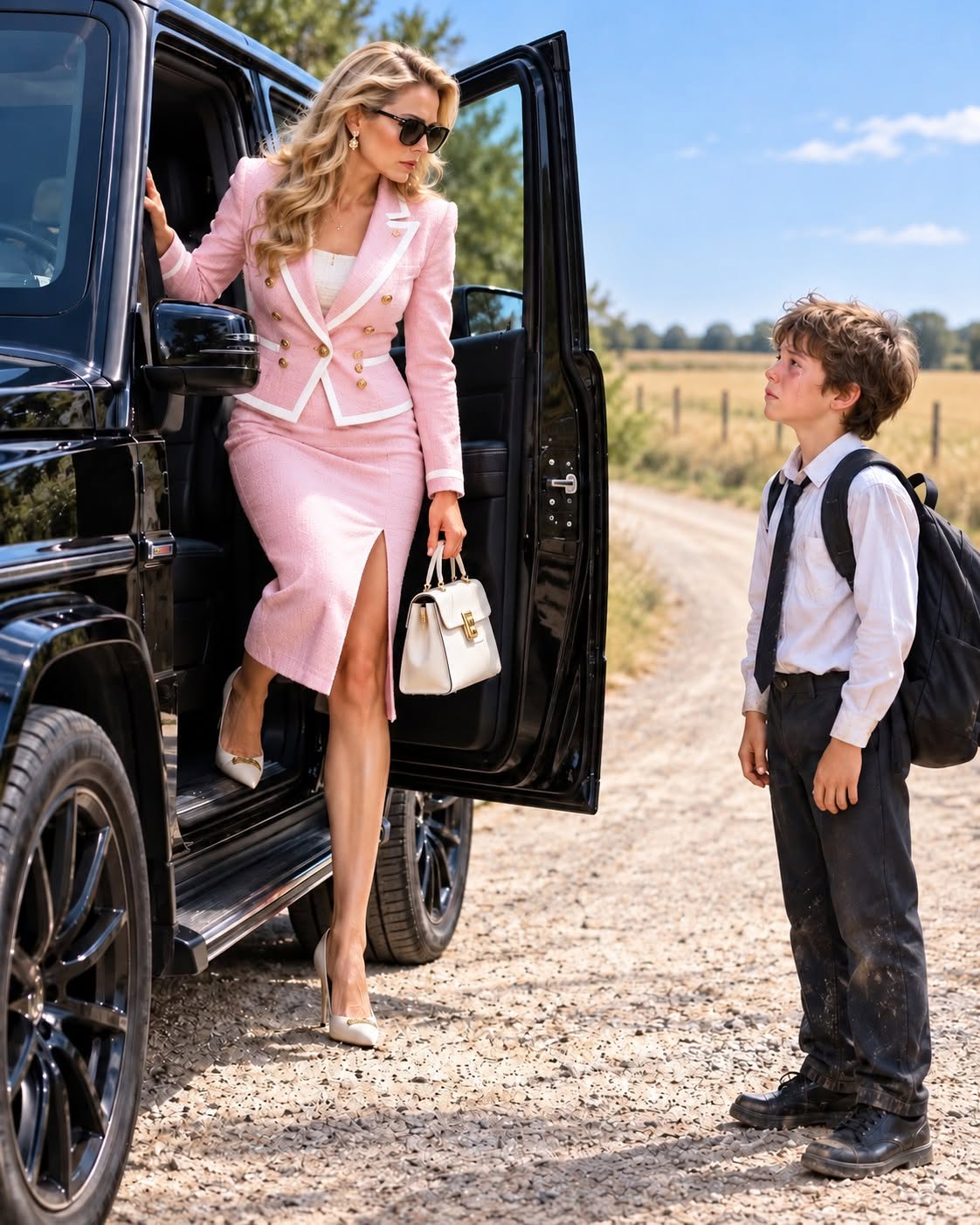
We did not go to her house that afternoon. We went to a judge in chambers with Rosa as the first adult who had fed me, and with a sheriff’s deputy who had already confirmed there was no missing-child report filed in my name. Abandonment on a county road after a funeral does not look like grief. It looks like a plan.
Veronica arrived in black that still looked like mourning. When she saw Gabriel she smiled the way she used to smile when Dad was watching.
“This is a misunderstanding. The child ran. I was distraught—”
The judge opened the folder.
She stopped smiling when she saw the trust.
She stopped speaking when she saw the date on the notary stamp.
The sentence Gabriel had said on Rosa’s porch was simpler than the documents:
“Alexander named me successor trustee. The boy was never hers to leave on the side of the road.”
What followed was not a movie confrontation on a dirt shoulder. It was quieter and worse for her. Temporary custody to Gabriel pending the full hearing. A freeze on every account she had touched since the ICU. A welfare finding that the funeral clothes I was still wearing were evidence, not costume.
That night I slept in a room that had been my father’s when he was a boy. On the dresser Gabriel set the original scrap of paper, smoothed flat.
“He was afraid he wouldn’t last long enough to say this out loud,” he said. “So he put a number in your pocket and a lock on everything else.”
I asked the only question that still had weight.
“Did he know she would do it?”
Gabriel looked at the window for a long time.
“He knew she might. He hoped he was wrong. He made sure that if he wasn’t, she would not get to keep both the money and the story.”
Outside, Georgia heat pressed against the glᴀss. Somewhere on a highway an SUV was already pointing toward a lawyer who would learn, too late, that the deserted road had been the first exhibit.
I was ten. I still had funeral dust in the seams of my shoes.
I also had a name on a folder that was not hers.