Nolan Wells UPDATE: Dr. Umar Breaks Silence and Reveals Truth You won’t Believe
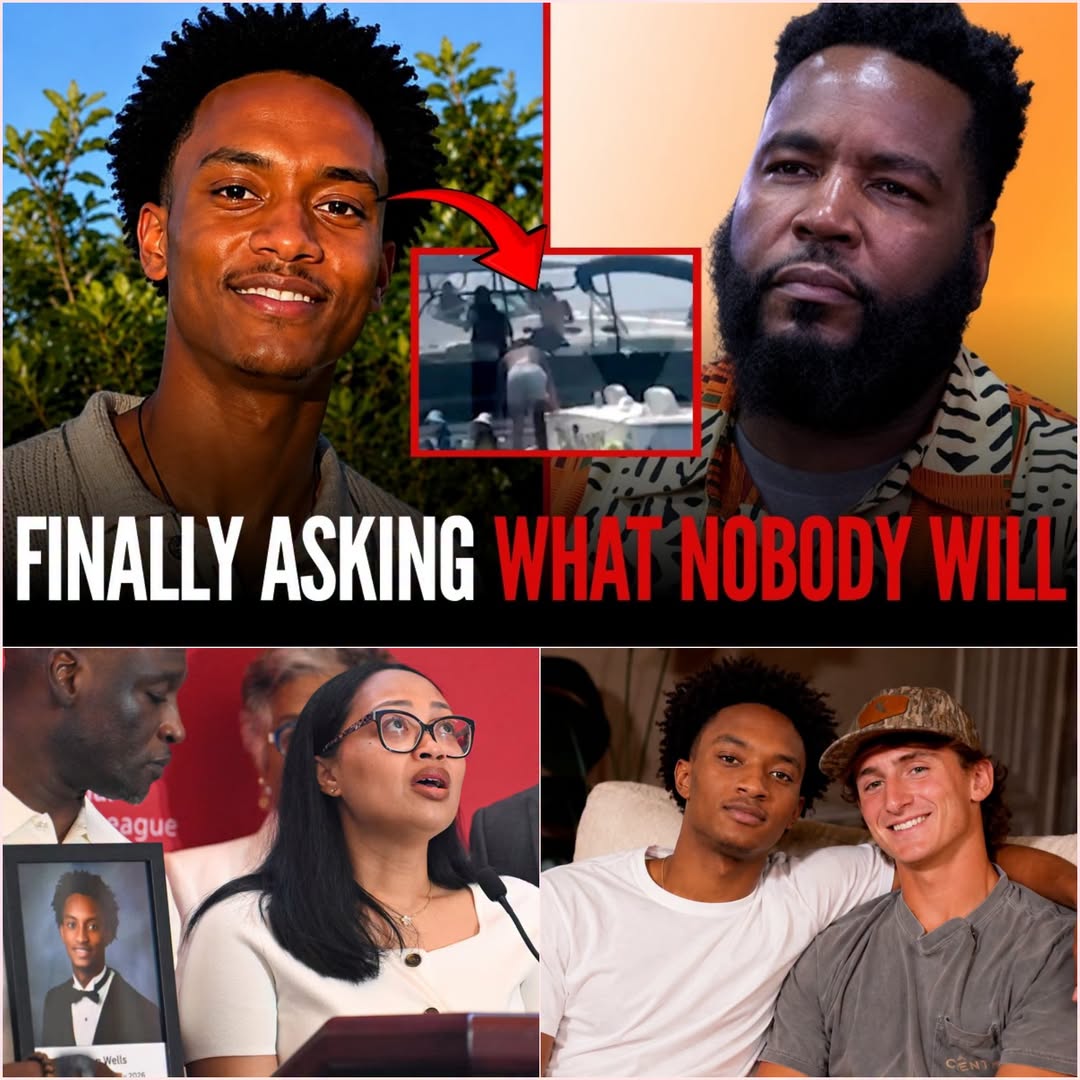
🚨 NOLAN WELLS: Two Autopsies, No Public Cause of Death — and a Timeline Still Full of Questions
More than a month after 18-year-old Nolan Xavier Wells disappeared during a Fourth of July trip to Horn Island, Mississippi, the central question haunting his family remains painfully simple:
How did Nolan die?
The public still does not know.
Nolan traveled to Horn Island with friends on July 4.
He did not return to the mainland with the group that afternoon, and his mother later reported him missing.
After an intensive search involving local, state and federal agencies, a U.S.
Park Service ranger discovered Nolan’s body in the water near the northwestern end of Horn Island on the morning of July 6.
Since then, two separate forensic examinations have become central to the mystery.
One was conducted by Mississippi’s State Medical Examiner.
The other was commissioned independently by Nolan’s family and performed by forensic pathologist Dr. Roger Mitchell in Washington, D.C.
But the two examinations have not yet produced a public explanation capable of ending the uncertainty.
The family’s independent examination classified Nolan’s cause and manner of death as undetermined pending further investigation.
Mississippi’s official autopsy has since been completed, but prosecutors have not released its conclusions publicly; the report is being withheld while the investigation moves toward grand-jury review.
That means that despite weeks of investigation, public scrutiny and forensic work, Nolan’s family still does not have a publicly disclosed answer explaining exactly what caused their son’s death.
What Happened on July 4?
Nolan traveled by boat from the Ocean Springs area to Horn Island on the morning of July 4.
Mississippi Department of Marine Resources data later placed the boat’s arrival at the island around 11:14 a.m.
Authorities have said Nolan was last seen around 3 p.m.
Friends have maintained that Nolan chose to remain on the island and intended to return with another group.
Nolan’s parents have repeatedly questioned that account, particularly because his phone and car keys returned to the mainland without him.
Another complication emerged around the boat itself.
Around 4 p.m., someone aboard the vessel called Sea Tow reporting that its bilge pump had stopped working and that the boat was taking on water.
Marine-resource records later showed the vessel near the northwest tip of Horn Island.
That sequence has become important because Nolan’s body would ultimately be recovered in roughly the same general portion of the island two days later.
Ben Crump’s legal team has since hired audio specialists to examine the complete Sea Tow recording and has said it is consulting ocean-engineering experts about tides, currents and how Nolan’s body came to be recovered near the area where he had last been reported.
Those examinations do not establish wrongdoing.
But they demonstrate how much remains under review.
The First Public Forensic Answers Created More Questions
The most detailed forensic information available publicly so far comes from Dr. Mitchell’s independent examination.
His preliminary report documented no fractures and no evidence of deep-tissue injury during extensive dissections of Nolan’s face, neck, ribs, pelvis, back and extremities.
But Mitchell also identified a focal area of unexplained red discoloration in deep tissue at the back of Nolan’s head over the occipital region.
There was no ᴀssociated skull fracture and no laceration in the skin above it.
Because Nolan’s body had undergone substantial decomposition and had already been examined during the original state autopsy, Mitchell could not establish what caused the discoloration or whether it represented an injury sustained around the time of death.
That is an important distinction.
The finding does not prove Nolan was struck.
But the independent pathologist also said the available evidence did not allow him to rule out non-accidental factors.
Mitchell faced another limitation.
Certain internal neck structures had been retained during the first autopsy and were not available when he performed the second examination.
Medical reporting has noted that retaining such tissue for further study can be standard forensic practice, but without those structures Mitchell could not fully answer several questions relevant to the cause of death.
So the independent examination did not deliver the definitive answer Nolan’s family wanted.
Instead, it documented what could be established — and highlighted what could not.
The State Knows More Than the Public Does
Mississippi’s official autopsy has now been completed.
But the findings remain outside public view.
Jackson County District Attorney Angel Myers McIlrath has said the evidence will be presented to a grand jury and that the autopsy will remain withheld during that process.
McIlrath has also stressed an important point that has often been lost in online debate: presentation to a grand jury does not automatically mean prosecutors believe a crime occurred.
She has said her office routinely presents deaths other than natural deaths and noncriminal traffic fatalities to grand juries.
As of the latest authoritative reporting, authorities have not publicly named a suspect or announced an arrest connected to Nolan’s death.
That is where the official case stands.
Yet online, an entirely different investigation has been unfolding.
When the Information Vacuum Became Dangerous
The absence of a public cause of death created space for speculation.
Then the speculation turned into misinformation.
A supposed Nolan Wells toxicology report began circulating online — until Mississippi Public Safety Commissioner Sean Tindell publicly warned that the document was fraudulent.
Tindell specifically cautioned that fake documents, artificial intelligence and social-media sharing had created a dangerous environment around the case.
AI-generated content involving Nolan and his family has also circulated online, further blurring the line between authentic evidence and fabricated material.
The consequences have gone far beyond misinformation.
Federal prosecutors have charged three people in separate cases involving alleged threats toward a judge, a witness and government offices connected to the Wells investigation.
Crucially, those defendants are not accused of causing Nolan’s death, and authorities said they did not appear to have personal connections to Nolan, his family or the boating group.
The charges show how dramatically online speculation surrounding the case has escalated.
Questions about Nolan’s death are legitimate.
Threatening witnesses or officials is not.
The United Cajun Navy Finds a Gap — Not a Conclusion
Another significant development came from the United Cajun Navy, which ᴀssisted during the original search.
The organization compiled a report containing pH๏τographs, GPS information, social-media screensH๏τs and other materials submitted by members of the public.
Its vice president, Brian Trascher, was careful to emphasize that the report does not determine criminal or civil responsibility and that many submitted materials could not be independently authenticated.
But the report did identify one critical area requiring clarification:
What happened between Nolan’s last known sighting and the departure of the boat that had taken him to Horn Island?
The organization described this as a significant unresolved portion of the timeline and supplied its report to investigators, prosecutors and Nolan’s parents.
Again, a gap is not evidence of a crime.
But it is exactly the type of gap investigators will need to resolve.
What Happens Next?
Eventually, the evidence will go before a Jackson County grand jury.
That body will review investigative materials and determine whether there is sufficient evidence to support criminal charges.
Grand-jury proceedings are confidential, meaning the public will not be able to watch the testimony or examine everything jurors see.
Until then, the public is left with an unusual situation.
The state has completed its autopsy but has not released the findings.
The independent autopsy could not determine the cause or manner of death.
Experts retained by Nolan’s family continue analyzing audio, tidal conditions and other evidence.
Investigators remain active.
And Nolan’s parents are still waiting.
More than a month after their son went to Horn Island for what should have been an ordinary Fourth of July outing, Christine Wells-Wonsley and Elmore Wonsley remain trapped between what is known and what is still hidden from public view.
There has been no publicly established cause of death.
No publicly named suspect.
No criminal charge connected to Nolan’s death.
And no definitive explanation for what happened between the last time Nolan was seen alive and the moment his body was discovered two days later.
That uncertainty is precisely why this case continues to command national attention.
The rumors will keep coming.
The theories will keep spreading.
But ultimately, only authenticated evidence can answer the question Christine Wells-Wonsley has been asking from the beginning:
What happened to Nolan?