🤖💙 After Losing Both Hands as a Toddler, This Inspiring Young Woman Is Now Helping Create Life-Changing 3D-Printed Prosthetic Hands ✨
🤖💙 After Losing Both Hands as a Toddler, This Inspiring Young Woman Is Now Helping Create Life-Changing 3D-Printed Prosthetic Hands ✨
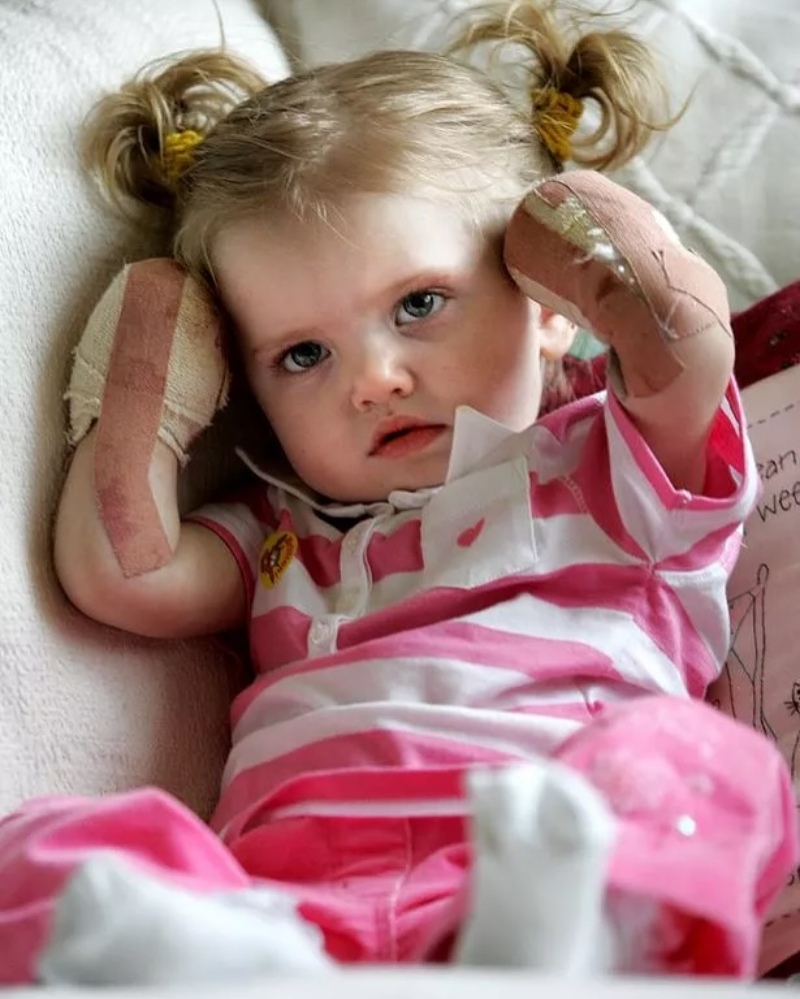
When Tilly Lockey was just 15 months old, her family faced the unimaginable.
The little girl from County Durham, England, became critically ill after developing Group B meningococcal septicaemia, a life-threatening infection that spread rapidly through her tiny body. 💔
Doctors fought desperately to save her life.
To give her a chance to survive, they had no choice but to amputate both of her hands and several of her toes.
Her loved ones were warned that her chances of survival were incredibly small.
But Tilly refused to give up.
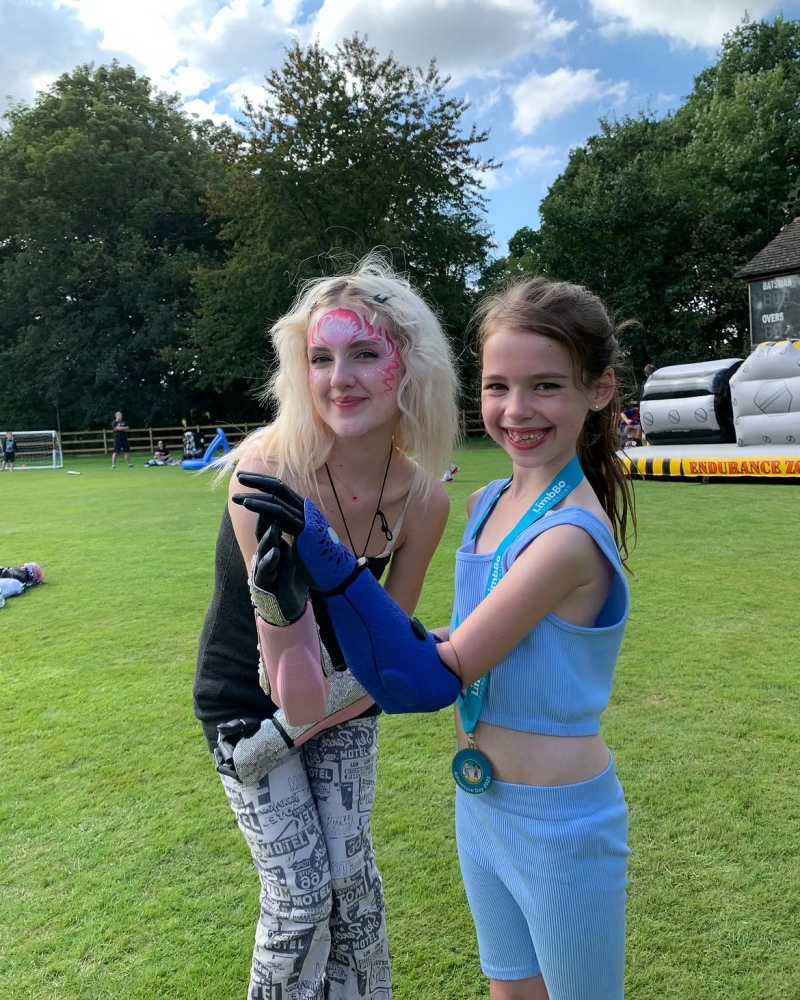
Today, nearly two decades later, she has become one of the world’s most inspiring advocates for bionic technology—not only wearing advanced prosthetic hands but helping engineers design the next generation of them. 🌈
Growing up, Tilly never allowed her limb difference to define who she was.
She taught herself how to paint.
How to draw.
How to open food packages.
How to complete countless everyday tasks by finding creative solutions that worked for her.
“I’ll teach myself to do things,” Tilly once said. “If you keep trying, anything can come together in the end.” ❤️
Her first prosthetic hands were fairly simple.
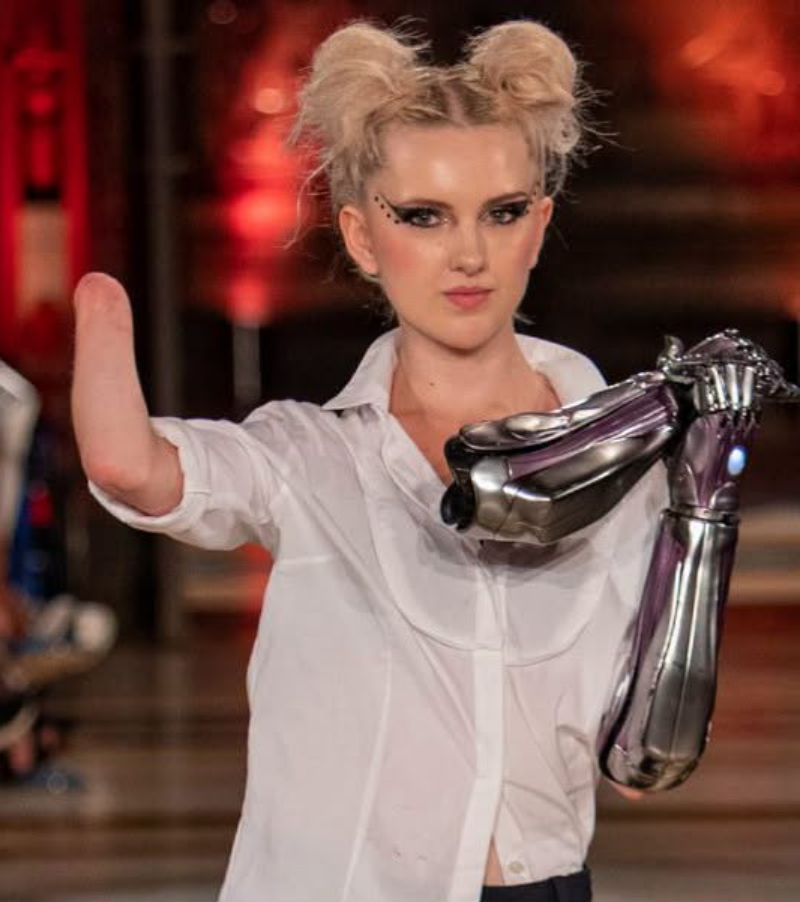
They could open and close, giving her a degree of independence, but they couldn’t always keep up with the busy, active life of a growing child.
Rather than accepting those limitations, Tilly decided to help change them.
She began working with the British robotics company Open Bionics, becoming much more than someone who simply wore prosthetic hands.
She became one of the people helping build them.
For almost 10 years, Tilly worked closely with engineers, testing prototype after prototype.
She evaluated everything that mattered in everyday life:
🤲 Comfort
⚙️ Grip strength
🏃 Weight and speed
🛠️ Practical use for daily activities
Her real-life experience gave designers something no laboratory could provide.
“Tilly tells the engineers when something is uncomfortable, too heavy, or simply doesn’t work in everyday life,” her mother, Sarah, explained. “Children like her are the ones who truly help improve this technology.”
In 2025, at just 19 years old, Tilly helped introduce Open Bionics’ Hero PRO, one of the company’s most advanced bionic hands to date.
The technology is remarkable.
Tiny wireless sensors inside the prosthetic detect electrical signals produced when Tilly contracts the muscles in her arms.
Those signals are instantly translated into natural finger movements—without the need for brain implants or handheld controllers. 🤖✨
One especially impressive feature even allows Tilly to remove one prosthetic hand and continue controlling it wirelessly from a short distance, demonstrating just how far prosthetic technology has evolved.
The Hero PRO also offers:
✅ Fast finger movement in about 0.6 seconds
✅ Multiple grip patterns for different tasks
✅ Wrist rotation for greater flexibility
✅ Improved durability for everyday activities, including brief exposure to water
But perhaps the most inspiring part of this story isn’t the technology itself.
It’s the young woman helping shape it.
Using feedback from nearly 1,000 prosthetic users, Open Bionics spent years refining its newest design.
Among those voices, Tilly became one of the most influential.
Her experiences, suggestions, and determination have helped create technology that could improve the lives of thousands of children and adults around the world. 💙
Looking back, Sarah still remembers the terrifying days when doctors weren’t sure her daughter would survive.
“I felt completely helpless,” she recalled. “But when Tilly survived, we believed she was here for a reason.”
Today, that reason seems clearer than ever.
The little girl who once fought simply to stay alive is now helping others regain independence, confidence, and hope.
Her journey is proof that life’s greatest challenges can sometimes become the inspiration for extraordinary change.
Tilly didn’t just adapt to the future.
She helped build it. 🌟🤖❤️