The Bus Stop Mirage
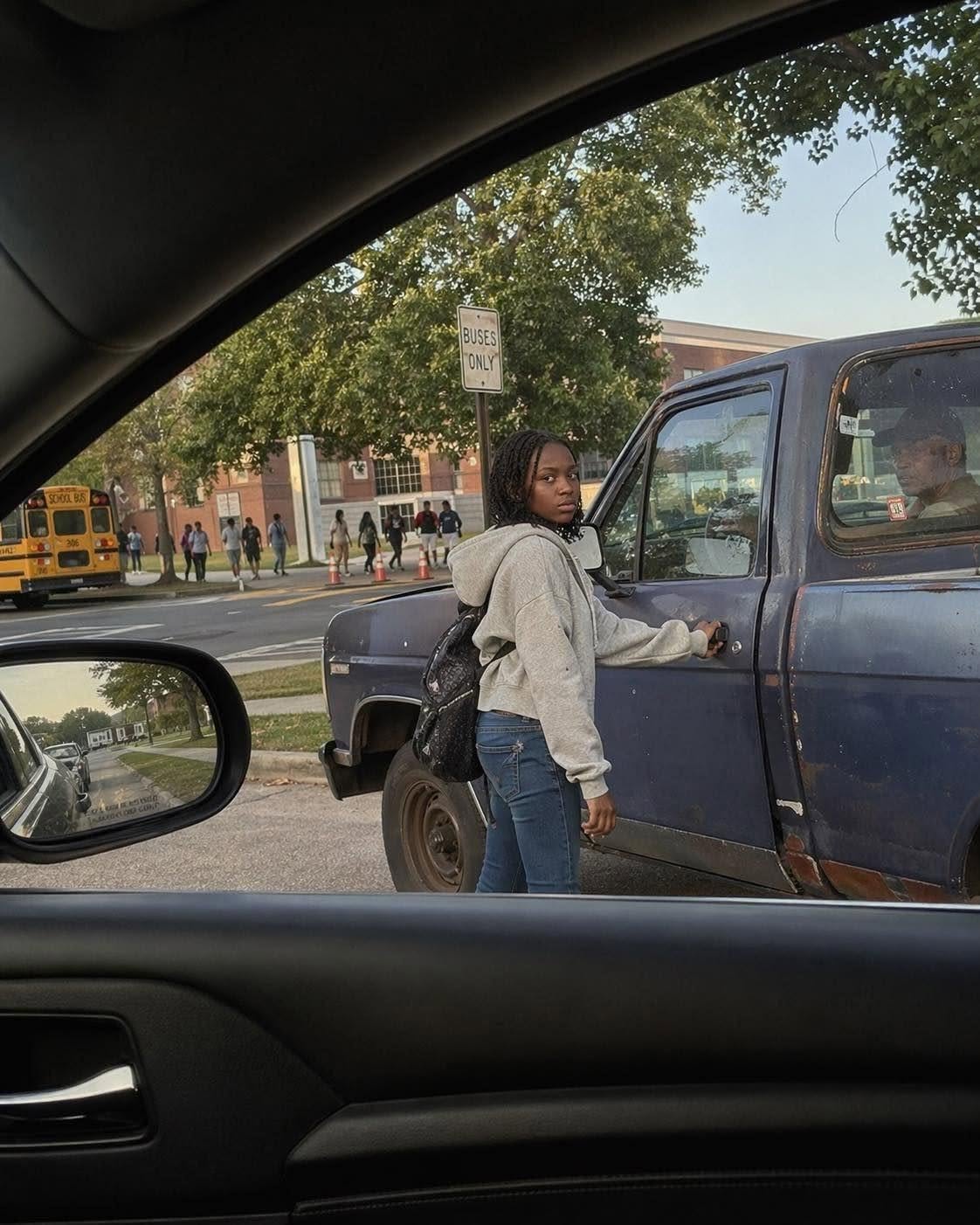
The Bus Stop Mirage
Chapter 1: The Stranger in the Seat
I kept my distance, my heart hammering against my ribs like a trapped bird. The pickup truck didn’t go to a seedy motel or a remote wooded area. It drove toward the industrial district on the edge of town, a place of rusted warehouses and quiet back alleys.
When the truck finally pulled into a gravel lot behind an old, repurposed brick building, I parked behind a stack of shipping crates and watched. Emily hopped out, her movements brisk and confident. The driver—the person I had been so terrified to see—stepped out of the cab.
It wasn’t a kidnapper. It wasn’t a predator.
It was Mrs. Carter, Emily’s homeroom teacher.
I sat in my car, my brain struggling to reconcile the reality. My daughter was skipping school to meet the very woman who was supposed to be teaching her. As they walked toward the building’s side entrance, Mrs. Carter had her arm around Emily’s shoulder, a gesture that looked more like a frantic comfort than a sinister plot.
Chapter 2: The Secret Sanctuary
I waited until they were inside, then slipped out of my car, moving toward the building. The side door was propped open with a brick. I stepped into a long hallway, the air filled with the smell of sawdust and old paint.
As I neared a set of double doors, I heard voices.
“The audition is in two days,” Mrs. Carter was saying. “If you don’t get the monologue perfect, you’ll never convince the board to let you into the conservatory early. Your parents… they’ll never understand why you’re willing to risk your high school transcript for this.”
“I have to,” Emily’s voice replied, small and shaky. “They want me to be a lawyer, Mom and Dad. They don’t even know I’m applying for the Juilliard pre-college program. If I fail this, I have to go to State. I’d rather die.”
I leaned against the wall, my knees giving way. My daughter wasn’t skipping school to do drugs or run away; she was skipping to chase a dream I hadn’t even known she had.
Chapter 3: The Price of Silence
I knew I had to leave before they saw me, but the sound of the stage was mesmerizing. I peeked through the door. The large room was converted into a makeshift studio, filled with costumes, mirrors, and scripts.
Mrs. Carter was a former theater professional—I’d heard whispers about it, but I never imagined she was spending her own money and time to coach Emily in secret.
Suddenly, Emily started the monologue. It was gut-wrenching, raw, and beautiful. My “moody, eye-rolling” teenager was gone. In her place was a performer with a soul so deep it scared me. Tears welled in my eyes. I had been so focused on her grades and her “teenage behavior” that I had completely missed the woman she was becoming.
Chapter 4: The Confrontation
I didn’t go home. I stayed in that building for hours, listening to them work. When I finally walked into the studio, the air turned electric. Emily dropped her script, her face draining of all color. Mrs. Carter stepped in front of her, protective and fierce.
“You can fire me,” Mrs. Carter said, her voice steady. “But she’s the most talented student I’ve ever seen. Don’t punish her for wanting something bigger than a diploma.”
I looked at my daughter, who was bracing for the storm, for the screaming, for the groundings. Instead, I walked over and picked up the discarded script.
“You’re slurring your vowels on the second act,” I said, my voice thick with emotion. “And you need to breathe more from your diaphragm.”
Emily froze. “Mom?”
Chapter 5: A New Script
The car ride home was quiet, but it was the kind of quiet that precedes a new beginning. We didn’t talk about the truant officer or the school policy. We talked about Juilliard. We talked about why Emily felt she had to hide her dreams—because we had made it so clear that only “practical” careers were worthy of our pride.
The next day, I walked into the school and had a long, private meeting with Mrs. Carter and the principal. We cleared Emily’s absences as a “special study program” that I officially sponsored.
I didn’t lose my daughter to a stranger; I found her in the places I had been too busy to look. We still argue about homework, and she still rolls her eyes when I tell her to clean her room. But she doesn’t hide in trucks anymore. And every afternoon, she comes home and tells me what she learned—not about math or history, but about the girl she’s trying to be.
Sometimes, the truth isn’t the disaster we fear. It’s the opportunity we were too blind to see.