HEAVY SHOCK DEBUNKED: No Complete T. Rex Fossil Has Ever Been Salvaged from 3,200 m in the Atlantic – Science Explains Why.lh
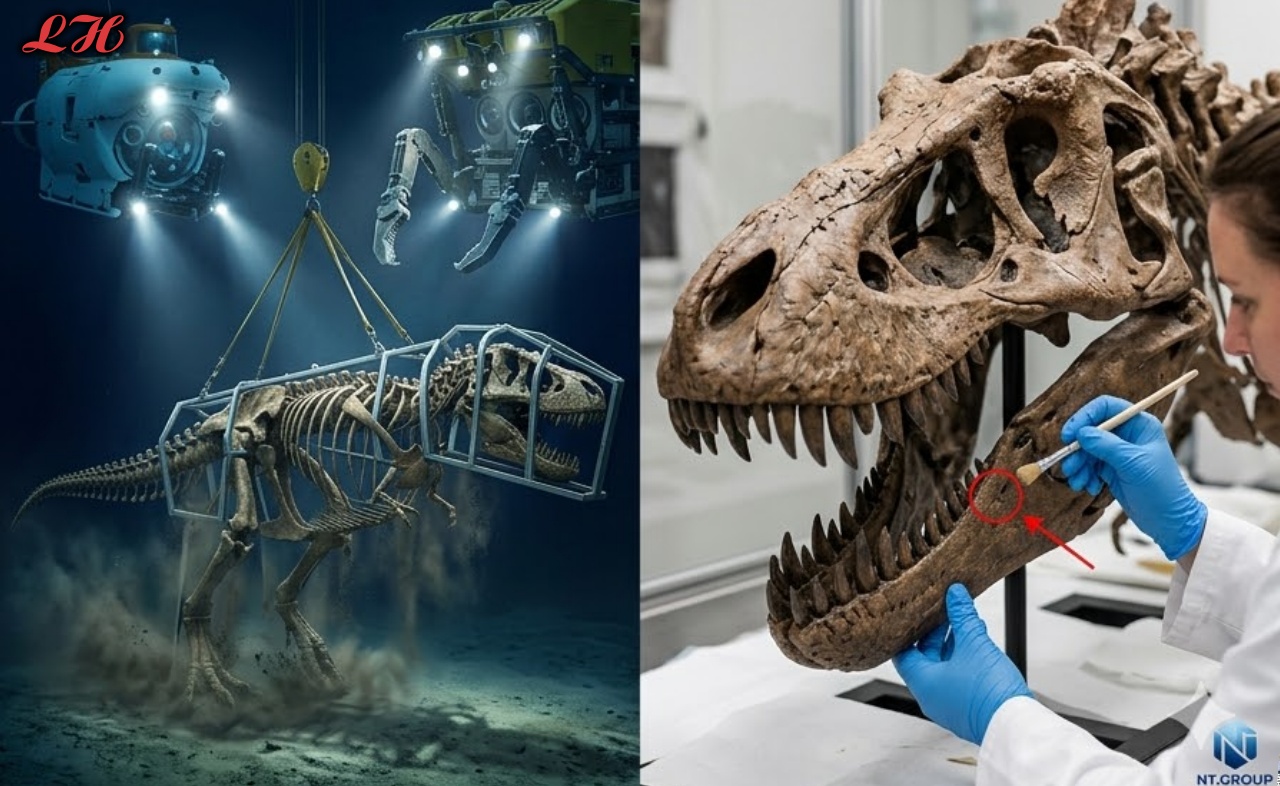
HEAVY SHOCK DEBUNKED: No Complete T. Rex Fossil Has Ever Been Salvaged from 3,200 m in the Atlantic – Science Explains Why
CNN-style headlines claiming a “complete Tyrannosaurus rex” was recovered from 3,200 meters beneath the Atlantic Ocean are fabricated. No such fossil exists, and none ever will under current geological reality.
Tyrannosaurus rex was a strictly terrestrial apex predator that lived exclusively in western North America during the final 2–3 million years of the Cretaceous (68–66 Ma). Every one of the ~50 known specimens comes from river floodplains, coastal plains, and alluvial deposits of the Hell Creek and Lance Formations—hundreds of kilometers from any ancient deep ocean.
For a complete, articulated T. rex skeleton to reach 3,200 m depth in the Atlantic would require:
- The animal dying near a river that somehow carried its 8-tonne body hundreds of kilometers offshore.
- Rapid burial in marine sediment before scavengers and currents destroyed it.
- 66 million years of continuous sedimentation and tectonic subsidence to bury it that deep.
Even then, the Atlantic seafloor at that depth is mostly Cretaceous oceanic crust formed after T. rex went extinct. Any hypothetical bone would have to survive subduction or extreme deep-sea conditions for tens of millions of years—an extremely unlikely scenario for a large terrestrial skeleton.
What does occasionally happen is that isolated dinosaur bones (never complete skeletons) from coastal or riverine environments are transported offshore and later recovered from much shallower marine deposits or through deep drilling. These finds are always fragmentary and explained by normal river flooding and post-mortem drift, not by dinosaurs living in the sea.
The “complete T. rex from the Atlantic abyss” story is pure sensationalism. Real paleontology continues to show that T. rex ruled the land—and its bones stayed on land until rivers or storms occasionally moved a few fragments into the sea. From the black depths of the Atlantic, no king of the dinosaurs has ever emerged.