A Story of Strength Behind the “Mother of Dragons” At the height of her rising career, Emilia Clarke — later known worldwide as the “Mother of Dragons” — experienced a life-changing medical emergency that very few people knew about at the time.
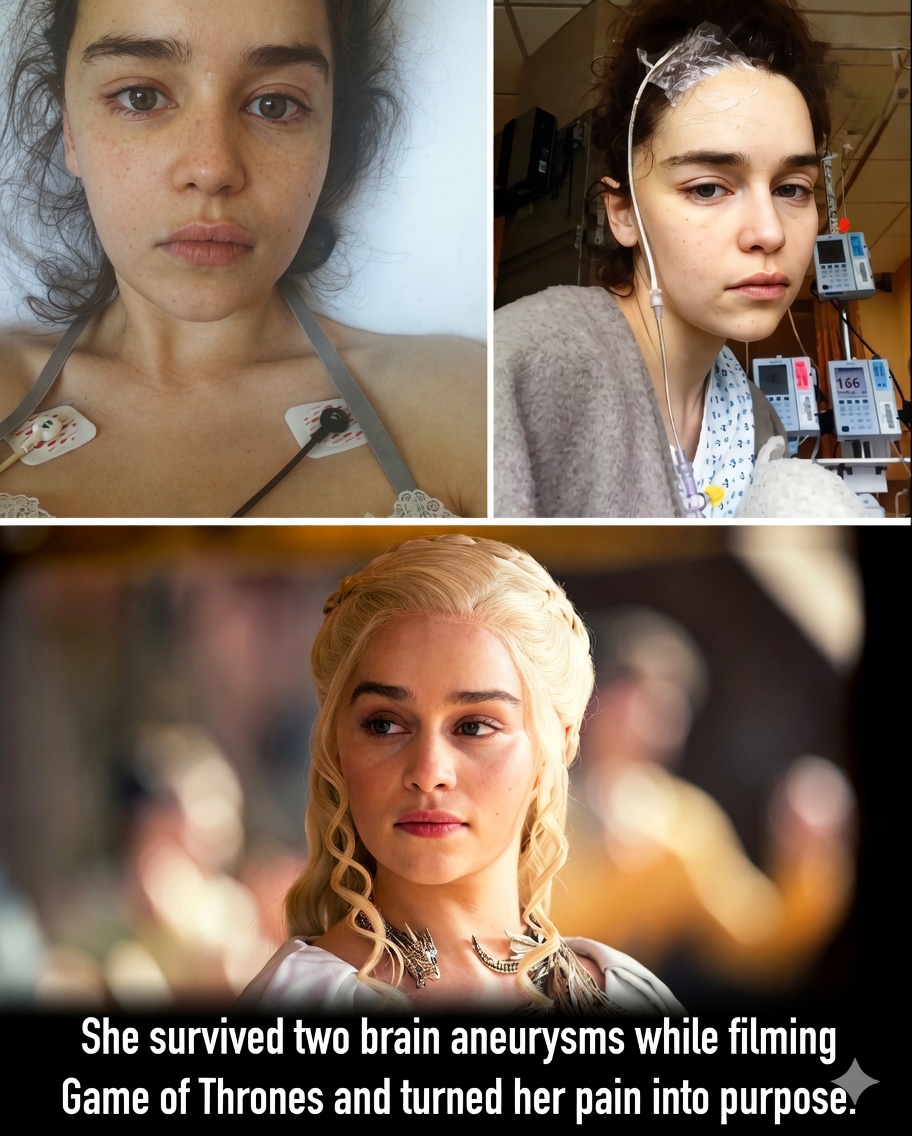
Emilia Clarke’s journey from surviving two life-threatening brain hemorrhages to becoming a leading advocate for recovery is a testament to resilience. Her story began in early 2011, shortly after filming the first season of Game of Thrones, when she suffered a subarachnoid hemorrhage (SAH).
The Hidden Battle
-
Initial Emergency: While training in a London gym, Clarke experienced a sudden “shooting, stabbing” head pain and was found to have a ruptured aneurysm.
-
The Struggle of Aphasia: Following her first surgery, she suffered from aphasia, a communication disorder that left her unable to recall her own name—a terrifying experience for an actress whose career relied on language.
-
The Second Aneurysm: In 2013, after Season 3, a scan revealed that a second aneurysm had doubled in size. A preventative procedure failed, leading to a mᴀssive bleed and a more intrusive surgery that required accessing her brain through her skull.
Quiet Determination on Set
-
Returning to Work: Clarke returned to the demanding role of Daenerys Targaryen shortly after her first recovery, often suffering from severe fatigue, anxiety, and panic attacks while filming.
-
Balancing Fame and Pain: She chose to keep her condition private for years, balancing the pressures of a global spotlight with the internal fear of cognitive or sensory loss.
A Legacy of Advocacy: SameYou
In 2019, Clarke went public with her experience in a powerful essay for The New Yorker, subsequently launching SameYou, a charity co-founded with her mother, Jenny.
-
Closing the Care Gap: The organization focuses on the often-neglected period after a patient leaves the hospital, where ongoing neurorehabilitation and mental health support are often unavailable.
-
Innovative Programs: SameYou has pioneered initiatives like Neurorehabilitation Online (NROL), which provides group rehabilitation in real-time online.
-
Specialist Nursing: Clarke partners with organizations like the RCN Foundation to fund nursing education programs specifically for young stroke and brain injury survivors aged 18 to 40.
Today, Clarke reports that she has “healed beyond her hopes” and uses her platform to smash the stigma surrounding brain injury in young adults.