Duonychus tsogtbaatari – The Two-Fingered Dinosaur with Giant Claws: Why Did Nature “Prune” Its Hands?lh
Duonychus tsogtbaatari – The Two-Fingered Dinosaur with Giant Claws: Why Did Nature “Prune” Its Hands?
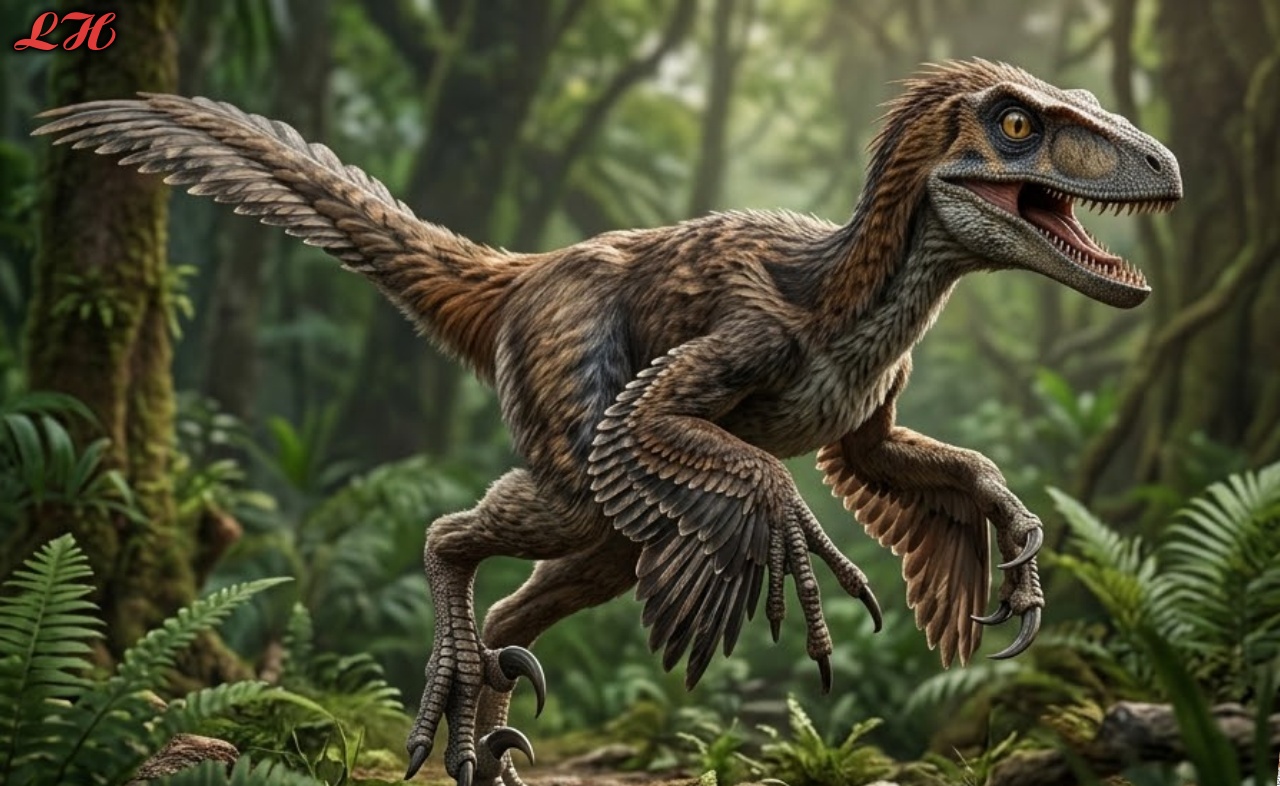
In a striking example of evolutionary convergence, paleontologists have described Duonychus tsogtbaatari—the first known therizinosaur with only two functional fingers on each hand. Unearthed from Mongolia’s Gobi Desert in the Bayanshiree Formation (~96–90 million years ago), this medium-sized herbivore (~3 meters long, 260 kg) sports enormous, foot-long claws, one of which preserves its original keratin sheath.
Therizinosaurs are already bizarre—long-necked, pot-bellied plant-eaters descended from carnivorous theropods. Most retain three clawed fingers for raking foliage. Duonychus (“two claws”) bucks the trend: metacarpal III is reduced to a splint, digit III is absent, and the two remaining digits bear equally mᴀssive unguals. Researchers led by Yosнιтsugu Kobayashi (published in iScience, March 2025) interpret this as an adaptation for powerful, pincer-like grasping—ideal for pulling down branches or stripping leaves in dense vegetation.
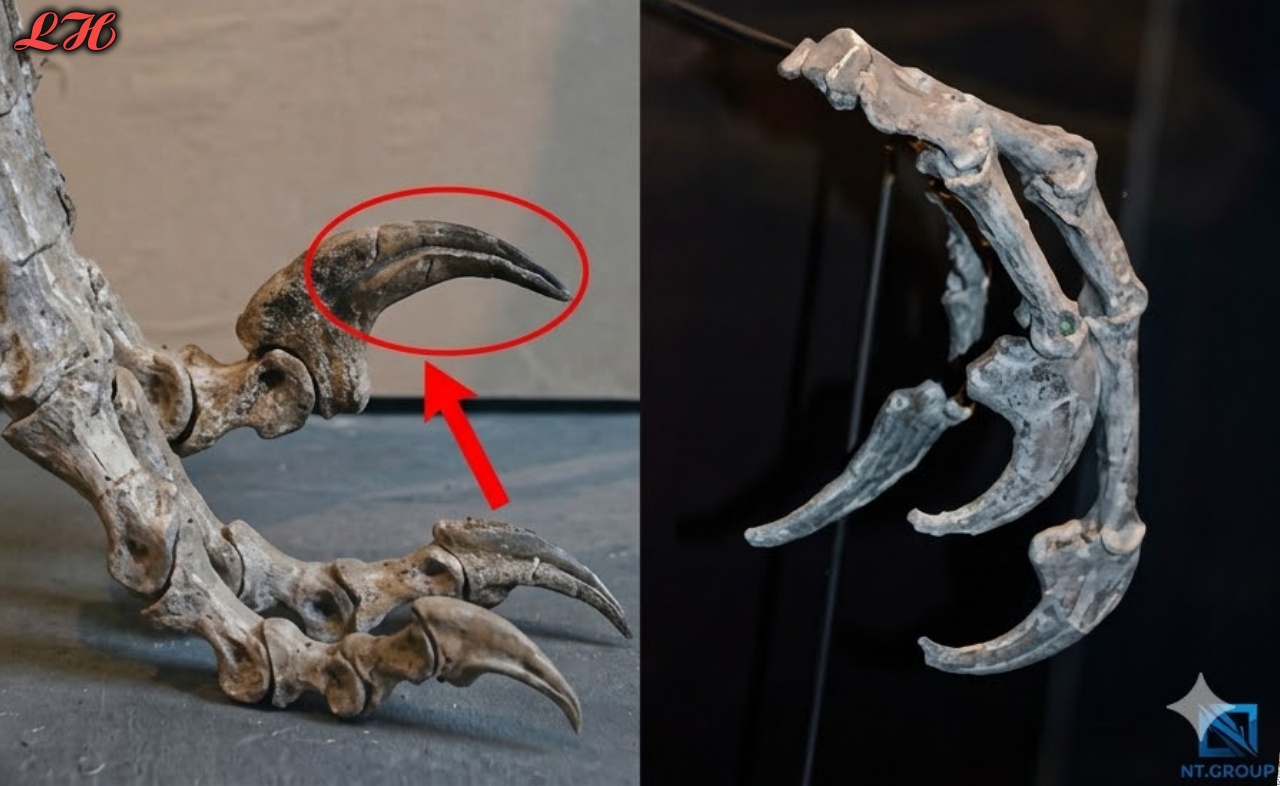
Why the reduction? Nature “cut back” for efficiency. Fewer, stronger digits concentrate muscle force and leverage, much like how tyrannosaurids independently lost a finger for powerful arms suited to their predatory niche. In Duonychus, the didactyl hands likely traded versatility for specialized herbivory, allowing the animal to harvest tough foliage with greater precision and strength. This convergent evolution highlights how similar selective pressures—here, a shift to plant-eating—can produce parallel solutions across unrelated lineages.
“This dinosaur shows how therizinosaurs experimented with hand morphology as they fully committed to a vegetarian lifestyle,” noted Kobayashi. From the arid badlands of Mongolia, Duonychus reveals that sometimes less really is more—evolution ruthlessly streamlined these “sloth-like” giants for survival. A gripping tale of prehistoric pruning!