The Baby Born With A Birthmark Covering Most Of His Back
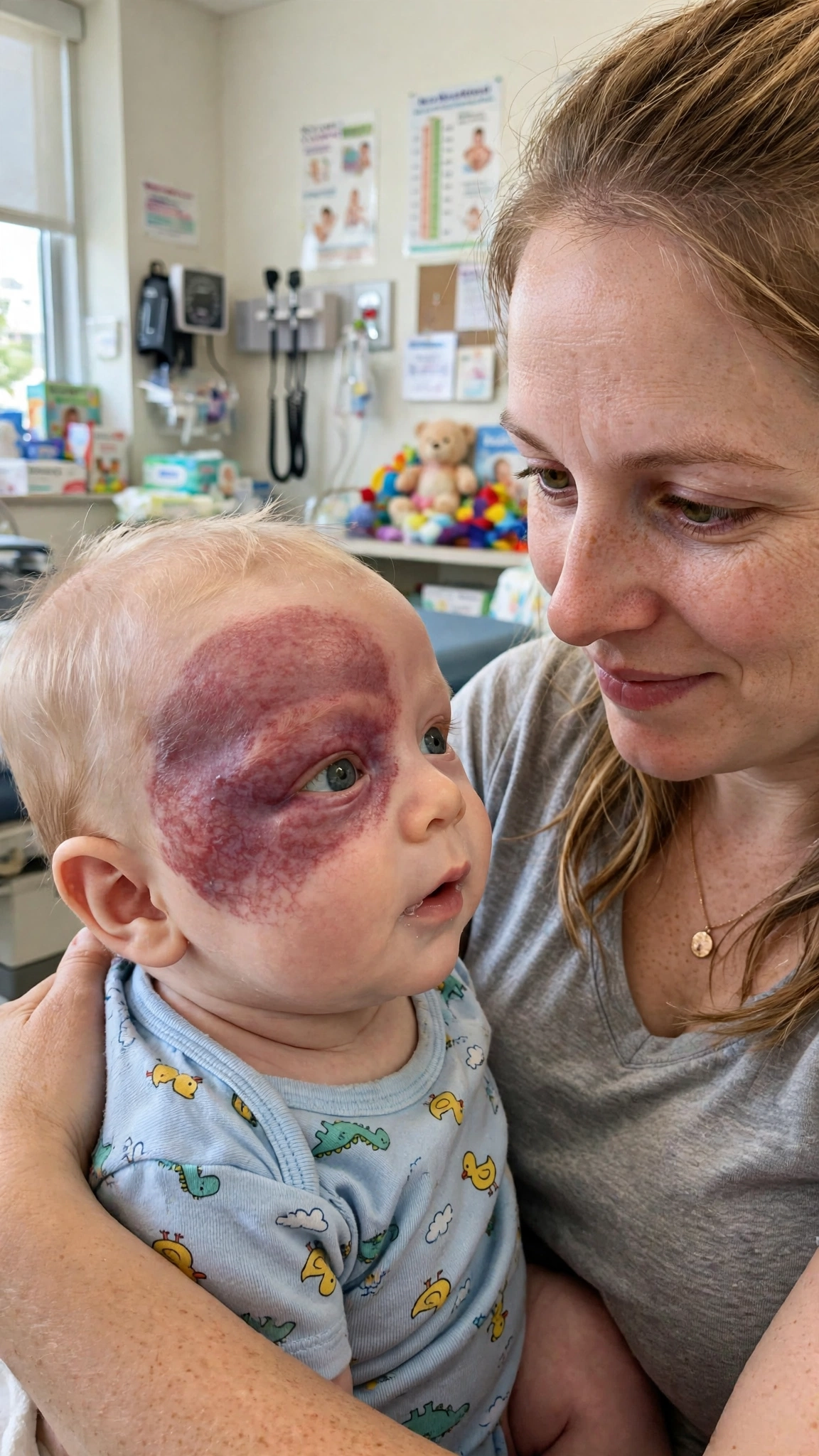
When little Oliver was born, his parents immediately noticed a large, dark patch covering much of his back.
It was very different from the small birthmarks they had seen on other babies. The mark was deeply pigmented, irregular in shape, and covered a substantial area of his skin.
At first, his parents did not know what to make of it. They wondered whether it was simply an unusual birthmark or something that might require medical attention.
After examinations, doctors diagnosed Oliver with a giant congenital melanocytic nevus, a condition in which a large area of skin contains an unusually high concentration of melanocytes, the cells responsible for producing pigment.
Congenital melanocytic nevi are present at birth, although their appearance can change as a child develops. As the body grows, the affected area generally grows proportionally. Some nevi may also become thicker, develop additional pigmentation, or grow hair.
For Oliver’s parents, the diagnosis brought important information but also new responsibilities.
They learned that large congenital melanocytic nevi can carry an increased risk of melanoma. The level of risk depends on several factors, including the size and characteristics of the nevus and whether there are additional lesions.
This did not mean Oliver would necessarily develop skin cancer. It meant that his condition deserved careful, long-term monitoring.
His parents began attending regular dermatology appointments so specialists could examine the birthmark and follow its development.
They learned to pay attention to changes in its appearance, including unusual alterations in color, texture, thickness, or the development of new raised areas. They also understood that some changes can occur naturally in congenital nevi, so medical ᴀssessment is essential before drawing conclusions.
In certain children with large or multiple congenital melanocytic nevi, doctors may also consider the possibility of a condition called neurocutaneous melanosis, which involves melanocytic cells affecting structures of the central nervous system. Whether additional investigations are appropriate depends on the child’s individual risk factors and clinical findings.
Oliver’s family gradually learned how to manage the condition as part of everyday life.
They followed medical advice about skin protection, sun exposure, and scheduled examinations. They also discussed possible treatment approaches with specialists.
Although surgical removal may be considered in some cases, removing a large nevus does not always eliminate the risk of melanoma completely. Surgery can also involve significant scarring or require multiple procedures. For this reason, decisions about treatment must be individualized.
Beyond the medical concerns, Oliver’s parents had another hope: they wanted their son to feel comfortable in his own skin.
His mother sometimes wondered what would happen when he became more socially aware. Would other children stare at his back? Would they ask why his skin looked different? Would he ever feel embarrᴀssed about something he had no control over?
These thoughts could be difficult, but they never changed how she saw her son.
Oliver was a cheerful, curious little boy. He loved spending time outdoors, playing with his favorite toys, and listening to his father’s songs. He found happiness in ordinary childhood moments, and his family treasured every laugh and every new discovery.
His parents wanted him to understand that his birthmark was part of his appearance, not a measure of his worth.
They would continue taking him to specialists, following medical advice, and supporting him as he grew. But they also wanted his childhood to be filled with friendship, play, confidence, and love.
Oliver’s birthmark might cover much of his back, but it could never define the person he would become.
He deserved to be known for his laughter, his kindness, his curiosity, and all the wonderful things that made him Oliver.
A birthmark may cover a child’s skin, but it should never overshadow the beauty of their life.