💙🦾 TILLY LOCKEY LOST BOTH HANDS AS A BABY — THEN BECAME A PIONEER FOR BIONIC TECHNOLOGY ✨
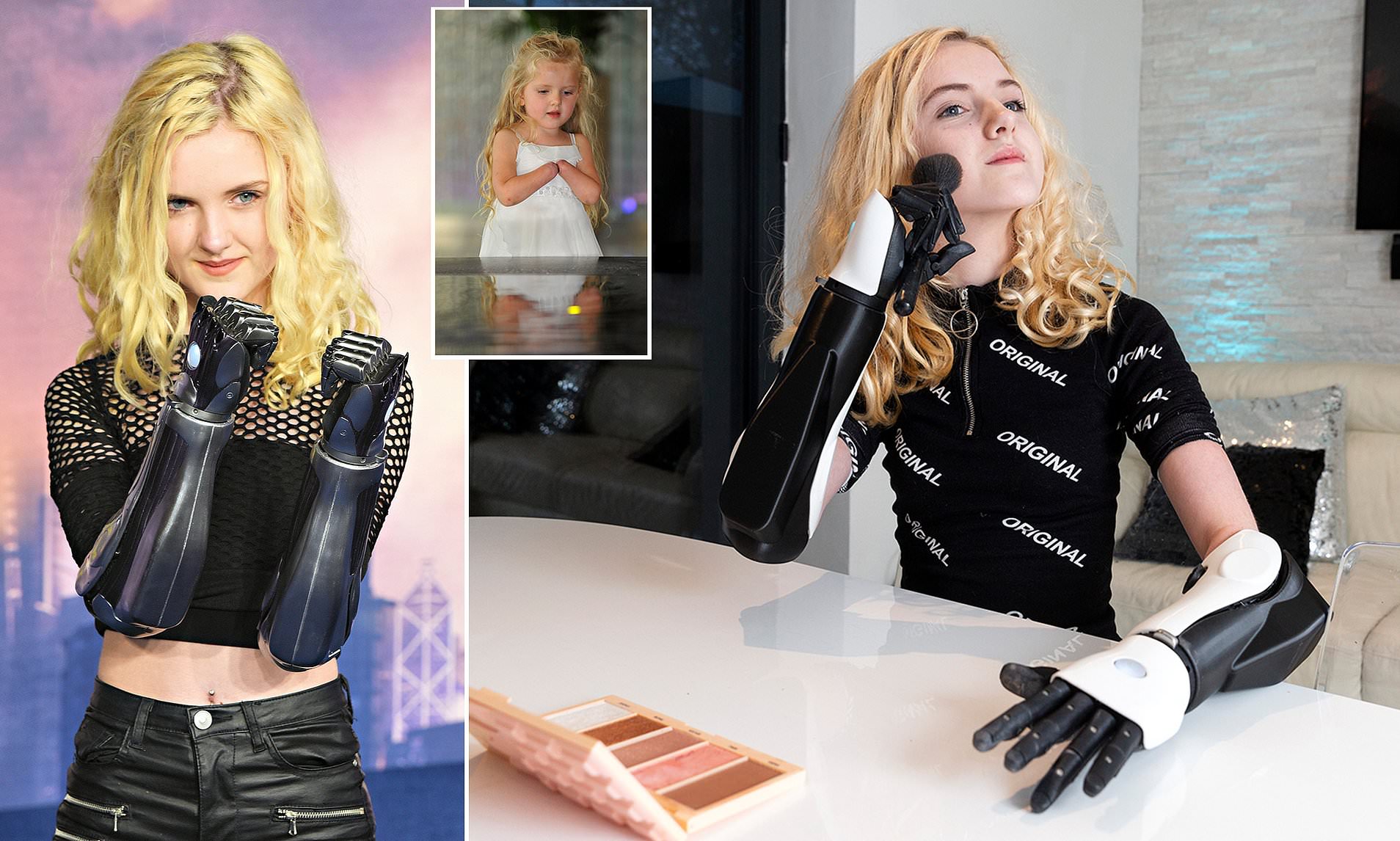
At just 15 months old, British girl Tilly Lockey faced a devastating battle for her life.
She contracted a severe form of meningococcal septicaemia, a life-threatening bacterial infection that caused extensive damage to her body. Doctors had to amputate both of her hands at the wrists, as well as her toes, to save her life. 💔🏥
Against the odds, Tilly survived.
But growing up without hands could have easily become something that defined her childhood.
Instead, Tilly and her family began searching for new possibilities. 🌈💕
Around the age of 10 to 12, she became involved with Open Bionics, a Bristol-based company developing affordable, 3D-printed myoelectric prosthetic arms known as Hero Arms.
The technology gave Tilly something extraordinary: the ability to control prosthetic hands using electrical signals from the muscles in her residual limbs. 🦾✨
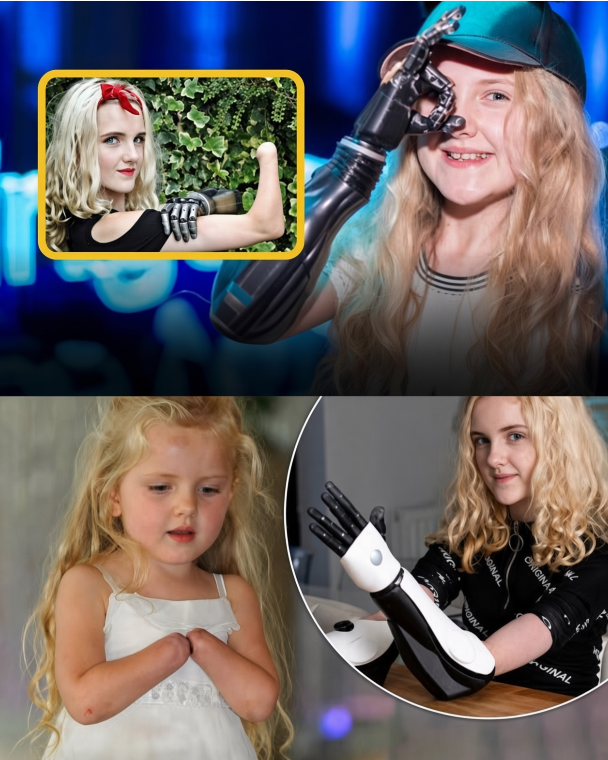
She became one of the early users of the technology and went on to test newer generations of the prostheses.
But Tilly wasn’t simply wearing the devices.
She was helping shape their future. 💙
Her real-world experience provided valuable feedback that contributed to design improvements, including features designed to make the arms easier and more natural to use.
In 2019, she even received a spectacular pair of Hero Arms inspired by Alita: Battle Angel, created through a partnership involving filmmaker James Cameron. 🎬🦾✨
Since then, Tilly has continued exploring increasingly advanced bionic technology, including newer prototypes designed to offer greater strength, speed, movement and functionality.
Her journey has taken her far beyond prosthetics.
Today, Tilly is a model, motivational speaker, social-media personality and advocate for disability inclusion and accessible technology. 💕🌍
She has appeared on television, created content about her experiences and used her platform to challenge the way society thinks about disability.
Rather than seeing prosthetic technology simply as something that replaces what was lost, Tilly has helped show that it can also become a tool for creativity, independence and self-expression. 🌈🦾
Her story is especially powerful because she didn’t allow a devastating illness from infancy to determine what her future would look like.
She turned an unimaginable beginning into an opportunity to help inspire technological innovation.
And along the way, she became a role model for countless people living with limb differences. 💙✨
Tilly lost both of her hands before she was even old enough to understand what had happened. But she grew up to show the world that losing something doesn’t mean losing your dreams.
Sometimes, technology can open a door.
Sometimes, courage gives you the strength to walk through it.
And sometimes, one person’s determination can help make the future more accessible for everyone. 🦾💗🌈
Tilly Lockey’s story isn’t about what she lost. It’s about everything she has gone on to build, inspire and achieve. ✨💙
The linked article reports Tilly’s meningococcal septicaemia, bilateral hand amputations, involvement with Open Bionics and her continuing advocacy for bionic technology and disability inclusion.