💔 **Daniel, 13 Years Old – Facing Progressive Adolescent Kyphosis and a Severe Upper Back Deformity** 💔
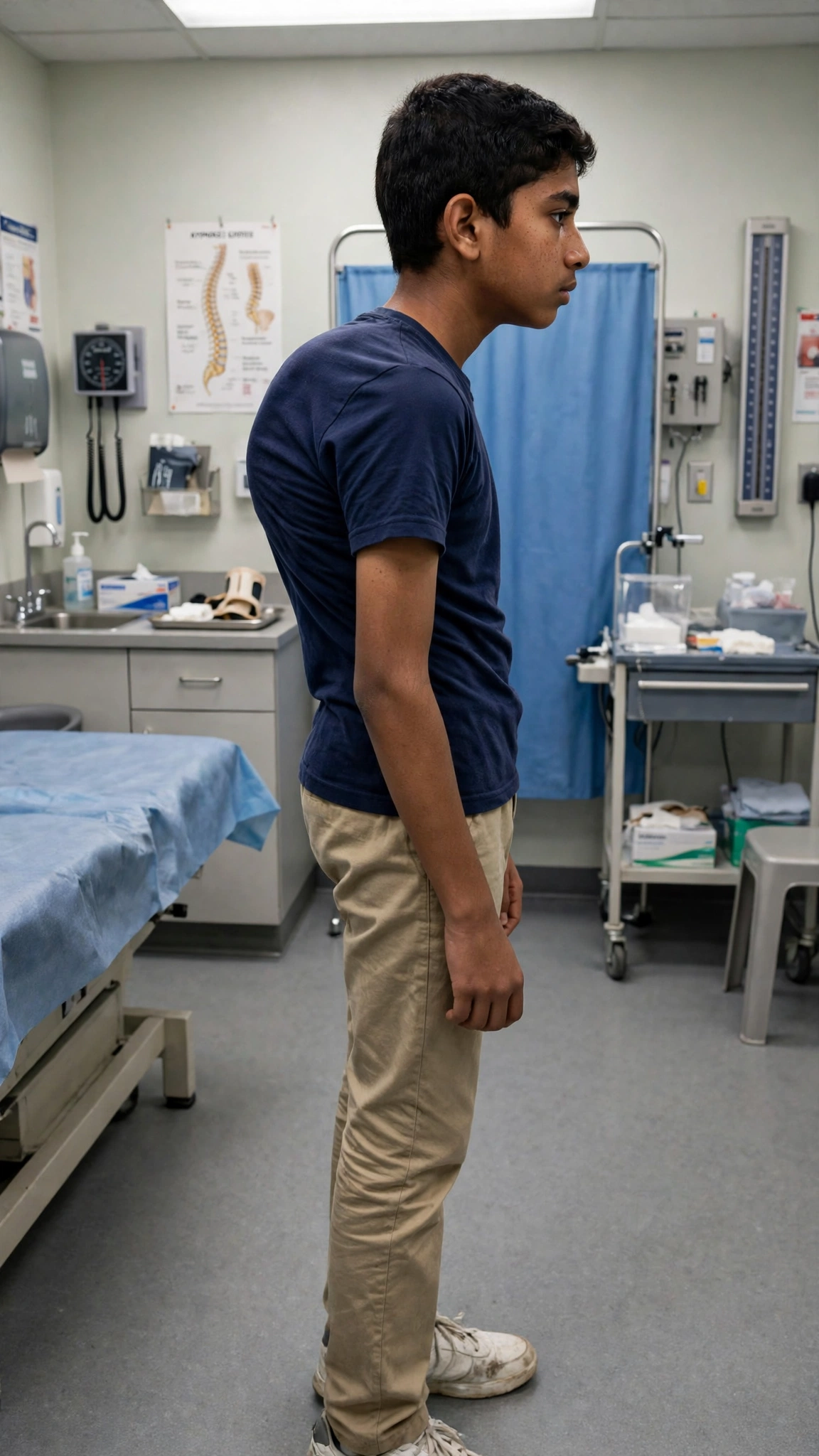
Daniel is a 13-year-old boy who has been experiencing increasingly noticeable changes in the shape of his spine. Over time, his upper back has gradually developed an excessive forward curve, making it difficult for him to maintain a naturally upright posture. What initially appeared to be a slightly rounded back has become a much more visible spinal deformity. 😢
When Daniel stands, his head naturally projects forward instead of remaining aligned with his shoulders. Both shoulders appear rounded and tilted toward the front, while his chest seems slightly compressed. His upper back forms a prominent outward curve, creating a hunched appearance that is particularly noticeable when viewed from the side.
The curvature is concentrated in the thoracic region of his spine. Rather than maintaining its normal gentle shape, this section bends excessively backward, causing Daniel’s upper body to lean forward. His posture looks noticeably different from that of other teenagers his age. Even when he tries to straighten his back, maintaining that position can be uncomfortable and physically exhausting. 💔
The condition has also begun affecting his everyday activities. Daniel frequently experiences aching and fatigue around his upper and middle back, especially after sitting through long school lessons, walking for extended periods, or participating in physical activities. Sometimes, the discomfort makes it difficult for him to concentrate on his schoolwork or remain comfortable in one position.
His rounded shoulders and forward head posture also affect the appearance of his chest and upper body. Daniel has become increasingly aware of these changes, particularly when standing beside his classmates. He sometimes feels embarrᴀssed about his posture and worries that other people may notice the unusual shape of his back. At an age when confidence and social relationships are especially important, these changes can be emotionally difficult. 🥺
After examining Daniel, doctors suspect that he may have **adolescent kyphosis ᴀssociated with Scheuermann’s disease**. This condition can develop during adolescence when several vertebrae grow into a wedge-like shape rather than maintaining their normal rectangular structure. As a result, the thoracic spine develops an excessive forward-rounding curve.
To confirm the diagnosis, Daniel needs standing spinal X-rays to measure the degree of curvature and examine the shape of his vertebrae. Doctors may also ᴀssess his skeletal maturity, remaining growth potential, spinal flexibility, and whether the deformity is continuing to progress.
His treatment will depend on the severity of the curvature, the amount of growth remaining, and the level of discomfort. For some adolescents, regular monitoring and physical therapy may help maintain flexibility, strengthen supporting muscles, and improve posture. If the curvature is more pronounced and Daniel is still growing, a specialized spinal brace may be recommended to help limit further progression. In particularly severe cases, surgical treatment may be considered.
His family understands that regular specialist appointments are essential because Daniel’s spine is still developing. Their greatest hope is to prevent the deformity from worsening and help him maintain a healthy, active life. 🙏
Behind his unusual posture is simply a 13-year-old boy who wants to attend school, spend time with friends, play sports, and enjoy his teenage years without worrying about his appearance or constant back discomfort.
Daniel deserves patience, understanding, and access to the medical care he needs. His spinal condition should never determine how others see him or how he sees himself. With appropriate treatment and support from his family, he deserves every opportunity to build a confident and healthy future. 🌷
❤️ May Daniel receive the best medical care, find relief from his discomfort, and grow stronger with every pᴀssing day. Wishing Daniel and all children facing serious medical conditions good health, courage, happiness, and a brighter future filled with love! ❤️