Willapa Whale – Final Update: Experts Confirm Tragic Outcome as Gray Whale Decomposes in River
Willapa Whale – Final Update: Experts Confirm Tragic Outcome as Gray Whale Decomposes in River
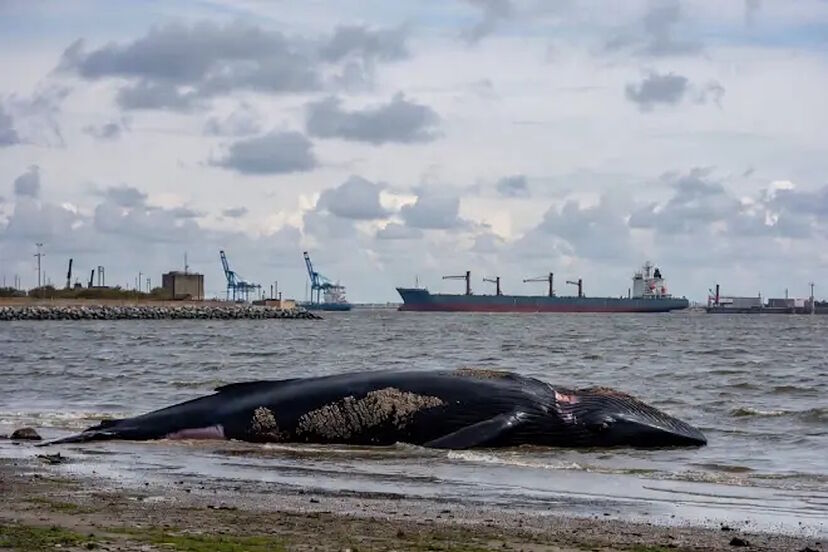
Willapa River, Washington – April 2026 – After weeks of uncertainty and expert assessments, the fate of the gray whale discovered in the Willapa River has been confirmed, and sadly, the outcome is not as hopeful as many had hoped. Experts from Cascadia Research, with support from the Chinook and Shoalwater Bay Tribes, have completed a thorough examination of the whale, and the findings paint a grim picture of the animal’s final journey.
Discovered on April 6, the whale was found in poor health, showing significant signs of malnutrition and internal injuries, likely caused by entanglement in woody debris. These injuries, combined with the animal’s weakened state, made any intervention unlikely to succeed. The whale’s size, initially estimated to be smaller, was found to be nearly the size of an adult, suggesting that it had wandered into the river already in a compromised condition.
Cascadia Research, alongside tribal representatives, collected genetic samples to confirm the whale’s sex, but the most devastating news was that the animal could not be safely removed from the river. Due to the whale’s physical condition and the difficulty of safely relocating such a large marine mammal, experts have decided that the best course of action is to allow the whale to decompose naturally within the river. This decision reflects a respect for the natural process and an understanding that further intervention would only cause unnecessary stress without altering the inevitable outcome.
The whale’s decomposition in the river will allow the ecosystem to take its course, with the remains providing nutrients for the river’s wildlife. As a part of the recovery process, later on, the Chinook and Shoalwater Bay Tribes will collect the bones for cultural purposes, honoring the whale in a traditional manner that respects both the animal and the tribe’s customs.
Despite the heartbreaking conclusion, the experts stress that the whale’s presence in the river was likely due to its already weakened state, and such strandings rarely end in a successful rescue. Redirecting such animals is a complex task, and any attempts would have only added more stress to the whale without changing the outcome.
This whale’s journey is a tragic reminder of the challenges marine mammals face in their migration, the hazards they encounter, and the delicate balance between human intervention and nature. The Willapa whale, a giant that wandered too far from its ocean home, has now become part of the river’s natural cycle — a quiet final chapter in a story that will live on in the hearts of those who tried to help.