Timmy’s Last Hope: The High-Stakes Rescue of a Stranded Humpback Whale
Timmy’s Last Hope: The High-Stakes Rescue of a Stranded Humpback Whale
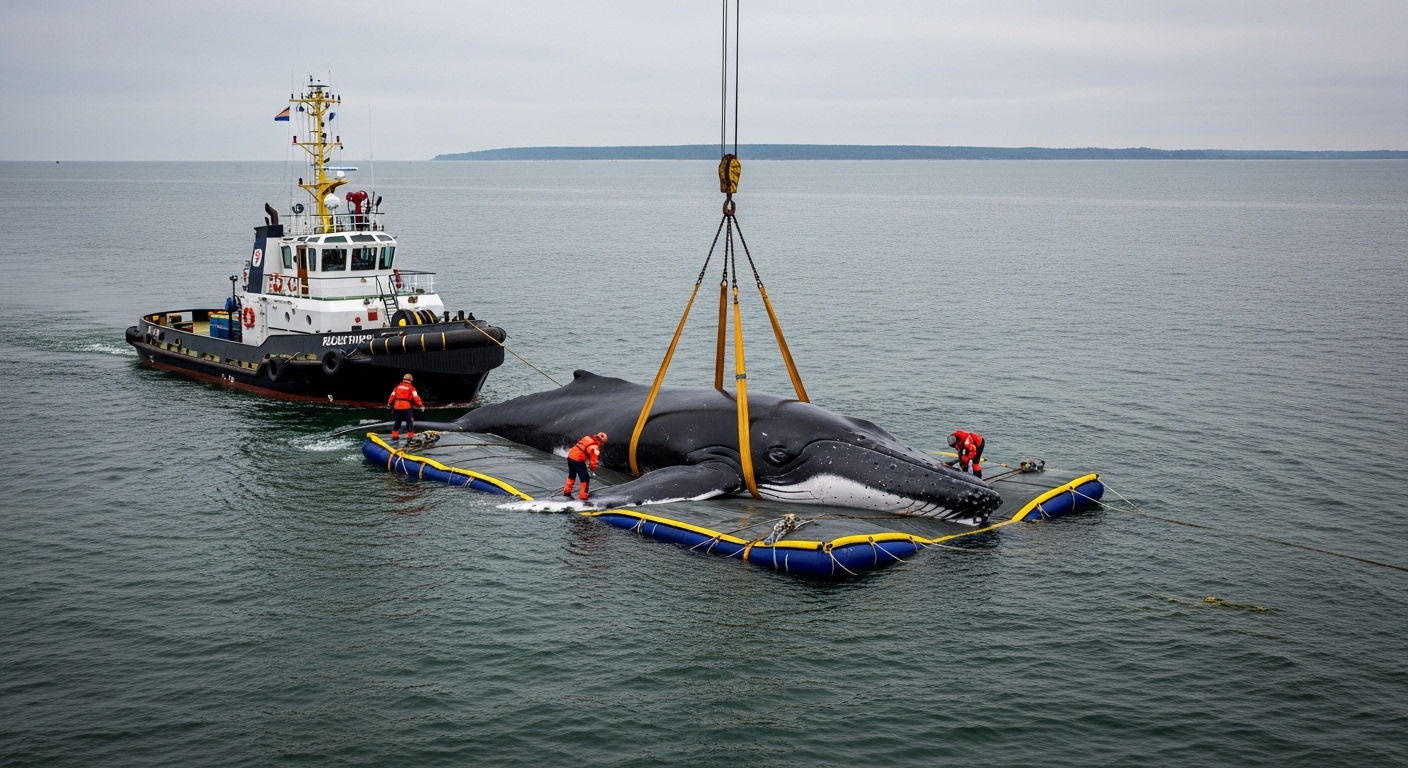
A dramatic and heart-pounding rescue operation is underway off the coast of Wismar, Germany, where a 30-ton humpback whale named Timmy has become stranded in dangerously shallow waters. The creature, measuring an impressive 13.5 meters in length, is in critical condition, and the clock is ticking for his survival. Rescuers are pulling out all the stops, deploying a never-before-seen technique involving massive airbags to lift Timmy from his perilous position and guide him back to safety in the open ocean.
The Situation: A Life-Threatening Stranding
Timmy’s saga began when he strayed too close to shore and became stuck in shallow waters. This situation is particularly dangerous for marine mammals of Timmy’s size. Without the buoyancy of the ocean to support his weight, the whale is at risk of severe internal injuries, as his massive body presses down on his own organs. The strain of this weight, combined with the lack of water support, makes survival extremely unlikely without intervention.
Marine experts emphasize that stranded whales face the grave danger of suffering internal damage, as their organs can be crushed under their own body weight when trapped in shallow waters. The longer Timmy remains stranded, the less chance he has to survive. In fact, time is his most significant enemy in this battle for life.
The Innovative Rescue: Airbags to the Rescue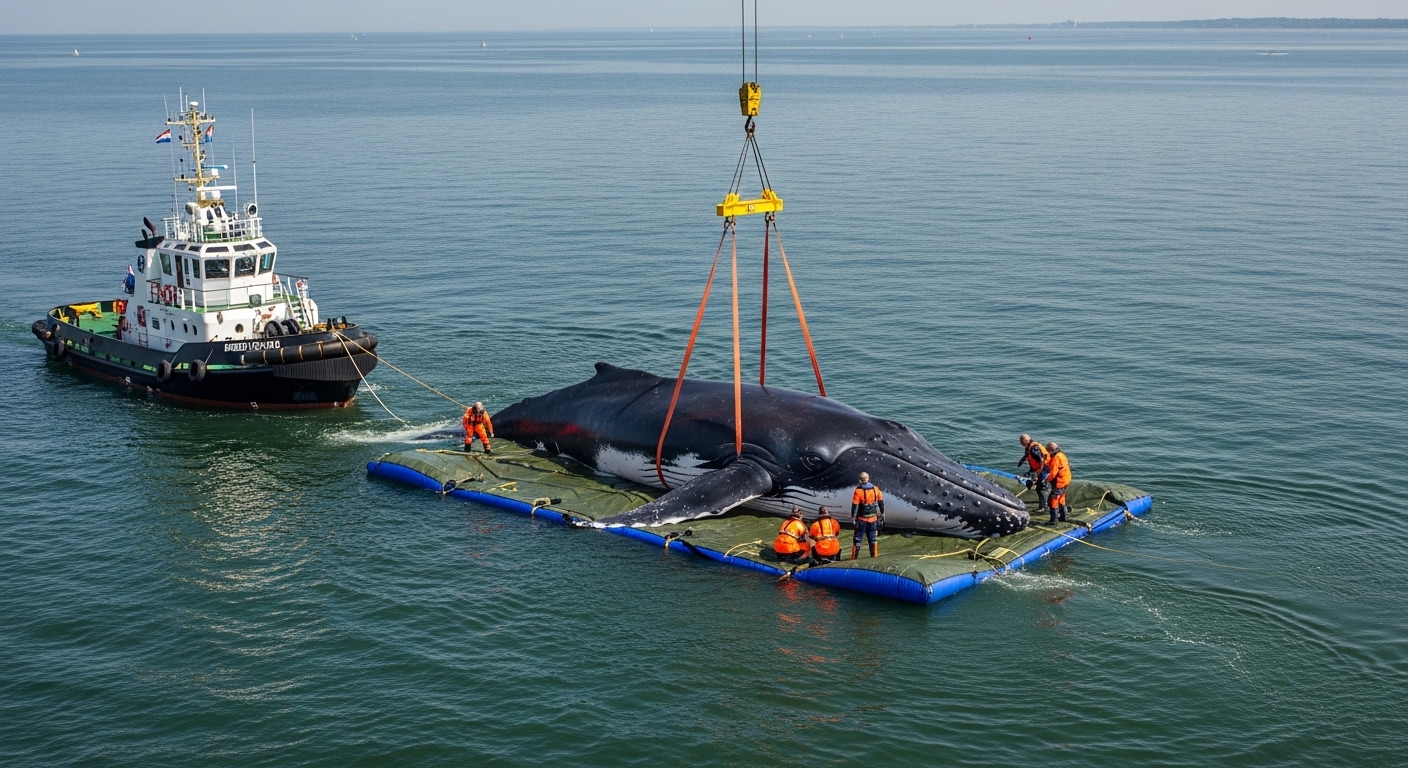
In a race against time, a team of marine biologists, engineers, and animal welfare experts is attempting an innovative rescue mission. Using industrial-sized inflatable airbags, the team hopes to lift Timmy from the seafloor, redistribute his weight, and give him the buoyancy necessary to float again. This is a groundbreaking technique, one that has never been tested on a whale of Timmy’s size.
The idea behind the airbags is to gently lift the whale, using a pressure redistribution method that aims to avoid further harm to Timmy. These massive airbags will slowly raise him off the shallow seabed, and once he is lifted, specialized pontoons will be used to guide Timmy back into deeper waters, where he can be towed toward the North Sea and, eventually, the open Atlantic Ocean.
The use of airbags to rescue a stranded whale is cutting-edge, and if successful, this technique could become a crucial tool for future whale rescue operations. It provides a more humane alternative to traditional methods, which often involve cranes or excavators that can cause further injury to the whale. However, the challenges remain immense — from the complexity of lifting a massive animal to the coordination of the delicate and time-sensitive process.
The Risks: A Race Against Time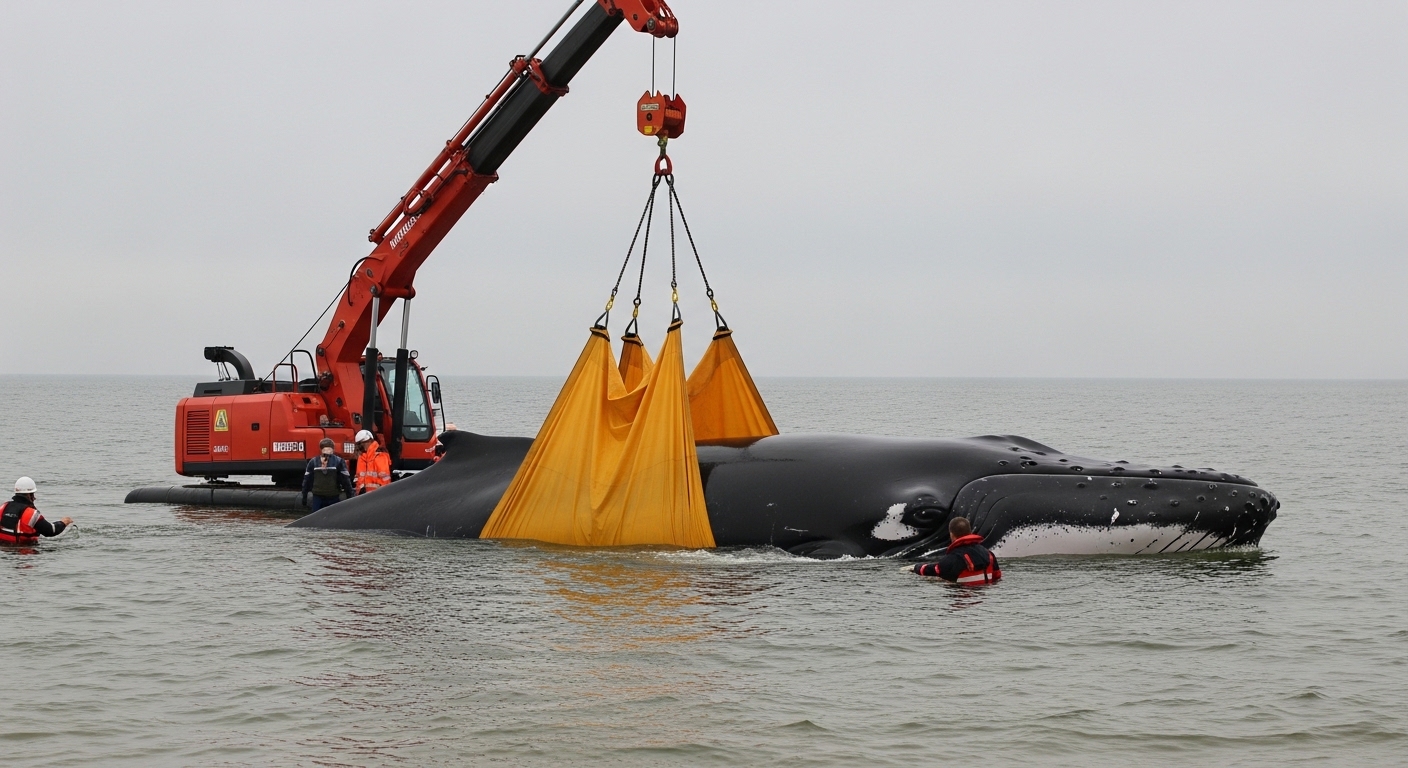
The rescue team faces significant risks. The airbag technique is untested on such a large scale, and experts are cautious. The whale’s body, under such extreme stress, may already have sustained internal injuries. Dehydration, the lack of food, and the constant pressure of being trapped for so long have already taken their toll on Timmy’s condition. If the operation fails, Timmy could be subjected to even more harm, prolonging his suffering or even leading to death.
Rescue teams are well aware of the emotional and physical toll this operation is taking on Timmy. They are working swiftly and with precision, knowing that the longer they wait, the less chance the whale has of survival. It’s a tense and emotional situation, with every minute counting. If the airbags fail to lift Timmy, it could be the end of his journey.
The Team’s Determination: Hope and Innovation in Action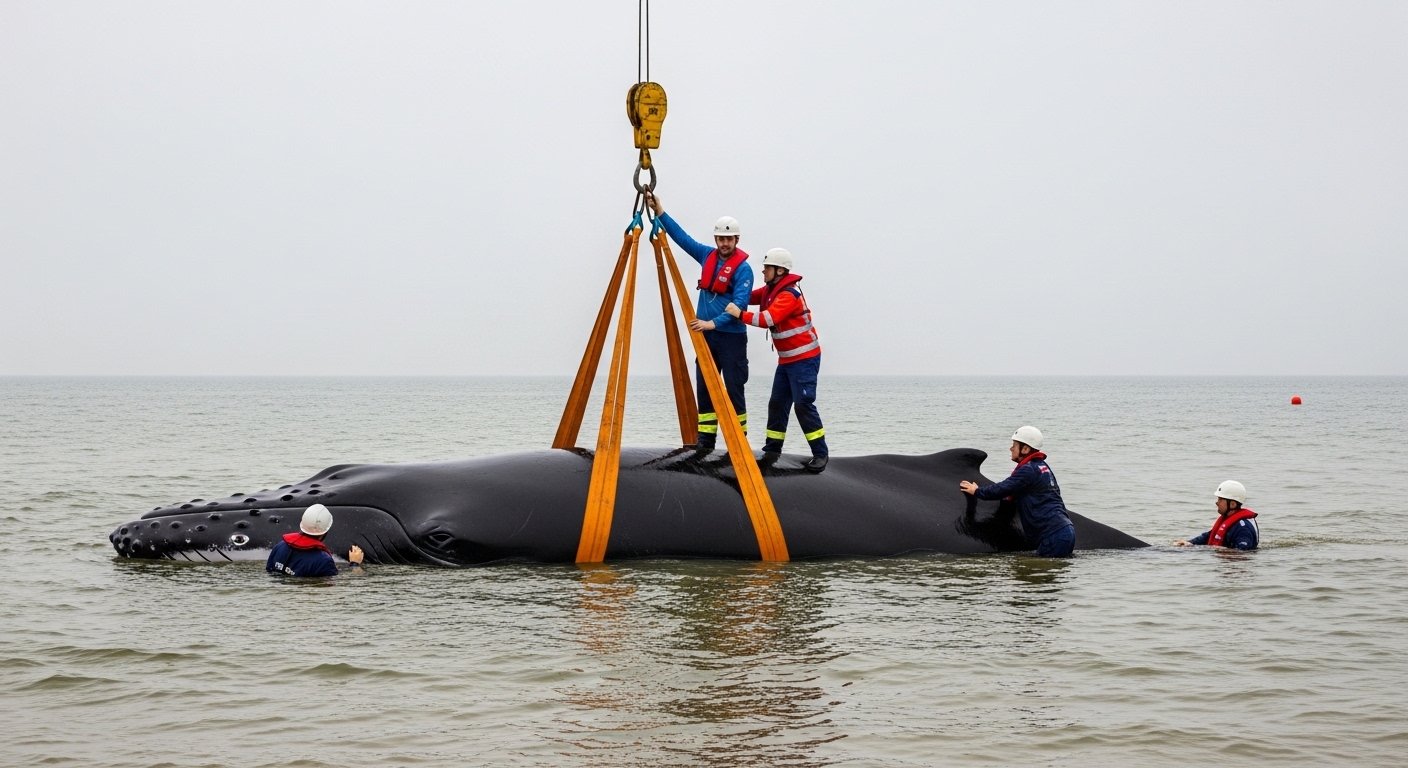
Despite the enormous risks, the team is committed to giving Timmy a chance. The airbag method could provide a breakthrough in marine mammal rescue, offering a way to save whales in distress without causing further trauma. If successful, it could open the door for similar rescue operations across the world, potentially saving the lives of stranded marine creatures in the future.
The team consists of highly skilled marine biologists, engineers, and rescue specialists who have dedicated their careers to protecting ocean life. Their expertise is matched only by their determination to save Timmy. In addition to using the airbags, the team is carefully monitoring Timmy’s vital signs, ensuring that the procedure is done with minimal stress and maximum care.
While the outcome is uncertain, there is hope that this innovative operation will succeed. As millions of people around the world watch, the mission to save Timmy is about more than just rescuing a whale — it’s a symbol of human ingenuity, compassion, and the lengths to which people will go to protect the ocean’s most incredible creatures.
What’s Next: Timmy’s Future
The coming hours will be critical. As the rescue operation unfolds, the world will be watching to see whether this bold new method succeeds in saving Timmy. If successful, the whale could be gently guided back to the deep waters of the North Sea, where he will once again be free to roam the vast oceans. But if the airbags fail, or if Timmy’s condition proves too critical, it could be the end of this incredible animal’s life.
The ocean is waiting for Timmy to return home, but it’s a race against time. Will the innovative airbag technique succeed? Or will time, and the power of the sea, decide his fate? Only time will tell, but one thing is certain — the next few hours will be pivotal in determining the outcome of this high-stakes rescue.