All of Europe is Watching: Plan to Pull 30-Ton Whale Timmy Out of Shallow-Water Suffocation Trap
All of Europe is Watching: Plan to Pull 30-Ton Whale Timmy Out of Shallow-Water Suffocation Trap
A rescue mission like no other is taking place off the coast of Wismar, Germany, as a 30-ton humpback whale, known as Timmy, is caught in a life-threatening situation. Trapped in shallow waters for nearly two weeks, Timmy is in a race against time to avoid suffocation and a slow, agonizing death. With the world watching, marine biologists, conservationists, and specialized rescue teams are coming together in a bold and unprecedented effort to save the stranded whale.
A Dire Situation
Timmy, a 13.5-meter humpback whale, was found stranded in a shallow inlet, with its massive body unable to reach deeper waters where it can breathe and survive. The situation is dire: whales, especially such large species, need constant movement and deep water to thrive. When stranded, they are at risk of suffocation as the pressure on their lungs and airways increases. Without immediate intervention, this enormous creature faces a high chance of fatality.
The whale’s condition is already fragile. Days of exposure to the sun, combined with the inability to move, have caused exhaustion, dehydration, and extreme stress. It is crucial that the rescue team act quickly, or Timmy could lose the fight for survival.
The Unprecedented Rescue Plan
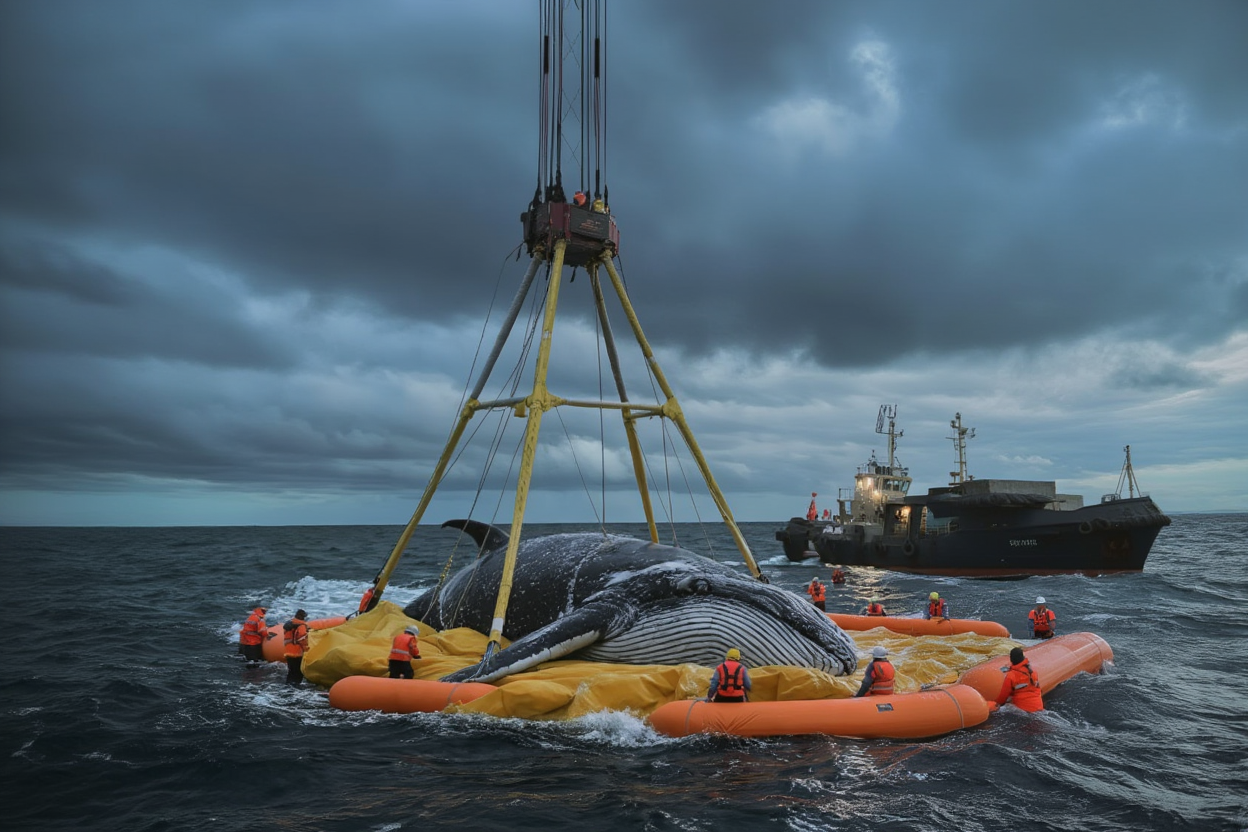
In what can only be described as an operation of immense scale and innovation, a team of marine rescue experts is utilizing industrial-sized airbags to lift Timmy from the shallow waters. These airbags, used in heavy-duty construction and heavy lifting, are the key to safely moving the whale without causing further harm. The challenge is not just the whale’s immense size but the complexity of moving it in an environment full of obstacles like rocks and shifting tides.
The method involves carefully sliding these massive airbags beneath Timmy’s body. As the airbags are inflated, they will gently lift the whale into a stable position, giving the rescue team the ability to tow it out of the shallow zone and into deeper water. The entire operation requires perfect coordination, as a misstep could result in further injury to the whale.
A Race Against Time
The clock is ticking, and the pressure is mounting. Every minute spent stranded in shallow water increases the risk of irreversible damage to Timmy’s internal organs. The rescue teams, armed with cutting-edge technology and expert knowledge, are working tirelessly to execute the plan and bring the whale to safety.
To add to the complexity, the weather is unpredictable, with heavy winds and occasional storms making the rescue even more dangerous. The team must also monitor Timmy’s health throughout the operation, ensuring that stress or physical damage does not compromise the whale’s ability to survive the rescue and make its return to the ocean.
A Global Focus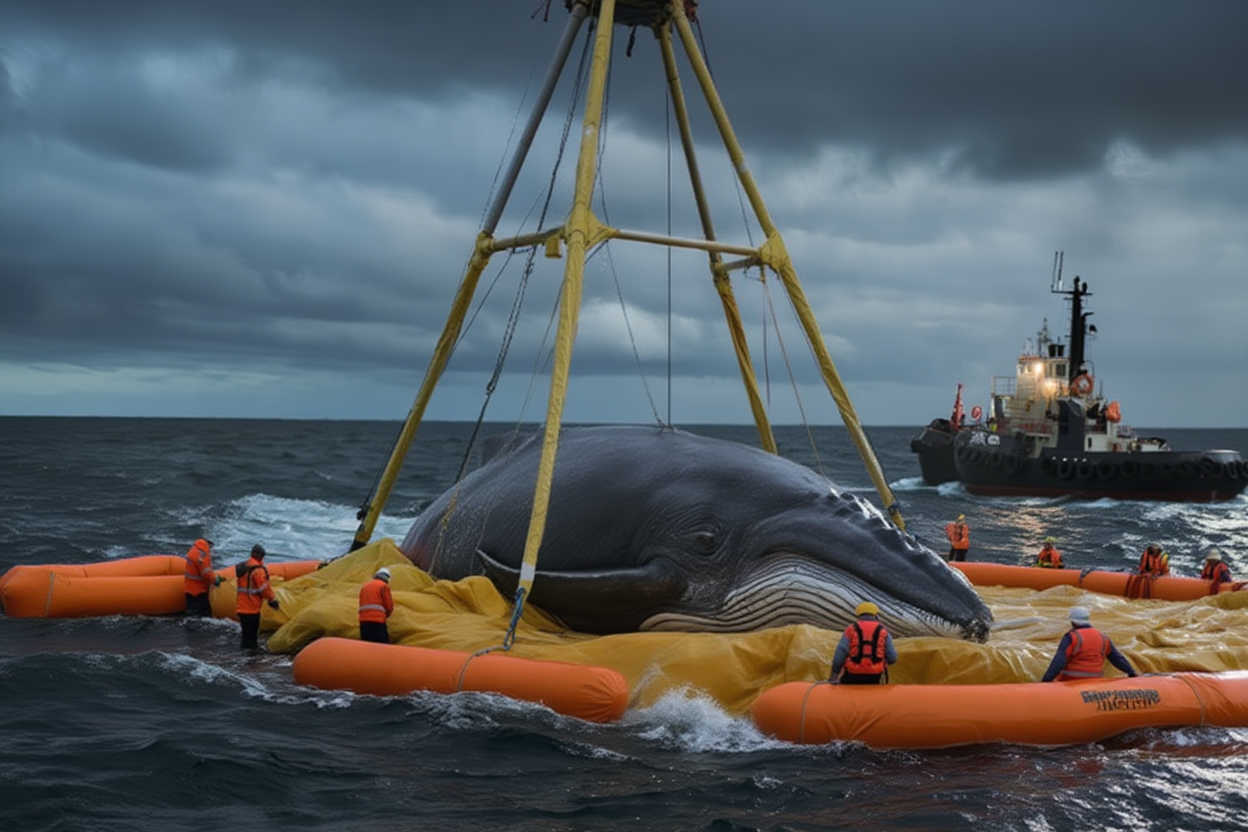
As this historic rescue unfolds, the eyes of the world are on Timmy and the team working to save it. From environmentalists to animal lovers, people from all corners of Europe—and beyond—are waiting for the outcome. Social media is buzzing with updates, and the dramatic nature of the rescue has captured the attention of millions. There is a universal hope that this operation will succeed, offering a glimmer of hope for the future of marine conservation.
A Larger Conservation Challenge
Timmy’s struggle is not just an isolated event. It’s a stark reminder of the larger issues facing marine life today. Habitat destruction, pollution, and climate change all contribute to the increasing number of stranded marine animals. While this rescue operation is a moment of triumph, it also serves as a call to action for stronger conservation efforts and better protection of the oceans.
Timmy’s rescue, if successful, will not only save the life of one of the ocean’s giants but will also serve as a pioneering example for future whale rescue missions. It’s a testament to human ingenuity, compassion, and the relentless desire to protect the wonders of the natural world.