The second failure in four months, and the governor who has now paused the chamber twice

Tennessee did not arrive at Christa Pike’s gurney without warning. In May 2026 the state tried to execute Tony Von Carruthers and could not. Staff placed a primary line and then spent roughly an hour and a half failing to establish the required backup, including an attempt to thread a central line. No drug was administered. Governor Bill Lee issued a reprieve. Pike’s lawyers spent the summer telling judges that she was the next version of that problem: small veins, a blood disorder, prior failed blood draws, a request for a smaller needle that the state refused. They also attacked the drug itself, arguing the pentobarbital supply could be degraded and that the protocol kept the testing, the sourcing, and the training of the team behind a wall of secrecy. On September 30 the state went ahead anyway. This time the lines were declared in, the drug was pushed twice, and the person lived.

Lee, a Republican, called the night deeply disturbing. He said corrections officials appeared to have followed the written protocol, then ordered a thorough, comprehensive, independent review and canceled Sutton’s December 3 date. It is the second such freeze of his governorship. In 2022 he stopped executions after learning the department had not tested lethal drugs for toxins that could cause respiratory failure. The outside review that followed, led by a former United States attorney, found chronic oversights and a department that was not following its own rules. The state answered by dropping the three-drug sequence for pentobarbital alone and restarting executions in 2025. Two failures in four months of 2026 are the test of that answer.

The Department of Correction’s position is that the chemical has been effective and that the team did what the protocol allows and nothing more. Defense lawyers say that is the indictment, not the defense. A protocol that cannot explain a living prisoner, that bars emergency care inside the chamber, and that hides the condition of the drug is not a safeguard. Laura Porter, a death-penalty opponent, said the state had shown it cannot be trusted to carry out capital punishment in a way that preserves dignity and the rule of law. Scholars put the Pike case in a longer pattern. Lethal injection’s recorded botch rate is about twice that of other modern methods, largely because it borrows the precision of medicine without the training. Failures usually look like Carruthers: no vein, no drug, a reprieve. Pike looks like the rare case in which the state believes the drug moved and the prisoner did not die. The closest historical rhyme is Willie Francis, who survived Louisiana’s electric chair in 1946 and was executed on a second attempt. Sarat’s point is that Pike’s survival after the drugs were administered puts her in territory the modern lethal-injection era has not occupied.
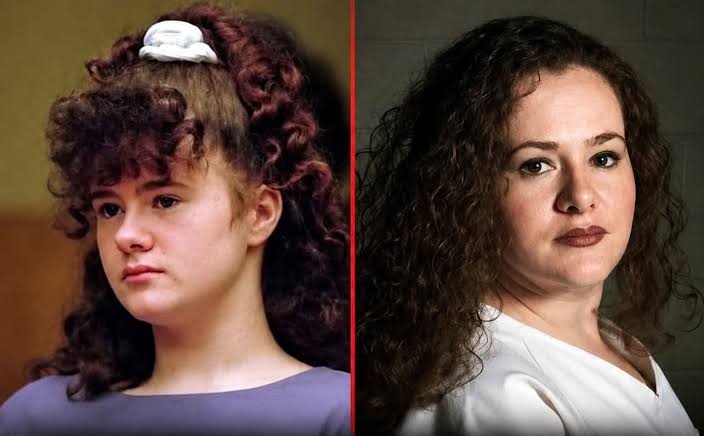
Lee’s review will have to decide whether the fault was a vein that blew, a catheter that slipped, a drug that was not what the paperwork said, a team that was not trained to notice, or a protocol that ends at the second syringe. Until that report exists, the practical result is simpler. Tennessee has no execution on the calendar for the rest of 2026, one woman in critical condition in a Nashville hospital, and a second man whose December date is gone because the state could not explain the first night.
Source: New York Post