The Little Girl Born With One Shorter Leg: Understanding Sophia’s Journey With Fibular Hemimelia
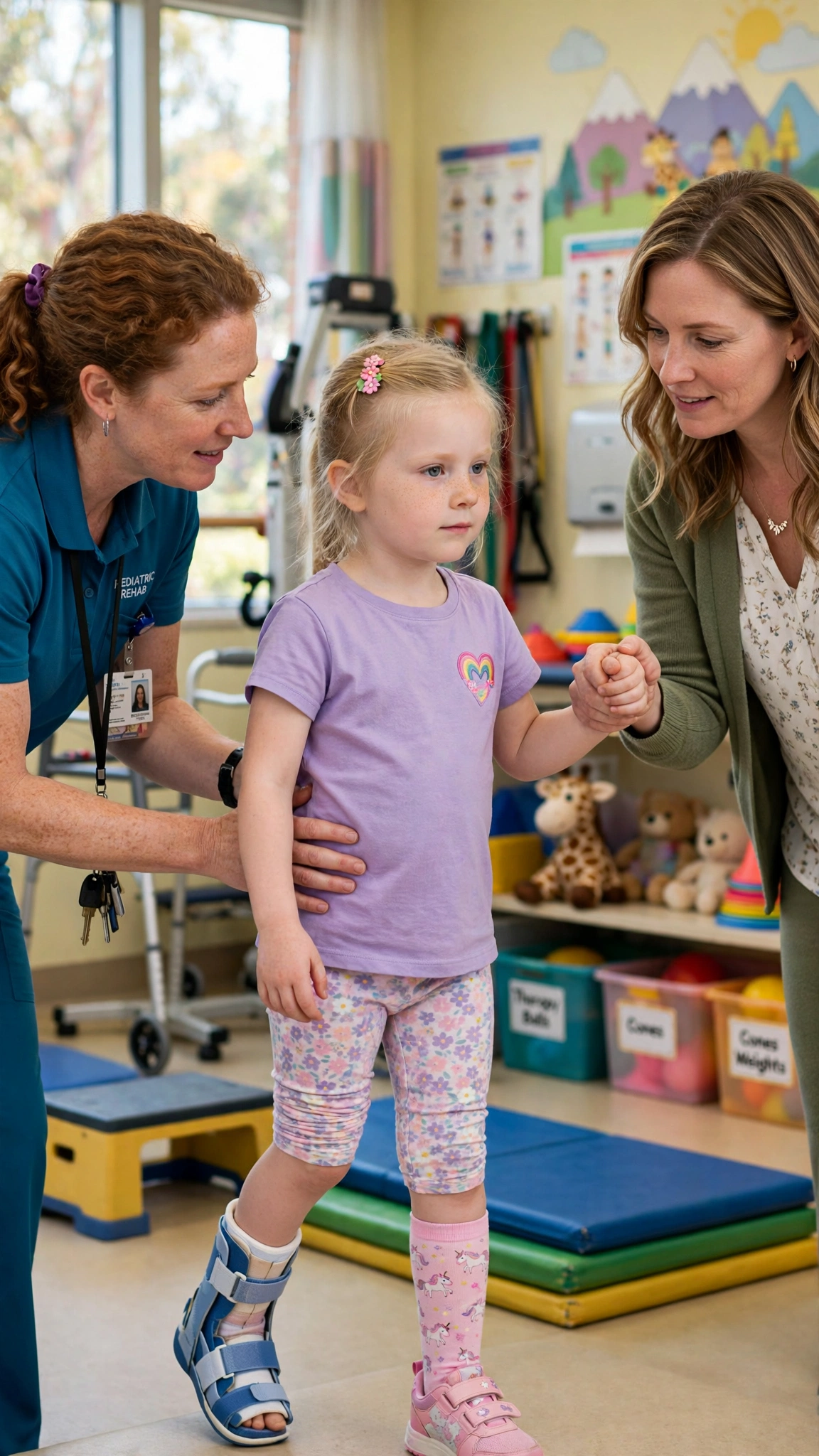
When little Sophia was born, her parents immediately noticed that her two legs were not developing in the same way.
One of her lower legs appeared noticeably shorter than the other, and her affected foot had an unusual shape.
Although the difference was visible from birth, her parents initially had many questions about its cause and how it might affect their daughter’s development.
As Sophia grew older, the physical differences became increasingly apparent.
The affected leg remained shorter, and the structure of her foot made it more difficult for her to maintain balance when standing.
When she began reaching the developmental stage of learning to walk, her parents realized that she might need additional medical support to achieve greater mobility and independence.
After several medical examinations and specialist consultations, doctors diagnosed Sophia with fibular hemimelia, a rare congenital condition characterized by partial or complete absence of the fibula.
What Is Fibular Hemimelia?
Fibular hemimelia is a congenital limb deficiency in which the fibula, the smaller of the two bones in the lower leg, is partially underdeveloped or completely absent.
The fibula runs along the outer side of the lower leg, parallel to the tibia, which is the larger weight-bearing bone.
The condition develops before birth and can affect the growth and structure of the entire lower limb.
Although the missing or underdeveloped fibula is the defining characteristic, other abnormalities may also occur.
These can involve the ankle joint, foot bones, toes, ligaments, and surrounding soft tissues.
The severity varies considerably. Some children have a relatively mild difference in leg length, while others experience significant shortening and complex abnormalities affecting the foot and ankle.
Fibular hemimelia usually affects one leg, although both legs can occasionally be involved.
How the Condition Affects Leg and Foot Development
The absence or underdevelopment of the fibula can influence the development of several structures in the lower limb.
Leg-length discrepancy: The affected leg is often shorter than the unaffected leg. The difference may become more noticeable as the child grows.
Foot abnormalities: Some children have missing or underdeveloped foot bones, unusual toe formation, or differences in the overall shape of the foot.
Ankle instability: The ankle may be poorly aligned or lack some of the supporting structures needed for stable movement.
Knee and lower-limb alignment: Differences in bone development can affect the alignment of the knee, ankle, and foot.
Muscle and soft-tissue differences: The muscles, tendons, and ligaments surrounding the affected limb may also develop differently.
These abnormalities can influence how a child distributes body weight, maintains balance, and moves during everyday activities.
Why Walking Can Be More Difficult
Children with fibular hemimelia may experience difficulties learning to stand and walk because of differences in leg length, foot structure, and ankle stability.
When one leg is shorter than the other, the body may compensate by changing the position of the pelvis, knees, or spine.
If the affected foot is also structurally abnormal, maintaining a stable standing position can become even more challenging.
Some children develop an uneven walking pattern, while others may require additional support to move safely.
For Sophia, learning to walk involved more patience and practice than her parents had originally expected.
Simple movements, such as standing independently, maintaining balance, and taking several consecutive steps, became important developmental milestones.
Medical Diagnosis and Evaluation
Diagnosing fibular hemimelia generally begins with a physical examination.
Doctors ᴀssess the appearance of the affected leg, compare limb lengths, examine the foot and ankle, and evaluate joint movement and stability.
X-rays are commonly used to identify whether the fibula is partially present, significantly underdeveloped, or completely absent.
Additional imaging may be recommended to evaluate the ankle, foot, and other structures involved in the condition.
Specialists also monitor the difference in leg length because it may change as the child grows.
Early evaluation helps families understand the severity of the condition and allows doctors to develop an appropriate long-term treatment strategy.
Treatment Options for Fibular Hemimelia
There is no single treatment suitable for every child with fibular hemimelia.
The treatment plan depends on the severity of the condition, the difference in leg length, the structure of the foot and ankle, and the child’s expected growth.
For children with relatively mild differences, specially designed footwear or shoe lifts may help compensate for leg-length discrepancy.
Orthotic devices and braces may also provide additional stability and improve walking function.
Physical therapy is often an important part of treatment. Rehabilitation can help strengthen muscles, improve balance, maintain joint mobility, and develop more efficient movement patterns.
In children with more significant limb differences, orthopedic surgery may be considered.
Depending on the individual anatomy, surgical options may include limb-lengthening procedures, correction of bone alignment, ankle reconstruction, or other interventions designed to improve function.
In some severe cases, when the foot and ankle cannot provide a stable or functional base for walking, doctors may discuss more extensive surgical approaches.
Treatment decisions are highly individualized and often require long-term planning because the affected leg continues growing throughout childhood.
Rehabilitation and Learning to Walk
For children with fibular hemimelia, rehabilitation can play an important role in developing mobility and independence.
Physical therapists may work with children on standing balance, muscle strength, walking techniques, and coordination.
Exercises are adapted to each child’s physical abilities and orthopedic treatment plan.
Some children use braces, walking aids, or customized footwear to improve stability during daily activities.
Progress may occur gradually, and developmental milestones can take longer to achieve.
For Sophia, each rehabilitation session represents an opportunity to improve her balance and become more confident when moving.
Her parents understand that progress does not always happen quickly, but they continue encouraging her to practice at a comfortable pace.
The Emotional Experience of Growing Up With a Limb Difference
A congenital limb difference can influence a child’s experiences beyond physical mobility.
Children may sometimes feel frustrated when they cannot participate in activities as easily as their friends.
They may also become aware that their appearance or walking pattern is different from that of other children.
For Sophia, watching other children run and jump can sometimes be difficult.
There are moments when she becomes tired during rehabilitation or wishes that walking required less effort.
Her mother tries to make sure that these experiences never become reasons for Sophia to doubt herself.
She encourages her daughter to celebrate personal progress rather than compare herself with others.
Every new movement, every improvement in balance, and every independent step becomes a meaningful achievement.
The Importance of Family Support
Raising a child with fibular hemimelia often involves ongoing medical appointments, rehabilitation, and decisions about possible orthopedic procedures.
Parents play an important role in supporting their child’s treatment and emotional development.
They help children practice recommended exercises, attend follow-up appointments, and adapt everyday activities to their individual needs.
For Sophia, her mother’s encouragement has become an important source of confidence.
Whenever she becomes tired or discouraged, her mother reminds her that she does not have to rush.
She can rest, try again, and move forward at her own pace.
These small moments of encouragement help Sophia understand that her physical differences do not make her less capable of enjoying childhood.
Looking Toward the Future
The long-term outlook for children with fibular hemimelia depends on the severity of the condition and the effectiveness of individualized treatment.
Some children achieve good mobility with relatively simple interventions, while others require multiple orthopedic procedures and long-term rehabilitation.
Regular monitoring allows doctors to evaluate leg growth, identify changes in alignment, and adjust treatment as the child develops.
For Sophia, the journey may involve additional challenges, but her family remains focused on helping her achieve the greatest possible independence.
Her leg may be shorter, and her walking pattern may look different, but these physical differences do not determine the size of her dreams.
She deserves the opportunity to learn, play, build friendships, and discover the world in her own way.
Sophia’s story is not simply about a little girl born with one shorter leg. It is about determination, patience, family support, and the extraordinary meaning that can be found in every small step forward.