The Little Boy Who Saw the World Differently: Noah’s Life with Crouzon Syndrome
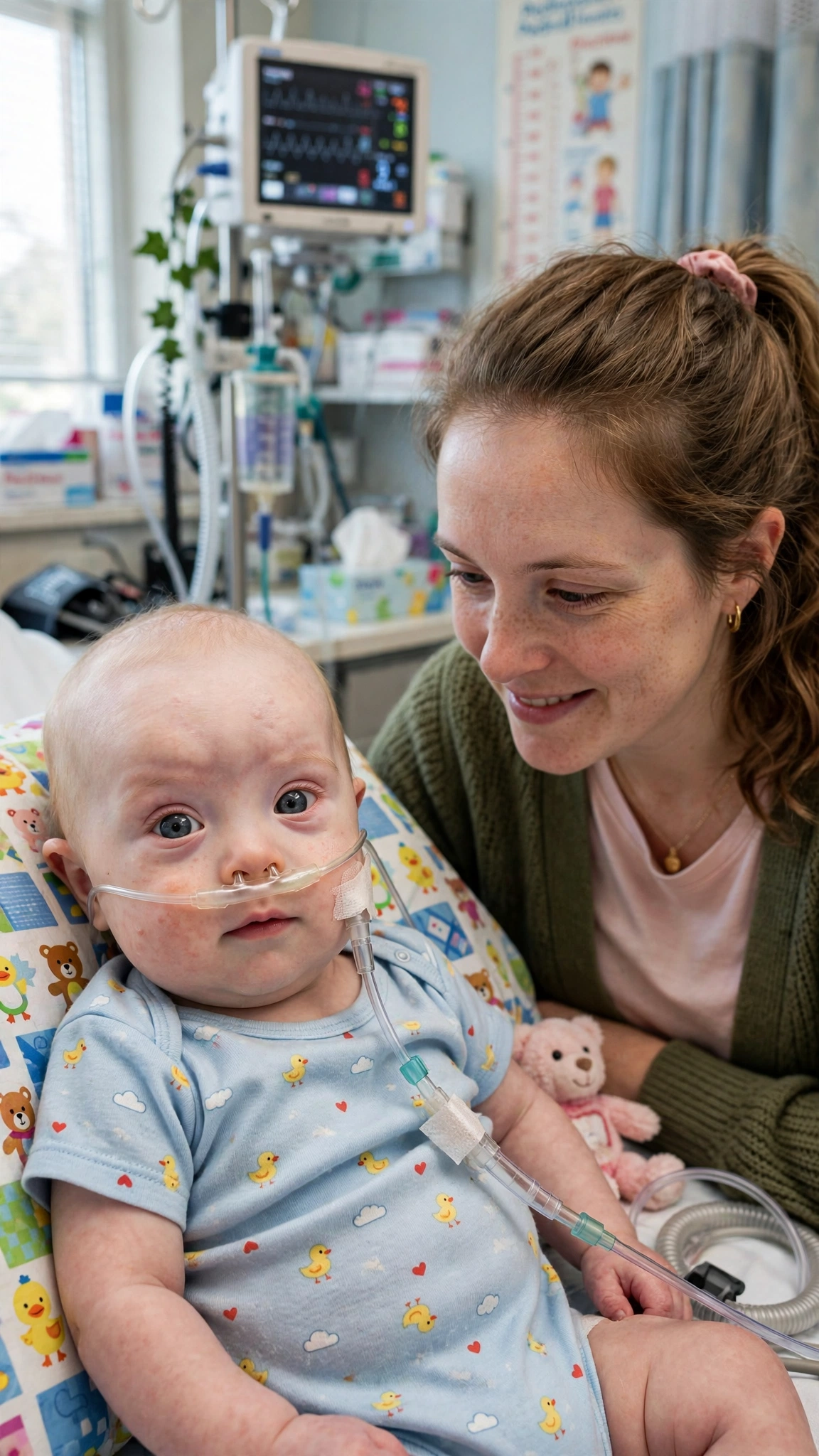
At just three years old, little Noah had already experienced more hospital appointments and medical examinations than most children his age.
His childhood began with physical differences that his parents noticed almost immediately after his birth.
His eyes appeared unusually prominent, his forehead was noticeably high, and the middle portion of his face seemed smaller and less developed than expected.
At first, his parents did not understand what these differences meant. They wondered whether his facial features would change as he grew, but as time pᴀssed, their concerns became more serious.
They wanted to know why their little boy’s face had developed differently and whether the condition could affect his health.
After several examinations and consultations with specialists, Noah was diagnosed with Crouzon Syndrome, a rare genetic disorder that affects the development of the skull and facial bones.
Crouzon Syndrome is most commonly ᴀssociated with craniosynostosis, a condition in which one or more of the natural joints connecting the bones of the skull fuse too early.
Under normal circumstances, these joints remain open throughout infancy and childhood, allowing the skull to expand as the brain grows. When they close prematurely, the skull cannot develop in its usual pattern.
This can result in an unusual head shape and changes in the development of the facial bones.
In Noah’s case, the condition contributed to his prominent eyes, high forehead, and underdeveloped middle portion of the face.
The bones around his eye sockets had developed differently, making his eyes appear more pronounced and exposed. His midface, particularly the area around his nose and upper jaw, had also developed differently from that of most children.
These physical differences could create challenges beyond appearance.
Children with Crouzon Syndrome may experience problems involving eye protection, vision, breathing, hearing, and other aspects of development. In some cases, premature fusion of the skull sutures can also contribute to increased pressure inside the skull.
Because of these potential complications, Noah required careful and continuous medical monitoring.
His doctors regularly examined the growth of his skull, ᴀssessed his neurological development, and checked his vision and eye health. They also paid attention to the position and protection of his eyes, since prominent eyes can be more vulnerable to dryness and irritation.
His medical care involved several specialists working together to evaluate his condition and determine what treatments might be appropriate as he grew.
For Noah’s parents, the first years of his life became a journey filled with hospital visits, medical ᴀssessments, and difficult decisions.
They spent countless hours traveling to specialist clinics, waiting for examination results, and listening to doctors explain the possible complications ᴀssociated with his diagnosis.
Some appointments were reᴀssuring, while others brought new concerns and questions.
Watching their little boy undergo repeated examinations was emotionally difficult. They worried about his vision, his breathing, and how his condition might affect his childhood.
They also wondered whether he would eventually require surgery to improve the development of his skull or facial structure.
Yet outside the hospital, Noah remained a little boy with the same simple needs and interests as other children his age.
He loved colorful toys and could spend long periods exploring their shapes and movements. He enjoyed bedtime stories, familiar songs, and the comforting feeling of being carried in his father’s arms.
To Noah, happiness was found in small things: a favorite toy, a playful moment with his parents, or the sound of his mother’s voice.
Sometimes, he noticed strangers looking at his face. He did not understand why people sometimes stared, and he was still too young to understand the medical condition that made his appearance different.
His parents wanted to protect him from feeling that he was somehow less special because of his physical differences.
His mother often kissed his forehead, gently brushed his hair, and held him close.
She would whisper that he was perfect just the way he was.
Those simple moments became a source of strength for the entire family.
Noah’s medical journey would require continued attention, patience, and specialized care. As he grew, his doctors would need to evaluate his development and determine whether additional treatments or surgical procedures were necessary.
His parents understood that there might be difficult days ahead, but they were determined to walk beside him through every examination, every uncertainty, and every new challenge.
They wanted Noah to grow up knowing that his appearance did not determine his value and that he deserved the same happiness, friendship, and opportunities as any other child.
He was not simply a diagnosis or a collection of medical symptoms.
He was a curious little boy who loved toys, bedtime stories, and the warmth of his family’s embrace.
And behind his distinctive facial features was a child whose heart was just as full of wonder as any other three-year-old.
Sometimes, the bravest hearts belong to the smallest children.