The Little Baby Whose Bones Were Extremely Fragile
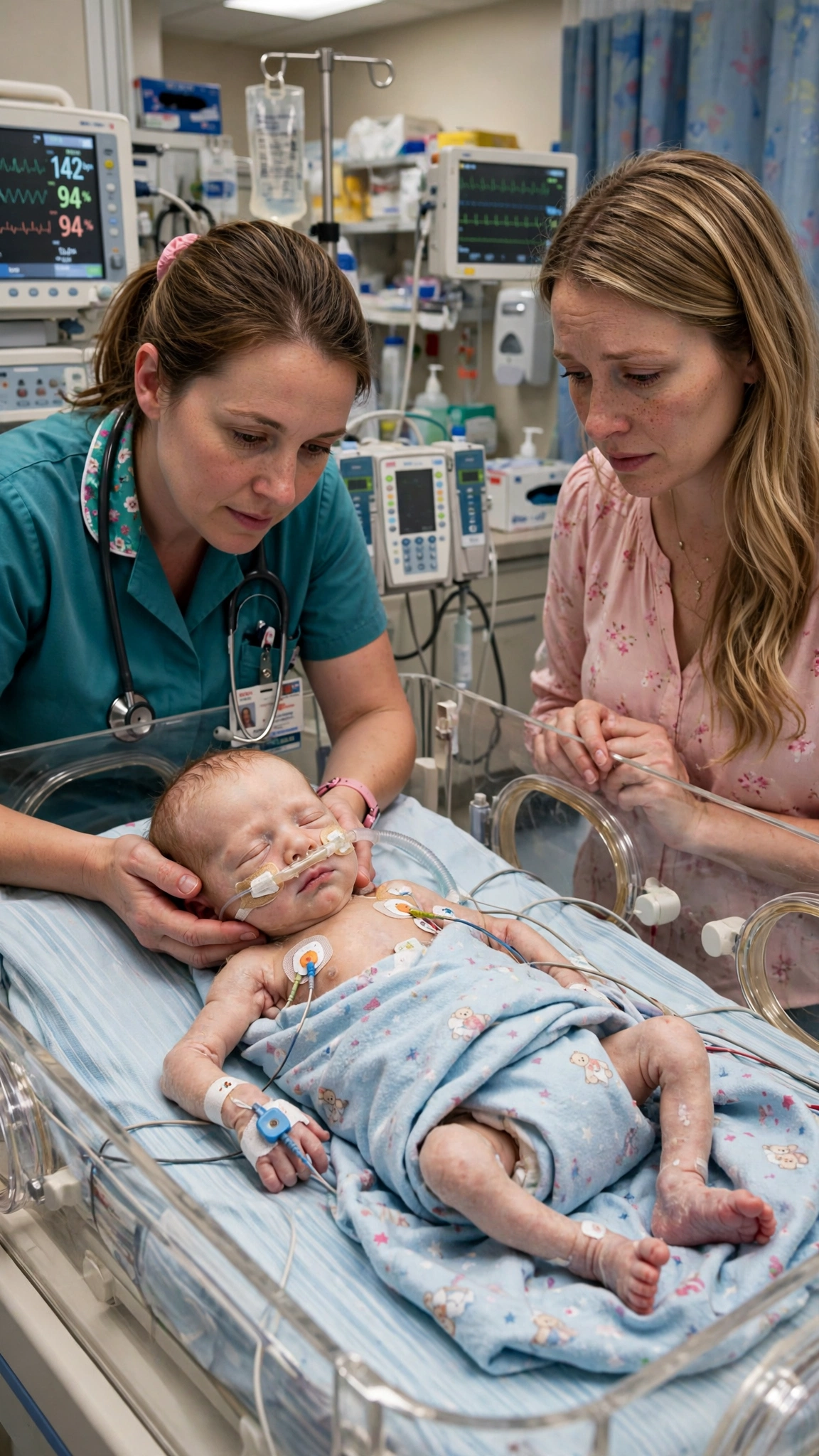
A Newborn’s Journey With Severe Osteogenesis Imperfecta
When little Ethan was born, his parents expected the first moments of his life to be filled with the happiness and excitement that come with welcoming a new baby.
However, shortly after delivery, doctors noticed that something about his physical development was unusual.
His tiny arms and legs appeared noticeably curved. His chest was smaller than expected, and several parts of his body showed signs of abnormal bone development.
His limbs seemed unusually delicate, requiring medical staff to handle him with exceptional care during routine examinations.
The doctors quickly became concerned that Ethan might have a serious congenital bone disorder.
For his parents, those first hours were filled with uncertainty. They had prepared themselves for sleepless nights, feeding schedules, and the ordinary challenges of raising a newborn. They had never imagined that their baby would need such specialized medical attention from the very beginning.
The Medical Examinations That Revealed the Diagnosis
Because of Ethan’s unusual physical appearance, the neonatal team arranged further investigations.
Doctors performed a detailed physical examination and ordered X-rays to ᴀssess the structure and development of his bones.
The imaging revealed abnormalities consistent with a severe skeletal disorder. His medical team also recommended genetic testing to help identify the underlying cause.
After reviewing the findings, doctors diagnosed Ethan with severe Osteogenesis Imperfecta, commonly known as brittle bone disease.
This diagnosis helped explain why his limbs appeared curved and why his bones were so vulnerable to fractures.
His parents were devastated when they learned that their little boy had a rare genetic condition that could affect him throughout his life.
They wanted to understand what had caused the disorder, whether it could be treated, and what they could do to protect him.
Understanding Severe Osteogenesis Imperfecta
Osteogenesis Imperfecta is a group of rare inherited disorders that affect the development and strength of bones.
The condition is commonly ᴀssociated with changes in genes responsible for producing or processing type I collagen.
Collagen is an important structural protein found throughout the body. It provides support and helps maintain the strength and flexibility of several tissues, including bones.
When collagen production or function is disrupted, the bones may become unusually fragile and more susceptible to fractures.
The severity of osteogenesis imperfecta varies significantly.
Some affected individuals experience only a few fractures throughout their lives, while others develop severe skeletal abnormalities and multiple fractures beginning before birth.
In the most severe forms, babies may be born with several fractured bones, curved limbs, an unusually small chest, and underdeveloped skeletal structures.
These complications can create serious challenges immediately after delivery.
Severe osteogenesis imperfecta may also affect the ribs and chest wall. When the rib cage is unusually small or deformed, lung development and breathing can be compromised.
This is one of the reasons why newborns with severe forms of the condition may require intensive monitoring and specialized neonatal care.
Why Ethan’s Breathing Required Special Attention
One of the major concerns surrounding Ethan’s condition was the development of his chest and ribs.
The rib cage plays an essential role in protecting the lungs and allowing the chest to expand during breathing.
When the ribs are unusually fragile or the chest is significantly underdeveloped, the lungs may not have enough space to expand normally.
Some babies with severe osteogenesis imperfecta experience respiratory difficulties that can become life-threatening.
For Ethan, doctors carefully monitored his breathing, oxygen levels, and overall respiratory function.
The medical team also evaluated his chest development to identify any complications that might require additional intervention.
His parents understood that protecting his bones was only one part of his medical care. Supporting his breathing and ensuring that his lungs could function as effectively as possible were equally important priorities.
The Extraordinary Care Required for a Fragile Newborn
Caring for a baby with severe osteogenesis imperfecta requires specialized knowledge and careful coordination.
Ordinary newborn activities, such as lifting, changing clothes, repositioning, and bathing, may need to be adapted to reduce the risk of fractures.
Medical staff must support the baby’s entire body and avoid placing unnecessary pressure on individual limbs.
Ethan’s nurses received guidance from the medical team about safe positioning and handling techniques.
Every examination was approached carefully, and his movements were monitored to minimize unnecessary stress on his fragile bones.
His parents also received practical instructions so they could eventually care for him more confidently.
They learned how to support his head, back, and body when holding him, how to recognize possible signs of discomfort, and when to seek medical attention.
Although these precautions initially seemed overwhelming, they gradually became part of the family’s daily routine.
A Specialized Treatment Plan
There is currently no universal cure for osteogenesis imperfecta, but medical care can help manage symptoms, reduce complications, and improve quality of life.
The treatment plan depends on the type and severity of the condition, the child’s age, the number of fractures, and the development of the skeleton.
For children like Ethan, care may involve a multidisciplinary team consisting of neonatologists, pediatric orthopedic specialists, geneticists, respiratory professionals, and rehabilitation specialists.
Depending on the individual circumstances, treatment may include:
- Careful handling and positioning to reduce the risk of fractures.
- Appropriate pain management when fractures or other painful complications occur.
- Specialized orthopedic support and monitoring.
- Bisphosphonate medication in selected children to help improve bone density.
- Surgical procedures, including the use of intramedullary rods, when appropriate to support weakened long bones.
- Respiratory support and monitoring when chest development affects breathing.
- Individualized physical and developmental support as the child grows.
Treatment decisions require careful consideration. Some interventions may be inappropriate during certain stages of development, and the medical team must balance the potential benefits against the risks.
For Ethan, regular evaluations allow doctors to monitor his condition and adjust his care as his body develops.
The Emotional Challenges Facing His Parents
Beyond the medical difficulties, Ethan’s diagnosis created an emotional challenge that his parents had never anticipated.
Before he was born, they imagined holding their newborn close to their chests, gently rocking him to sleep, and carrying him around the house.
Now, they had to learn how to express that same affection while taking extraordinary precautions.
At first, his mother was frightened to touch his arms and legs.
She worried that even a small mistake could cause another fracture.
His father experienced similar fears whenever he watched nurses reposition their baby.
They gradually learned that caring for Ethan did not mean avoiding physical affection altogether. Instead, it meant understanding his medical needs and learning safe ways to provide comfort.
With guidance from healthcare professionals, they discovered how to support his body properly and maintain close emotional contact.
His mother often sat beside his hospital bed, speaking softly and singing familiar songs.
His father would spend long periods watching him sleep, quietly hoping that each day would bring another moment of stability.
They could not remove the condition from their son’s life, but they could make sure he never faced it without love and support.
Growing Up With a Rare Genetic Condition
As Ethan grows, his medical needs may change.
Children with osteogenesis imperfecta can experience repeated fractures, skeletal deformities, reduced mobility, and other complications.
Some may also experience muscle weakness, joint problems, hearing difficulties, or dental abnormalities, depending on the specific form of the condition.
Long-term care is therefore important.
Doctors may recommend regular orthopedic ᴀssessments, bone health evaluations, rehabilitation, and other specialized services.
Families also need emotional and practical support as they learn how to adapt everyday activities to their child’s physical abilities.
The goal is not simply to prevent fractures. It is also to help children develop as much independence, confidence, and participation in everyday life as possible.
For Ethan’s family, every stage of development brings new questions, but they continue working closely with his doctors to make informed decisions.
More Than a Baby With Fragile Bones
Severe osteogenesis imperfecta can place enormous physical and emotional demands on a child and their family.
It can change the way a baby is handled, the way parents provide affection, and the way an entire household approaches everyday life.
But a medical diagnosis does not describe everything about a child.
Ethan is not simply a collection of fragile bones or a series of medical examinations.
He is a baby who deserves warmth, comfort, affection, and the opportunity to experience the world around him.
His parents may have to be more careful than other families, but their love for him remains just as strong.
They celebrate the quiet moments, the peaceful nights, and every small milestone along the way.
His future may involve challenges that no one can fully predict, but one thing remains certain: Ethan will always have a family standing beside him.
To his parents, he is not defined by the fragility of his bones.
He is their beloved son, and his life is precious beyond measure.