The Baby Born With Protruding Eyes and an Abnormally Shaped Skull: Understanding Crouzon Syndrome
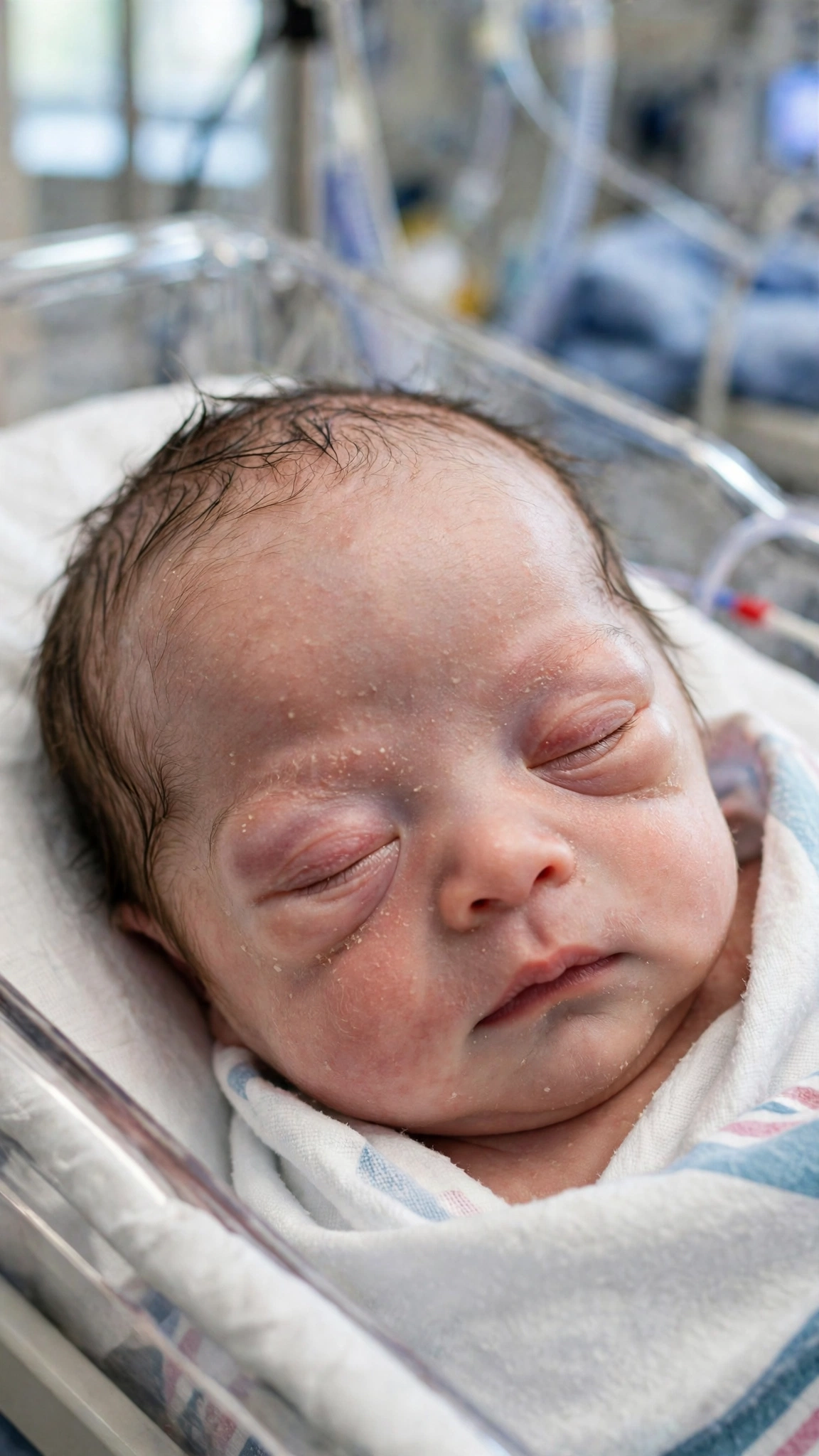
When little Jacob was born, doctors immediately noticed that his eyes appeared unusually prominent, protruding noticeably from their normal position.
His facial structure also showed several unusual features. The middle portion of his face appeared underdeveloped, his nasal bridge was unusually low, and his upper jaw was significantly smaller than expected. These differences gave his face an unusual shape and raised concerns about the development of his skull.
As doctors examined him more closely, they discovered that several of the fibrous joints between the bones of his skull had fused prematurely. These joints, known as cranial sutures, normally remain open during infancy to allow the brain and skull to grow.
However, in Jacob’s case, some of these sutures had closed too early, preventing his skull from expanding normally in certain directions. As a result, his growing brain had less room to develop, while other parts of his skull and facial bones became abnormally shaped.
Following specialized examinations and genetic testing, Jacob was diagnosed with Crouzon syndrome, a rare genetic condition that affects the development of the skull and facial bones.
Crouzon syndrome is most commonly ᴀssociated with changes in the FGFR2 gene, which plays an important role in bone development. When this gene functions abnormally, the bones of the skull may fuse earlier than they should, leading to distinctive changes in facial appearance.
One of the most recognizable features is proptosis, a condition in which the eyes protrude because the eye sockets are unusually shallow or poorly developed. Children may also have a small upper jaw, a recessed midface, a prominent forehead, and an unusually shaped nose.
In more severe cases, premature fusion of the skull bones can increase pressure inside the skull, potentially affecting brain development. The abnormal position of the eyes may also lead to dry eyes, corneal damage, and vision problems. Some children experience breathing difficulties because of the underdeveloped middle portion of the face and narrowed nasal pᴀssages.
There is no single treatment that cures Crouzon syndrome. Management depends on the severity of the condition and may involve craniofacial surgery to reshape the skull, procedures to advance the midface, and specialized eye and airway care.
Children with this condition require long-term monitoring by a multidisciplinary medical team to protect their vision, breathing, neurological development, and overall quality of life.
For Jacob and his family, early diagnosis and appropriate treatment are essential to address the physical challenges ᴀssociated with this rare condition and support his development as he grows.