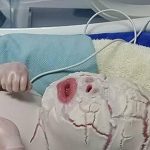
The Baby Born With an Unusually Developed Face: Understanding Treacher Collins Syndrome
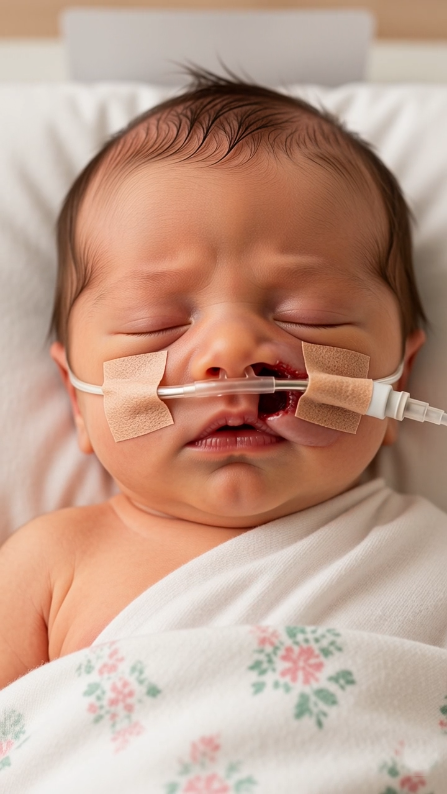
When little Daniel was born, his parents immediately noticed that several features of his face looked significantly different from those of most newborn babies.
His cheekbones appeared unusually small and underdeveloped, while his lower jaw was noticeably smaller than expected. His outer ears had also formed abnormally, creating a distinctive facial appearance that raised concerns about his development.
At first, his parents did not understand what had caused these physical differences. They were worried about whether their newborn son would be able to breathe normally, hear sounds clearly, and feed without experiencing difficulties.
What should have been an entirely joyful moment became the beginning of a long journey filled with medical examinations, unanswered questions, and concerns about the future.
After undergoing several evaluations, Daniel was diagnosed with Treacher Collins syndrome, a rare congenital genetic condition that affects the development of facial bones and soft tissues.
Understanding Treacher Collins Syndrome
Treacher Collins syndrome is a condition that occurs when certain facial structures do not develop normally during the early stages of pregnancy.
It primarily affects the cheekbones, jaw, ears, and surrounding facial tissues. The condition is commonly ᴀssociated with changes in genes involved in the development of structures derived from the embryonic first and second pharyngeal arches.
Children with Treacher Collins syndrome may be born with underdeveloped cheekbones, a small lower jaw, downward-slanting eyes, abnormalities of the outer ears, and sometimes a cleft palate.
The appearance and severity of the condition can vary significantly. Some children experience relatively mild physical differences, while others have more severe abnormalities that interfere with important functions such as breathing, hearing, and feeding.
For Daniel, the most immediate concerns involved his small lower jaw and abnormal ear development.
Breathing and Feeding Difficulties
One of the most important aspects of Daniel’s medical evaluation was determining whether his facial structure was affecting his airway.
When the lower jaw is significantly underdeveloped, the tongue may sit farther back in the mouth, potentially narrowing the airway and making breathing more difficult.
In some children, this can lead to noisy breathing, breathing interruptions during sleep, or more serious respiratory complications.
Doctors therefore needed to ᴀssess Daniel’s airway carefully and monitor his breathing, particularly while he was sleeping and feeding.
Feeding was another challenge that required attention.
Because the structure of his jaw and mouth was different, Daniel could have difficulty coordinating sucking, swallowing, and breathing. These problems can make it harder for some affected infants to consume enough milk and gain weight appropriately.
His medical team monitored his feeding ability, nutritional intake, and physical growth to determine whether additional feeding support was necessary.
Hearing and Ear Development
Daniel’s unusually developed outer ears also raised concerns about his hearing.
Treacher Collins syndrome frequently affects the structures of the outer and middle ears. In some cases, the ear canals may be narrow or absent, and the small bones responsible for transmitting sound may not develop normally.
These abnormalities can cause conductive hearing loss, a condition in which sound cannot travel efficiently through the outer and middle ear to reach the inner ear.
For a growing child, hearing difficulties can affect speech development, communication, and learning if they are not identified and managed early.
Daniel therefore needed specialized hearing ᴀssessments to determine how well he could detect sounds and whether hearing support would be beneficial.
Depending on his individual needs, treatment options could include bone-conduction hearing devices, regular hearing evaluations, and speech and language support.
A Long-Term Treatment Plan
Following his diagnosis, Daniel’s parents learned that his care would require a coordinated team of medical professionals.
Pediatricians, craniofacial surgeons, ear, nose, and throat specialists, audiologists, and other healthcare professionals would work together to monitor his development and address the challenges ᴀssociated with his condition.
Treatment would depend on the severity of his abnormalities and the specific difficulties he experienced.
If breathing problems became significant, doctors might consider specialized airway management or surgical interventions.
As Daniel grew older, reconstructive procedures could potentially help improve the development and function of his jaw, cheekbones, and ears.
Some procedures are performed during childhood, while others may be postponed until later developmental stages to achieve better functional and structural outcomes.
His parents also understood that treatment would involve more than surgery. Regular hearing ᴀssessments, nutritional monitoring, dental care, speech support, and psychological encouragement could all play important roles in his long-term development.
Growing Up Beyond His Diagnosis
For Daniel’s parents, learning about Treacher Collins syndrome was frightening at first.
They knew their son might face challenges that other children would never experience. There could be hospital visits, medical procedures, hearing difficulties, and moments when his physical appearance attracted unwanted attention.
However, they gradually understood that his diagnosis did not determine everything about his future.
With appropriate medical care, early intervention, and continued family support, many children with Treacher Collins syndrome can attend school, develop friendships, communicate, and participate in everyday activities.
Daniel’s parents made a promise to give him every opportunity to grow up feeling accepted, supported, and confident.
They wanted him to understand that looking different did not make him less valuable or less deserving of happiness.
His journey would require patience and courage, but he would never have to face it alone.
Treacher Collins syndrome may affect the development of a child’s face, but it does not define the child’s intelligence, personality, dreams, or ability to experience a meaningful life.