**Sophia, 10 Years Old – Living with a Severe Spinal Deformity and Scoliosis**
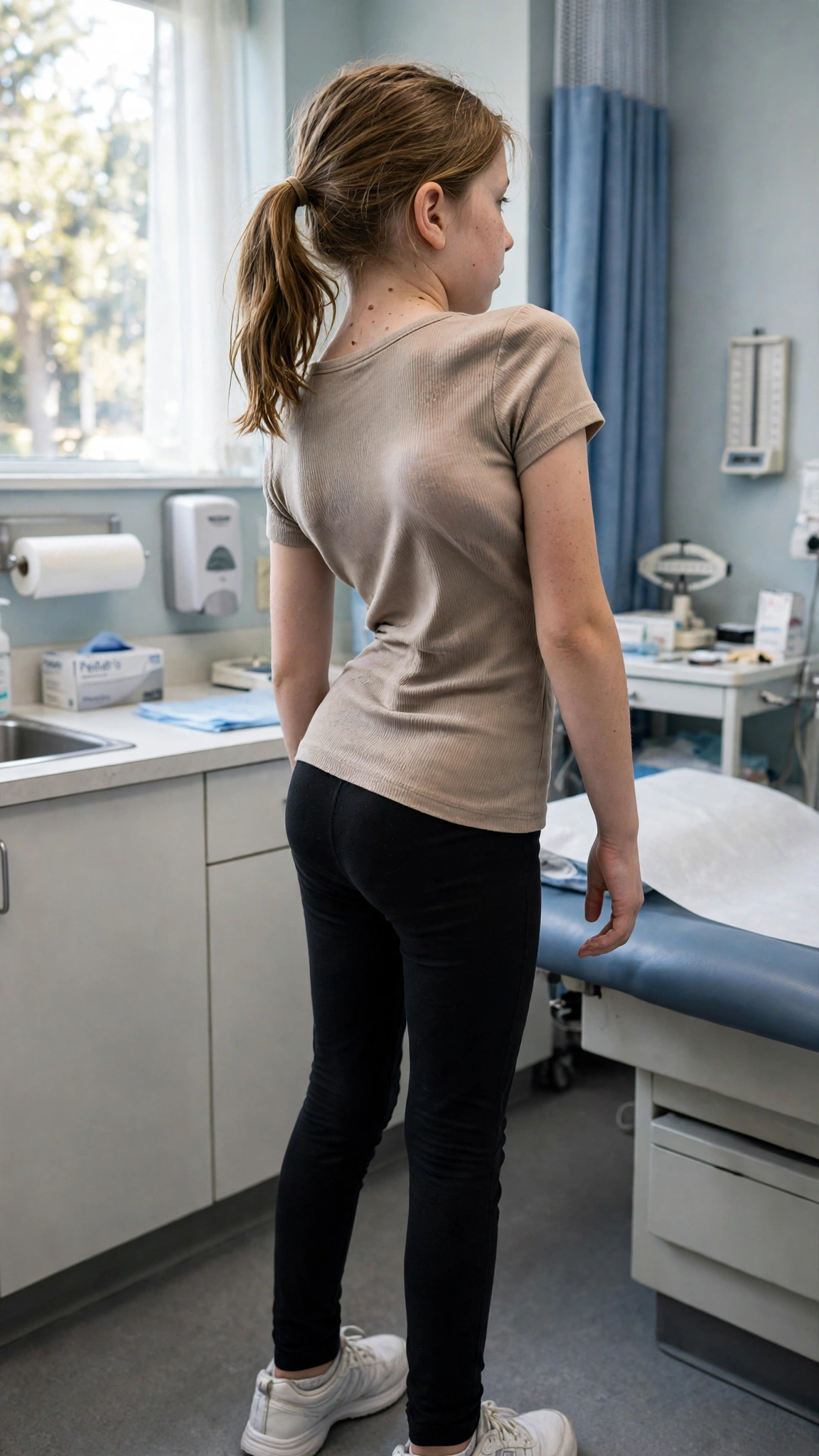
Sophia is a 10-year-old girl who has been struggling with an abnormal spinal condition since early childhood. As she has grown older, the changes in her spine have become increasingly noticeable, affecting the alignment of her back, shoulders, and upper body. 😢
Unlike a normal spine, which has a relatively straight alignment when viewed from behind, Sophia’s spine curves abnormally in more than one direction. Her back bends outward, while the spinal column also curves sideways, creating an unusual S-shaped or C-shaped appearance. This combination of abnormal curvature makes her posture visibly uneven.
One of the most noticeable features is the difference in the height of her shoulders. One shoulder appears higher than the other, while her upper body tends to lean toward the right side. Her waistline is also uneven, with one side appearing more prominent than the other. 💔
When Sophia bends forward, the deformity becomes even more apparent. One side of her back rises higher than the opposite side, creating a visible hump along the rib cage. This happens because the vertebrae are not only bending sideways but also rotating around their own axis. Doctors suspect that Sophia has scoliosis accompanied by vertebral rotation, a condition that can affect the overall shape and balance of her torso.
As the spinal deformity progresses, Sophia may experience discomfort, back fatigue, and difficulty maintaining a balanced posture for extended periods. Sitting at a school desk, standing for long periods, carrying a backpack, and participating in physical activities may become increasingly uncomfortable.
Her family is particularly concerned because Sophia is only 10 years old, meaning her bones and spine are still developing. During periods of rapid growth, scoliosis can sometimes progress more quickly, making regular medical examinations especially important. 🥺
Doctors need to monitor the curvature of her spine through physical examinations and appropriate imaging studies, such as standing spinal X-rays. These evaluations help determine the severity of the curvature, ᴀssess vertebral rotation, and identify whether the condition is progressing.
Depending on the degree of curvature and her remaining growth, treatment may involve regular observation, specialized exercises, physical rehabilitation, or a spinal brace. In more severe or progressive cases, doctors may discuss surgical options to prevent further deformity and improve spinal alignment.
Despite these challenges, Sophia is still a young girl with dreams, hopes, and a childhood to enjoy. She deserves encouragement, understanding, and access to appropriate medical care. With careful monitoring and a treatment plan suited to her condition, there is hope of protecting her spinal development and improving her quality of life. 🌷
❤️ May Sophia receive the best medical care, grow stronger every day, and continue to smile with confidence. Wishing her and all children facing serious medical conditions good health, strength, happiness, and a brighter future! ❤️