PART 8 — THE AGREEMENT THAT COULD DESTROY HENRY VALE
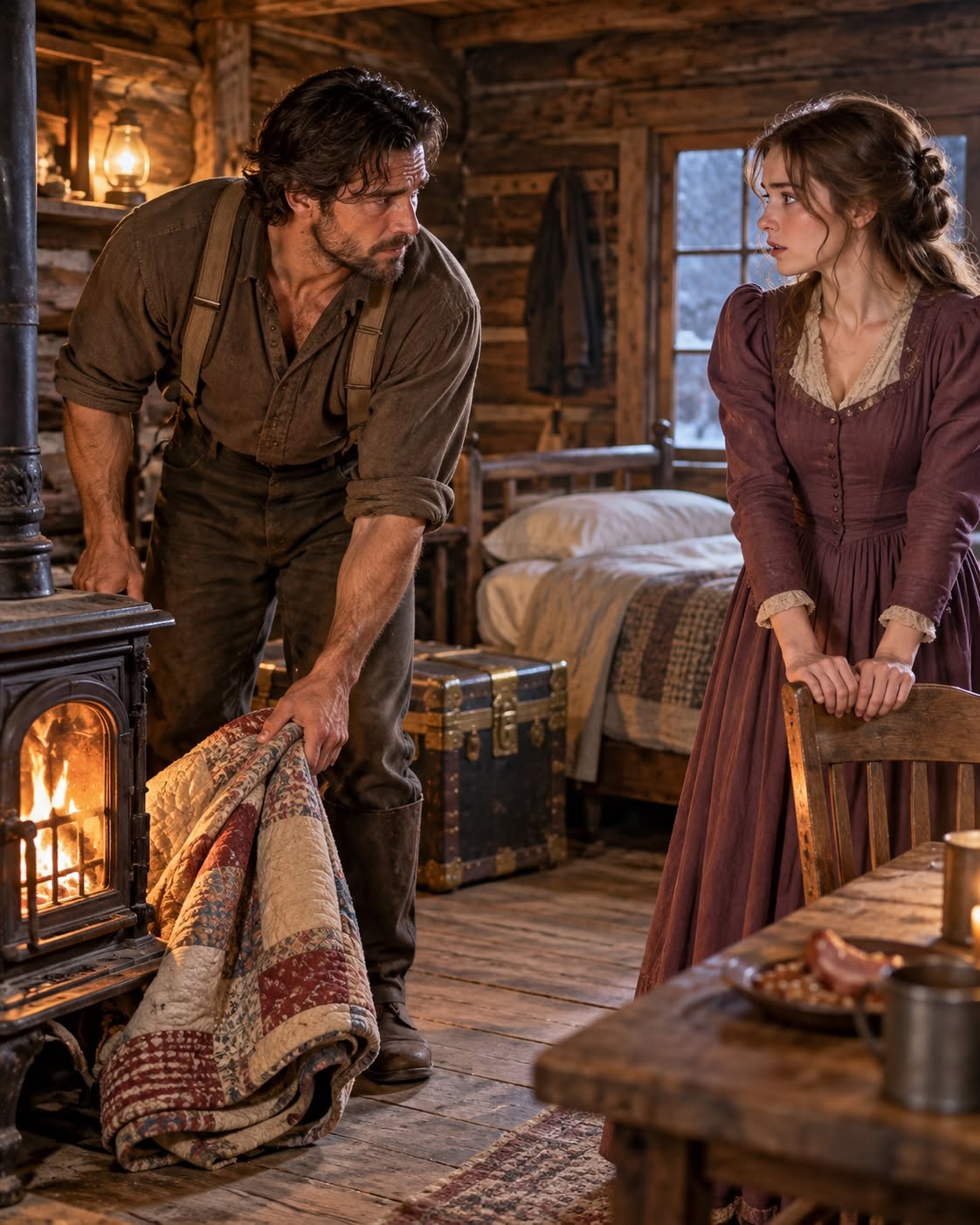
PART 8 — THE AGREEMENT THAT COULD DESTROY HENRY VALE
The next morning, St. Louis woke beneath a blanket of gray clouds.
Clara had barely slept.
Neither had Margaret.
Their father’s workshop was at the center of a legal battle, and a man they had never trusted was preparing to present a document that might overturn everything they had discovered.
Amos stood near the boardinghouse window, fastening his coat.
“We’ll go together.”
Clara nodded.
“Whatever happens, we won’t let him separate us.”
Margaret took her sister’s hand.
“Father would have wanted us to stand together.”
At nine o’clock, they entered the county courthouse.
Henry Vale was already there.
He wore a dark suit and carried his polished briefcase. Beside him stood Jonathan Pike, a broad-shouldered man with a carefully trimmed beard.
Henry smiled when he saw Clara.
“Miss Whitmore. I hope you’ve reconsidered your position.”
“I haven’t.”
“Then I suppose we’ll let the court decide.”
Pike glanced at Amos.
“You’ve traveled a long way to involve yourself in another family’s business.”
Amos stepped beside Clara.
“She’s my family.”
Pike said nothing.
The hearing began shortly afterward.
Henry’s attorney presented the claim that Edward Whitmore had transferred ownership of the workshop before his death. He produced a typed document bearing what appeared to be Edward’s signature.
Pike testified that he had witnessed the signing.
Clara listened without interruption.
She recognized the signature.
But something about the document bothered her.
The date was wrong.
Her father had been seriously ill on that day and had not visited the workshop.
When the attorney finished, the judge turned toward the solicitor representing Clara and Margaret.
“Do you have evidence contradicting this claim?”
The solicitor stood.
“We do, Your Honor.”
He presented the original partnership agreement, the bank’s certification, the ledger, and Edward’s handwritten letter.
The judge examined each document.
Henry’s expression grew increasingly uncomfortable.
Then the solicitor called Dr. Whitaker.
The old physician entered slowly.
Henry immediately stood.
“This man is unreliable. He left the territory years ago and has no business giving testimony about my affairs.”
The judge raised a hand.
“Mr. Vale, you will have an opportunity to respond.”
Whitaker took his place.
He explained his involvement with the Whitmore family, the false accounts, and the pressure Henry had placed upon him eleven years earlier.
He did not exaggerate.
He did not try to excuse his silence.
He simply told the truth.
When asked about the night Eleanor died, he confirmed that Jonathan Pike had arrived at Amos’s cabin searching for documents.
Pike’s face changed.
“That’s nonsense,” he interrupted.
The judge warned him to remain silent.
Whitaker continued.
 “I saw Pike remove a letter from the room. I didn’t know what it contained, but I recognized the symbol on its envelope. It was the same carpenter’s square Edward Whitmore used on his business papers.”
Clara leaned toward Margaret.
The letter.
The one Eleanor had hidden.
Could Pike still have it?
The solicitor then presented the pH๏τograph showing Edward, Henry, Whitaker, and Eleanor together.
Pike claimed it proved nothing.
But when the pH๏τograph was examined more closely, the judge noticed a small handwritten date.
October 17.
The exact date mentioned in the anonymous note.
Henry’s attorney objected to its relevance.
The judge allowed the solicitor to continue.
“Your Honor, we believe this pH๏τograph demonstrates a connection between Mr. Whitaker, Mr. Vale, and the Whitmore family that the defendant has repeatedly denied.”
Then the solicitor asked Pike a simple question.
“Mr. Pike, have you ever been inside Edward Whitmore’s workshop?”
“Of course. I was a business acquaintance.”
“Did you ever handle his account books?”
“No.”
“Did you ever receive payment from Henry Vale?”
Pike hesitated.
“Not that I recall.”
The solicitor opened the ledger.
“Would you care to explain these entries?”
He pointed to a series of payments made under Pike’s initials.
Pike leaned forward.
His face turned red.
“Those figures are meaningless.”
“Then perhaps you can explain why the same amounts appear in the bank’s records.”
For the first time, Pike had no answer.
During a recess, Clara stepped into the courthouse corridor.
She needed air.
Amos followed her.
“Are you all right?”
She nodded, though her hands were trembling.
“I keep thinking Father knew this day might come.”
“He prepared as best he could.”
“But he couldn’t finish it.”
Amos took her hand.
“Then we’ll finish it.”
Clara looked up at him.
“When we first met, you thought I was too beautiful to survive in your cabin.”
He almost smiled.
“I was an ignorant fool.”
“You were frightened.”
“Of what?”
“Of having someone close enough to lose.”
Amos went quiet.
Then he gently touched her cheek.
“I don’t want to spend another day pretending I don’t care.”
Clara leaned closer.
“Then don’t.”
Before he could answer, Margaret hurried toward them.
“Clara! The solicitor needs us.”
They returned to the courtroom.
Henry Vale was standing beside his attorney, speaking urgently.
Pike had been asked to produce the original agreement he claimed to possess.
But he could not.
He had brought only a copy.
The solicitor placed it beside the bank’s authenticated original.
The differences were obvious.
The signatures did not match exactly. Several clauses had been added in a different typeface, and the paper was newer than the date claimed.
The judge examined both documents.
Then he addressed Pike.
“Where did you obtain this copy?”
Pike looked toward Henry.
Henry’s expression was now cold and furious.
“I found it among old business records,” Pike muttered.
“Which records?”
“I don’t remember.”
The judge leaned forward.
“Mr. Pike, you have made a sworn statement claiming you witnessed a transfer of property. You have also presented a document that appears inconsistent with the original agreement.”
Pike swallowed.
Then, unexpectedly, he turned toward Henry.
“I told you I didn’t want to do this.”
Henry’s head snapped around.
“Be quiet.”
The courtroom became silent.
Pike looked at the judge.
“I have another document.”
He reached into his coat and produced a small folded paper.
Henry moved toward him, but the court officer intervened.
Pike placed the paper on the table.
It was a receipt.
A payment from Henry Vale, dated eleven years earlier.
The amount was small, but the description beside it was unmistakable.
For services concerning the Whitmore records and the Eleanor Mercer matter.
Amos stood so quickly that his chair moved backward.
The judge looked at the receipt.
Then at Henry.
“Mr. Vale, can you explain this?”
Henry said nothing.
For the first time, the confident businessman appeared unable to find the words he needed.
Pike continued.
“Henry told me to find the letter Eleanor had hidden. He said it contained information that could ruin him. I found it, but I didn’t destroy it.”
Amos stepped forward.
“Where is it?”
Pike looked at him.
“I kept it.”
“Where?”
“In a safe deposit box. I was afraid to hand it over because Henry knew where my family lived.”
Clara’s heart began to race.
“Can you bring it here?”
Pike nodded.
“Yes.”
The judge ordered that the document be secured and examined before any final ruling.
Henry’s attorney requested an adjournment.
The judge granted a short delay.
But before the hearing ended, the solicitor received another paper from the bank.
It was a notice confirming that the trust established by Edward Whitmore remained active.
Henry’s claim to the workshop could no longer be treated as an uncontested matter.
The sisters had won an important step.
But the truth about Eleanor remained unfinished.
That evening, Amos and Clara returned to Margaret’s boardinghouse.
For the first time in days, Clara allowed herself to smile.
“Father protected us,” she said.
Amos nodded.
“He did.”
She looked at him.
“And perhaps Eleanor helped him.”
He considered that.
“Perhaps she knew the truth had to survive, even if she couldn’t tell me herself.”
Margaret entered carrying a telegram.
“There’s news from the bank.”
Clara took it.
The safe deposit box had been located.
The letter was inside.
But there was something else.
A second envelope had been placed beside it, addressed in Eleanor’s handwriting.
Amos stared at the name.
His face changed.
“That’s impossible.”
Clara opened the telegram’s final line.
The bank clerk had written:
The second envelope is addressed to Amos Mercer. It contains a message dated three days before Eleanor’s death.
Amos slowly sat down.
For eleven years, he had believed his wife had left him without a final explanation.
Now a letter existed.
A letter she had written before she died.
Clara reached for his hand.
“Whatever it says, you won’t have to read it alone.”
He looked at her, then nodded.
But when Margaret read the final sentence of the telegram aloud, the room fell silent.
The envelope contains a warning: “Amos must never trust the man who comes looking for him after my death.”
And beneath that warning was a name.
Henry Vale.
TO BE CONTINUED — PART 9: ELEANOR’S LAST LETTER AND THE SECRET THAT CHANGED AMOS’S LIFE FOREVER.