PART 5 — THE MAN WHO CAME TO CLAIM WHAT WASN’T HIS
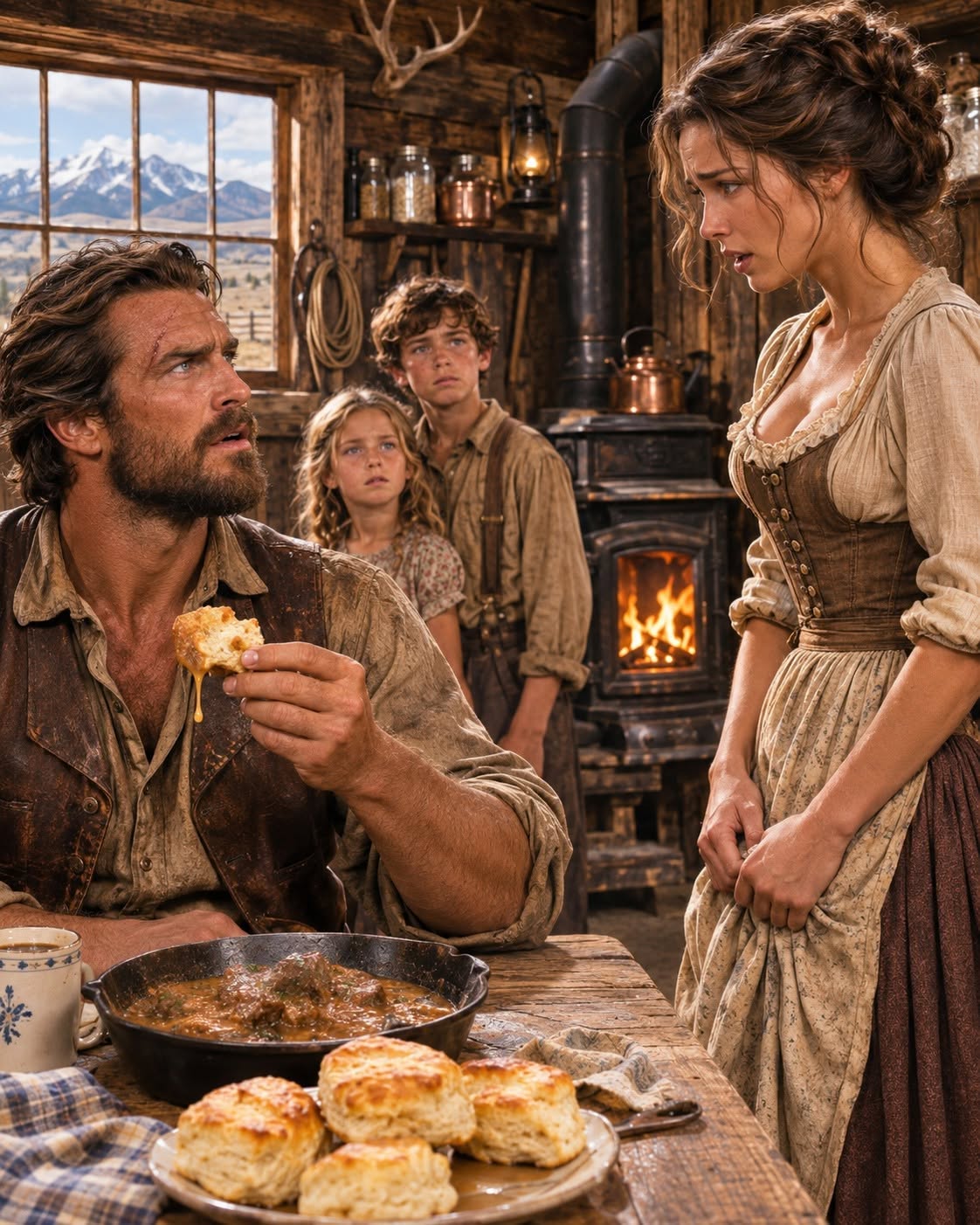
PART 5 — THE MAN WHO CAME TO CLAIM WHAT WASN’T HIS
Gideon motioned for me to take the children upstairs.
“Stay there until I call you.”
I gathered Toby and Clara, but Toby refused to let go of my hand.
“Is that the man who made us leave Bozeman?”
I swallowed.
“Yes.”
“Will he take us away again?”
“No,” I whispered. “Not if I can help it.”
I led them into the upstairs room and closed the door. Through the floorboards, I heard Gideon unbolt the front door.
Hiram Fletcher entered without waiting for an invitation.
“Well, Cobb. I see you’ve found yourself a new housekeeper.”
Gideon’s voice was cold.
“Say what you came to say.”
“I’ve come for Henrietta Miller.”
My heart began pounding.
Gideon said nothing.
Hiram continued.
“She owes my family money. Her late husband signed a mortgage agreement, and the debt remains unpaid. I have every legal right to collect.”
“Then take your papers to a judge.”
“I don’t need a judge. I need the woman.”
There was a pause.
Then Hiram added, “And her children.”
I heard a chair move sharply across the floor.
“You threaten those children again,” Gideon said, “and you’ll leave this mountain with more trouble than you brought.”
Hiram laughed.
“You always were a sentimental fool, Cobb. Perhaps Margaret Whitcomb taught you that.”
My breath stopped.
He knew my mother’s name.
I heard Gideon step closer.
“Get out.”
“Not until I speak to Henrietta.”
“She has nothing to say to you.”
“Then perhaps she’ll be interested in what I have to say about her inheritance.”
Silence followed.
I opened the upstairs door a few inches.
Hiram was standing beside the table, holding a leather folder. He was a well-dressed man in his forties, with polished boots and a narrow smile that never reached his eyes.
He looked up and saw me.
“Mrs. Miller. There you are.”
I descended the stairs, keeping Toby and Clara behind me.
“What do you want?”
“To settle your husband’s account.”
“My husband is ᴅᴇᴀᴅ. And I have no money.”
“Then we can discuss another arrangement.”
Gideon moved between us.
“She isn’t making any arrangements with you.”
Hiram ignored him.
“Your husband borrowed money. You inherited his obligations. That’s how business works.”
“Then why did you never show me the original loan?”
His smile faltered.
I continued.
“You brought me a mortgage agreement, but you refused to let me have it examined. You gave me no receipts and no account of the payments Arthur had already made.”
Hiram’s eyes narrowed.
“You should be careful, woman.”
“I have been careful for three months. It hasn’t helped my children.”
Gideon placed the property trust document on the table.
“Perhaps you should explain this instead.”
Hiram looked down.
For the first time, his confidence disappeared.
“Where did you get that?”
“From Margaret Whitcomb.”
Hiram reached for the paper, but Gideon covered it with his hand.
“Don’t touch it.”
Hiram stared at me.
“You have no idea what you’re holding.”
“Then explain it.”
He straightened his coat.
“That document is old and irrelevant. Whatever your mother owned was settled years ago.”
“By whom?”
“Your father.”
“My father was Thomas Whitcomb. He never told me about any land.”
Hiram gave a thin smile.
“Perhaps he had his reasons.”
I looked at him carefully.
“You knew about this inheritance before you came to my bakery, didn’t you?”
 He didn’t answer.
That silence told me more than his words.
Gideon opened the document and pointed to a paragraph near the bottom.
“Read it.”
I leaned closer.
The trust stated that my mother had placed a parcel of land outside Bozeman in my name, with its income reserved for my education and future support. The property could not be sold or transferred without the approval of the appointed trustee.
The trustee’s name was Samuel Whitaker.
I had never heard of him.
“Where is he?” I asked.
Gideon looked at Hiram.
“That’s what we’d like to know.”
Hiram closed his folder.
“This conversation is over.”
“Not quite,” Gideon replied.
He produced a second paper.
It was a letter from Samuel Whitaker, dated just two months earlier.
The attorney had written that he was investigating irregular transfers involving the Whitcomb property. He requested that anyone with knowledge of Margaret’s trust contact him immediately.
At the bottom was an address in Helena.
Hiram’s face hardened.
“Give me that letter.”
“No.”
“You don’t understand what you’re involving yourself in.”
“I understand enough,” Gideon said. “You have been using a ᴅᴇᴀᴅ man’s signature to collect a debt from a widow. And now you’re trying to frighten her away from land that may belong to her.”
Hiram stepped toward him.
“You think you’re protecting her? You couldn’t protect Margaret. You won’t protect this one either.”
Gideon’s expression turned stone-cold.
“Get out of my house.”
For a moment, I thought Hiram might strike him.
Instead, he looked at me.
“You have until the end of the week to pay what you owe. After that, I’ll let the sheriff decide what happens to your children.”
Then he walked out.
The door slammed behind him.
Toby began crying. Clara buried her face in my skirt.
I knelt and held them both.
“He can’t take you,” I whispered. “I promise I’ll do everything I can.”
Gideon stood by the window, watching Hiram ride away.
“He won’t stop,” he said.
“Then we won’t stop either.”
That evening, Gideon saddled his horse and rode to a neighboring settlement to send a telegram to Samuel Whitaker.
He returned the next afternoon with an answer.
Samuel would come within three days.
Those three days changed everything.
I began working in Gideon’s kitchen, preparing meals for the ranch hands who occasionally came down from the upper pastures. Word spread that the mountain cabin finally served decent food. Two neighbors arrived with sacks of flour, another brought eggs, and an elderly woman named Mrs. Bell offered to help repair Clara’s winter coat.
For the first time since Arthur died, my children laughed.
Gideon also began teaching Toby how to care for the horses. Clara followed him everywhere, asking questions about the mountains, the animals, and the stars.
I watched him with them and wondered how a man so rough with the world could be so gentle with two children who weren’t his own.
One evening, while I was washing dishes, he placed a small wooden box beside me.
“I think this belongs to you.”
Inside lay a silver locket.
I recognized it immediately.
It had belonged to my mother.
I opened it. One side held her pH๏τograph. The other contained a tiny folded paper.
It was a message in her handwriting.
My dearest Etta, if you ever find this, remember that no debt should cost you your dignity, and no man’s cruelty should decide your worth.
My eyes filled.
“She knew,” I whispered. “She knew someone might try to take everything from me.”
Gideon nodded.
“She wanted you to have a chance to live freely.”
Before I could answer, a wagon appeared on the trail.
A thin, gray-haired man climbed down, carrying a leather briefcase.
“Mrs. Henrietta Miller?” he called.
I stepped onto the porch.
“I am.”
“My name is Samuel Whitaker. I believe I’ve been looking for you for a very long time.”
He opened his briefcase.
Inside were copies of land records, bank receipts, and letters bearing Hiram Fletcher’s signature.
Samuel looked at Gideon, then at me.
“I’m afraid your mother’s property was not the only thing taken from you.”
He laid one final document on the porch railing.
It was the original mortgage agreement Arthur had supposedly signed.
And at the bottom, beside my husband’s name, was a signature that did not belong to him.
Samuel’s voice dropped.
“Mrs. Miller, this debt may never have existed.”