PART 3 — THE SECRET BENEATH THE OLD MILL
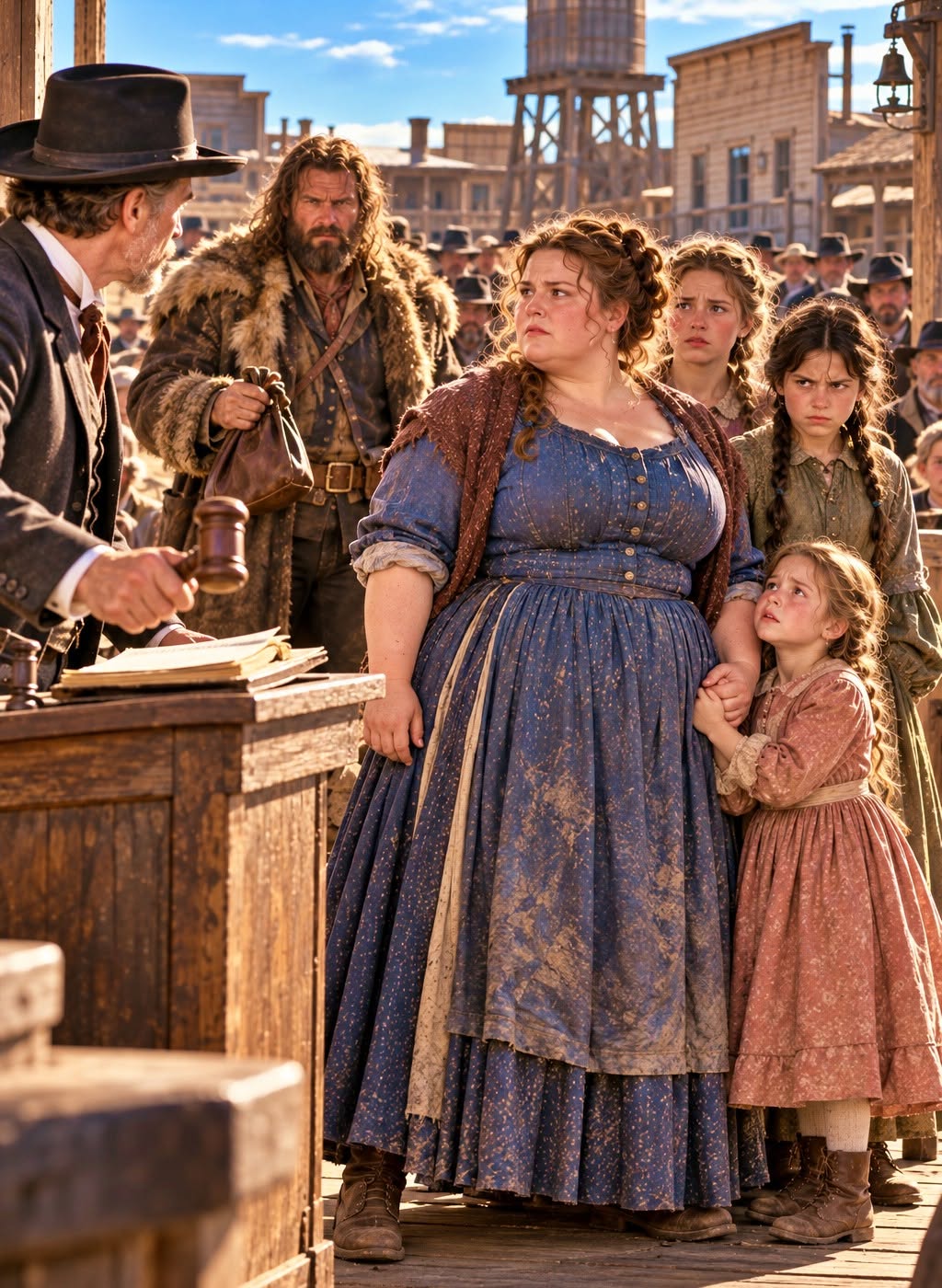
PART 3 — THE SECRET BENEATH THE OLD MILL
Rourke drove the wagon into a narrow stand of cottonwoods.
The horses plunged through the undergrowth, branches scraping the sides as he guided them away from the open trail.
“Keep low!” he ordered.
Della pulled Posy against her chest.
 Blythe wrapped an arm around Wren, who had gone pale but remained silent.
Another sH๏τ rang out.
Then came the sound of hoofbeats.
“They’re following us!” Wren whispered.
“I know,” Della replied.
She looked toward Rourke.
“Who are they?”
“Men who believe your father’s property contains something worth killing for.”
“Then tell me what it is!”
Rourke didn’t answer immediately.
He guided the wagon behind a low ridge and brought the horses to a stop.
“Daniel,” he called.
The attorney climbed down from the back of the wagon, his face tense.
“How many?”
“Three riders. Maybe four.”
“Can we reach the northern road?”
“Not without crossing open ground.”
Rourke looked at Della.
“There’s an old logging trail beyond those trees. We’ll leave the wagon here and walk the last mile.”
Della stared at him.
“With Posy?”
“I can carry her.”
“No.”
His eyes narrowed.
“Miss Crane—”
“She is my sister. I carry her.”
For a moment, he said nothing.
Then he nodded.
“All right.”
They gathered what they could carry. Daniel took the document case. Blythe carried the food sack. Wren held the water canteen. Della lifted Posy into her arms.
Rourke took the wooden box and led them through the trees.
The trail was narrow and shaded. The air smelled of pine needles and dry earth. Behind them, the riders continued searching.
After twenty minutes, the trees opened onto a small clearing.
An old cabin stood at its center.
Its roof leaned to one side, and the porch steps had almost disappeared beneath weeds.
Rourke unlocked the door.
“Inside.”
Della entered cautiously.
The cabin was small but clean. A table stood near the window, and a cast-iron stove occupied the far corner. There were four chairs, a narrow bed, and shelves filled with jars.
Someone had been living there recently.
“Is this your cabin?” she asked.
“One of them.”
“You have more than one?”
“I spend a good deal of time in the mountains.”
Wren inspected the shelves.
“Do you live alone?”
“Usually.”
“Why?”
Rourke glanced at her.
“Because people ask fewer questions when a man has no neighbors.”
Wren considered that.
“That’s a strange reason.”
“It’s a strange life.”
Posy climbed down from Della’s arms and looked around.
“Do you have a kitchen?”
Rourke blinked.
“Yes.”
“Do you have biscuits?”
Della closed her eyes briefly.
“Posy.”
“What? I’m hungry.”
To her surprise, Rourke almost smiled.
“There’s flour in the cupboard. Dried apples, too.”
Posy brightened.
“Can we make something?”
“After we make sure the door stays closed.”
For the first time since the auction, the youngest sister looked almost like herself.
Della watched Rourke secure the shutters.
Then she approached him.
“Now tell me about my father.”
He took off his hat and set it on the table.
“Abe Crane saved my life twelve years ago.”
“How?”
“I was caught in a winter storm beyond the northern pᴀss. My horse went down, and I couldn’t walk. Your father found me while he was checking his traps.”
Della listened.
“He brought me to his mill, kept me warm, and sent for a doctor. I stayed with him nearly three weeks.”
She remembered her father mentioning a stranger who had recovered at the mill one winter, but she had been too young to understand.
“Why didn’t he ever tell us?”
“Because I asked him not to.”
Rourke stared at the old stove.
“I had been working for a man named Silas Crowe. I discovered that Crowe was using false land surveys to steal water rights from small farmers. When I tried to expose him, he arranged for me to disappear.”
Della’s eyes narrowed.
“Silas Crowe?”
“Yes.”
“The man who sent those riders?”
Rourke nodded.
“Your father kept the original survey records. They proved that the spring beneath your family’s mill belonged to the Crane property.”
“Then why didn’t he take them to the authorities?”
“He tried. The first time, the papers vanished. The second time, the county clerk was found ᴅᴇᴀᴅ before he could testify.”
Della felt sick.
“And my father kept the documents?”
“He hid them.”
“Where?”
Rourke looked at the wooden box.
“That is what we need to find out.”
Della opened the box again and examined the bottom.
The four pendants lay in their velvet lining. She removed them carefully.
Beneath the fabric was a small strip of paper, folded so тιԍнтly it looked like part of the lining.
She unfolded it.
There was a drawing of the old mill.
Below it, her father had written:
Four flowers. Four stones. One door beneath the wheel.
Della looked at the pendants.
The flowers were not merely decorations.
Each one had a tiny number engraved on its back.
One.
Two.
Three.
Four.
She placed them in order.
The numbers formed a date.
September 14.
“What is that?” Daniel asked.
Della shook her head.
“I don’t know. But the old mill has a door beneath the wheel.”
Rourke moved toward the table.
“Your father told me the same thing. He said the key was divided among four objects.”
Della looked at him.
“Why didn’t you say that earlier?”
“Because I didn’t know where he had hidden the objects.”
She stared at the four pendants.
“You knew about the key?”
“I knew it existed.”
“And you didn’t think to tell me?”
Rourke’s expression hardened.
“I didn’t want four young women dragged into a fight they never asked for.”
Della stepped closer.
“We were already dragged into it. Griswold put us on an auction block. Crowe sent men after us. My father is ᴅᴇᴀᴅ, and someone wants to steal his land.”
Her voice trembled, but she kept going.
“You don’t get to decide what we’re strong enough to know.”
Rourke studied her.
Then he lowered his head.
“You’re right.”
It was not the answer she expected.
“Your father said you were stubborn,” he added.
“He said that?”
“He said you had the courage to argue with a mountain.”
Della almost smiled.
“He wasn’t wrong.”
A sudden knock sounded at the door.
Everyone froze.
Rourke reached for the lantern.
“Who is it?”
A woman’s voice answered.
“Someone who knew Abe Crane.”
Della looked at Daniel.
He shook his head slightly.
Rourke moved toward the door and opened it just enough to see outside.
A woman stood on the porch.
She was perhaps fifty, dressed in a faded blue traveling coat, with silver hair pinned beneath a bonnet.
Her face was tired.
But her eyes were sharp.
“Name’s Martha Bell,” she said. “I came from Kessler Flats.”
Rourke did not move.
“Why?”
“Because I saw what happened at the auction. And because I know who forged the debt papers.”
Della stepped forward.
“Who?”
Martha looked directly at her.
“Your father’s creditor, Clement Griswold.”
“We already know that.”
“No, child. You know he collected the debt. You don’t know he created it.”
The cabin fell silent.
Martha entered and removed a folded ledger from beneath her coat.
“Your father borrowed money, yes. But he paid most of it back. Griswold changed the numbers after Abe died.”
Daniel opened the ledger.
“Where did you get this?”
“I worked in Griswold’s office for seven years. I copied his accounts before I left.”
She placed her finger on a line.
“Here. Your father’s original debt was $86. Not $460.”
Della stared at the page.
“Eighty-six?”
“That’s right. The rest was invented.”
Wren stepped closer.
“Then they had no right to take us?”
Martha’s face softened.
“No, sweetheart. They had no right.”
Posy moved beside Della and took her hand.
“Does that mean we’re going home?”
Della swallowed.
“I hope so.”
But Martha was shaking her head.
“Not yet. Crowe doesn’t care whether the debt was real. He wants the mill. And if he gets the deed, he can claim the spring and every acre connected to it.”
Rourke unfolded the map from the wooden box.
“Then we go to the mill tonight.”
Martha looked alarmed.
“That’s impossible. Crowe’s men are already there.”
“How many?”
“At least six.”
Daniel closed the ledger.
“We need the sheriff.”
Martha gave a bitter laugh.
“Voord is working for Crowe.”
Della felt the last of her hope begin to disappear.
“Then who can help us?”
Martha looked at Rourke.
“There is one man Crowe still fears.”
Rourke’s expression changed.
“Who?”
“The territorial judge. Judge Elias Whitcomb.”
Daniel nodded slowly.
“If we can get the original deed and the false ledger before Monday, we can request an injunction.”
“Can we trust him?” Della asked.
Martha looked at her.
“Your father did.”
Rourke folded the map.
“Then that’s where we’re going.”
But before anyone could move, Posy pointed toward the window.
“What’s that?”
A thin ribbon of smoke was rising beyond the trees.
Rourke crossed the cabin in two strides.
He looked outside.
Then his face became frighteningly still.
“The wagon.”
Della rushed to the window.
Through the trees, she could see the clearing where they had left it.
Flames were climbing the wooden sides.
The horses were gone.
And beside the burning wagon stood a man holding something in his hand.
A small silver pendant.
Della looked down at her sisters.
Blythe still wore hers around her neck.
Wren had hers in her pocket.
Posy’s rested in the wooden box.
The fourth pendant was missing.
Della turned toward Rourke.
“Who has it?”
He stared at the man outside.
“Someone who knows the secret.”
The stranger lifted his face toward the cabin.
Even from that distance, Della recognized him.
Clement Griswold.
The man who had put her and her sisters on the auction block.
He raised the silver pendant and called out:
“Miss Crane! Your father left you a lovely little inheritance.”
Then he smiled.
“But I’m afraid the key won’t work without all four pieces.”
Della looked at the empty place in the box.
Griswold had stolen the fourth pendant.
And without it, the hidden door beneath the mill might remain locked forever.
Rourke reached for his rifle.
Della caught his arm.
“No.”
He looked at her.
“He’s not leaving here with the only thing that can prove what my father owned.”
For the first time, Rourke seemed to understand something.
Della Crane was no longer the frightened young woman standing on an auction platform.
She was a daughter who had discovered that her father’s final battle had become hers.
And she intended to finish it.
End of Part 3.