PART 3 — THE SECRET BENEATH THE HEARTH THAT COULD DESTROY THE MAN WHO STOLE HER HOME
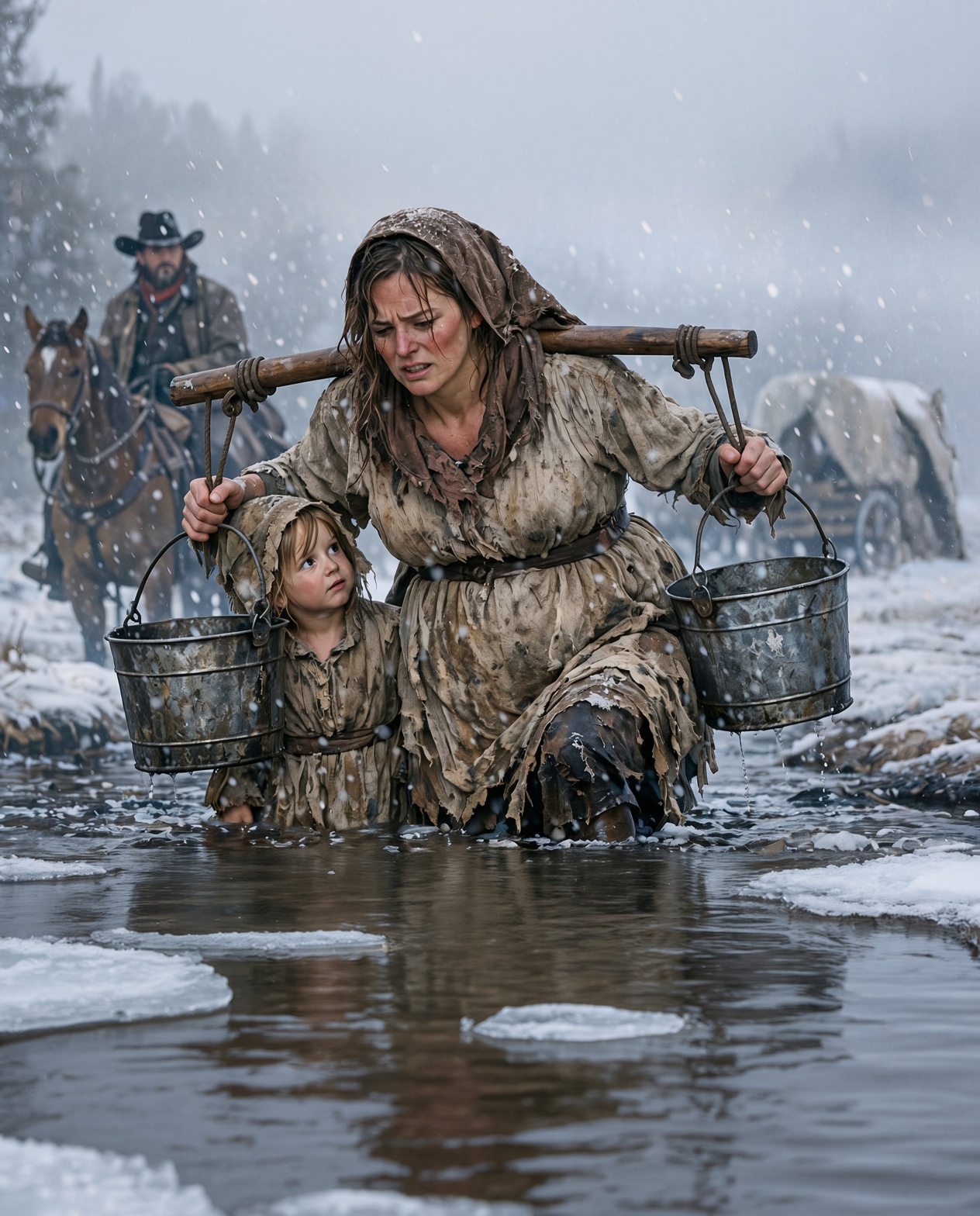
PART 3 — THE SECRET BENEATH THE HEARTH THAT COULD DESTROY THE MAN WHO STOLE HER HOME
Maggaret Thorne had not slept properly in four nights.
Now she stood inside Silas Cole’s warm kitchen, holding a letter from her ᴅᴇᴀᴅ husband as though it might disappear if she loosened her grip.
“If Hackett comes for the land, look beneath the hearth.”
She read the words again.
Silas poured coffee into two cups.
“Do you know what he meant?”
Maggie shook her head.
“Ezekiel never told me about anything beneath the hearth.”
“Then we’ll find out.”
She looked at him.
“Why are you doing all this?”
Silas paused.
“Because someone has to stand beside you.”
“You barely know me.”
“I know you crossed a frozen creek without boots because your children needed water. I know you sold the last things you owned to keep your baby alive. And I know a man who uses a widow’s grief to steal her home doesn’t deserve to sleep peacefully.”
Maggie’s eyes filled.
She looked away before he could see.
By midday, the storm had eased enough for them to return to the homestead.
Silas brought two ranch hands and a wagon.
Maggie insisted on entering the cabin alone first.
The room looked smaller than she remembered.
The fire had gone out. Snow covered the floor near the door. Ruth’s empty cradle stood beside the bed.
Maggie touched its wooden rail.
“I thought we’d never come back.”
Silas stood behind her.
“But you did.”
She nodded.
Then she knelt beside the hearth.
Ezekiel had built it himself, placing each stone carefully. He used to say a good hearth was the heart of a home.
Maggie remembered him working late into the night, sometimes stopping to stare at one particular stone near the left corner.
She pressed her fingers against it.
It moved.
Silas brought a small iron tool from the wagon. Together, they loosened the stone.
Beneath it lay a narrow wooden box wrapped in oilcloth.
Maggie’s breath caught.
Inside were three documents, a leather-bound notebook, and a small envelope bearing her name.
She opened the envelope first.
My dearest Maggie,
If you are reading this, then Hackett has finally made his move.
I am sorry I did not tell you sooner. I wanted to settle the matter before it could frighten you.
The eighty dollars I borrowed was paid back. I have the receipt to prove it. Hackett refused to return the note and continued adding interest to a debt that no longer existed.
But the money is not the worst of it.
He has been changing the boundary records around Dry Creek. He wants the creek crossing, the northern pasture, and the land where the new rail supply road is supposed to run.
I found the original survey.
Keep it safe. Trust no paper bearing Hackett’s signature.
And remember, Maggie, our home is not the land or the walls. It is you and the children. Never let him make you believe otherwise.
Forever yours,
Ezekiel.
Maggie pressed the letter to her chest.
For eighteen months, she had believed her husband had left her a debt she could never repay.
Now she knew he had died trying to protect them from the man who had created it.
Silas opened the notebook.
Inside were dates, measurements, names, and copies of payments made to a county clerk.
One name appeared repeatedly.
Cyrus Hackett.
Another name appeared beside it.
Sheriff William Rusk.
Silas frowned.
“That’s interesting.”
Maggie looked up.
“What?”
“Rusk signed the foreclosure notice.”
He turned another page.
“He also witnessed the boundary changes.”
Maggie felt cold despite the fire warming the cabin.
“Are you saying the sheriff helped him?”
“I’m saying we need proof before we accuse anyone.”
Silas examined the survey.
The original boundary line placed the Thorne homestead along a valuable stretch of creek frontage. Hackett’s newer records moved that line nearly a quarter mile, giving him control of the crossing.
The documents could prove the debt was false.
They could also prove the land transfer was fraudulent.
But they needed someone who could verify the survey.
Silas knew exactly who.
The next morning, they rode to Dry Creek to find Mr. Amos Whitcomb, the retired surveyor who had measured much of the valley before the county records were changed.
Whitcomb was nearly seventy, with a white beard and a cane polished smooth by years of use.
He studied the documents for a long time.
Then he removed his spectacles.
“Where did you get this?”
“My husband hid it beneath our hearth,” Maggie answered.
Whitcomb looked at her.
“Ezekiel was a good man. He came to me two months before he died. He suspected someone had altered the records.”
“Can you prove it?”
The old surveyor nodded.
“I kept my original field book. The county never collected it.”
Silas leaned forward.
“Would you testify?”
Whitcomb’s eyes moved toward the window.
“If Hackett learns I helped you, he’ll make my remaining years miserable.”
Maggie stood.
“My husband lost his life trying to keep what belonged to his children. I lost my boots, my wedding ring, and nearly my baby. I’m not asking you to be fearless, Mr. Whitcomb.”
Her voice shook, but she continued.
“I’m asking you not to let a dishonest man win simply because everyone else is frightened.”
The old surveyor stared at her.
Then he reached for his cane.
“Give me an hour to find my book.”
They returned to town that afternoon with the surveyor’s field book and the original receipt.
Hackett was waiting outside the courthouse.
His expensive coat was spotless, his boots polished, his smile practiced.
“Well, Mrs. Thorne. I wondered when you’d come to settle things.”
Maggie stepped down from the wagon.
“I have already settled my debt.”
Hackett laughed.
“Your husband borrowed eighty dollars. The balance is one hundred and forty-seven dollars and thirty-two cents.”
She held up the receipt.
“Here is proof that sixty dollars was repaid. And here is the original agreement showing the balance you claimed was never calculated correctly.”
Hackett’s smile faded.
Silas stepped beside her.
“And Mr. Whitcomb has the original survey proving you altered the property boundaries.”
For the first time, Hackett looked uncertain.
Then he noticed the sheriff standing near the courthouse steps.
“Sheriff Rusk,” Hackett called. “This is harᴀssment. These people have stolen county records.”
Rusk approached.
“Hand over those papers, Mrs. Thorne.”
Maggie held them тιԍнтer.
“No.”
“That’s an order.”
“Then show me the law that gives you the right to take evidence of a crime.”
The sheriff’s face darkened.
Hackett stepped closer.
“You’re making a terrible mistake, woman. You have three children and no money. You think this rancher will protect you forever?”
Silas moved between them.
“Careful.”
Hackett sneered.
“She’s not your responsibility.”
Silas’s voice was quiet.
“No. She’s a woman who deserves to stand on her own land without being threatened. And I’m standing here because I choose to.”
A crowd had gathered.
People who had once crossed the street to avoid Maggie now watched from the boardwalk.
Then Amos Whitcomb stepped forward.
“I measured that land myself,” he announced. “And I have the original field book.”
He held it high.
“The boundaries were changed after the survey was filed. I can identify every mark in this book, and I can testify that the records Hackett submitted are false.”
A murmur moved through the crowd.
Sheriff Rusk reached for the book.
But a second voice stopped him.
“Don’t touch it, William.”
Everyone turned.
Judge Harlan, who had arrived from the county seat that morning, stood at the courthouse entrance.
“I received a telegram from the state land office,” he said. “They have requested an immediate review of the Thorne property records.”
Hackett’s face drained of color.
The judge examined the documents, then looked at Maggie.
“Mrs. Thorne, this foreclosure will be suspended pending investigation. No one is taking your home today.”
Maggie could barely breathe.
“Does that mean my children can stay?”
The judge’s expression softened.
“It means your home remains yours unless a lawful claim proves otherwise.”
For the first time in months, Maggie felt the ground beneath her feet was solid.
The investigation lasted six weeks.
The original records confirmed what Ezekiel had written. The debt had been improperly inflated, the property boundaries had been altered, and payments had been made to a county clerk.
Sheriff Rusk was suspended while the case proceeded.
Hackett’s claim was dismissed.
The court ordered him to return the original debt note and pay the legal costs caused by his fraudulent filing.
Maggie kept her homestead.
She also received the money Hackett had unlawfully collected from Ezekiel’s estate.
It wasn’t a fortune.
But it was enough to repair the roof, buy proper winter boots, and fill the pantry.
And Ruth grew stronger every day.
Spring arrived slowly in Montana.
One morning, Silas found Maggie standing beside the creek.
She wore a pair of sturdy brown boots.
Eliza was skipping stones. Thomas was chasing a ʙuттerfly. Ruth sat bundled in a blanket, laughing whenever the older children made faces at her.
Silas approached.
“Looks like someone finally has proper footwear.”
Maggie smiled.
“I almost forgot what warm feet felt like.”
He looked down at the creek.
“Do you ever wish you’d taken my first offer differently?”
“What offer?”
“The ham.”
She laughed.
“You were a terrible salesman.”
“I’ve been told.”
They stood quietly for a moment.
Then Maggie turned toward him.
“Silas, why did you come back that night? In the blizzard?”
He looked at Ruth.
“Because I knew what it was like to lose someone while there was still a chance to save them.”
Maggie lowered her eyes.
“And now?”
Silas took a slow breath.
“Now I find myself hoping I might have a reason to stay.”
She looked at him.
“Are you asking me to marry you?”
“No.”
His answer surprised her.
“I’m asking if I can keep showing up. If I can keep helping with the fence, bringing wood when the weather turns, and sitting at your table when there’s room.”
Maggie’s eyes shone.
“And if I want you there even when there’s no work to do?”
Silas smiled for the first time without sadness touching his face.
“Then I’d be a very lucky man.”
Maggie reached for his hand.
He held it gently, as though he understood that trust was something earned, not taken.
Behind them, Eliza shouted.
“Mr. Cole! Ruth laughed!”
Silas turned.
The baby was smiling at him.
He walked toward the children, and Maggie followed.
For five years, Silas had believed his heart had been buried with the family he lost.
For eighteen months, Maggie had believed her life was nothing but a series of things she had to surrender.
But that spring, beside a little Montana creek, they discovered something neither had expected.
Sometimes the worst winter of your life doesn’t come to take everything.
Sometimes it brings someone who helps you find your way home.