PART 3 — THE GIFT NO ONE COULD TAKE AWAY
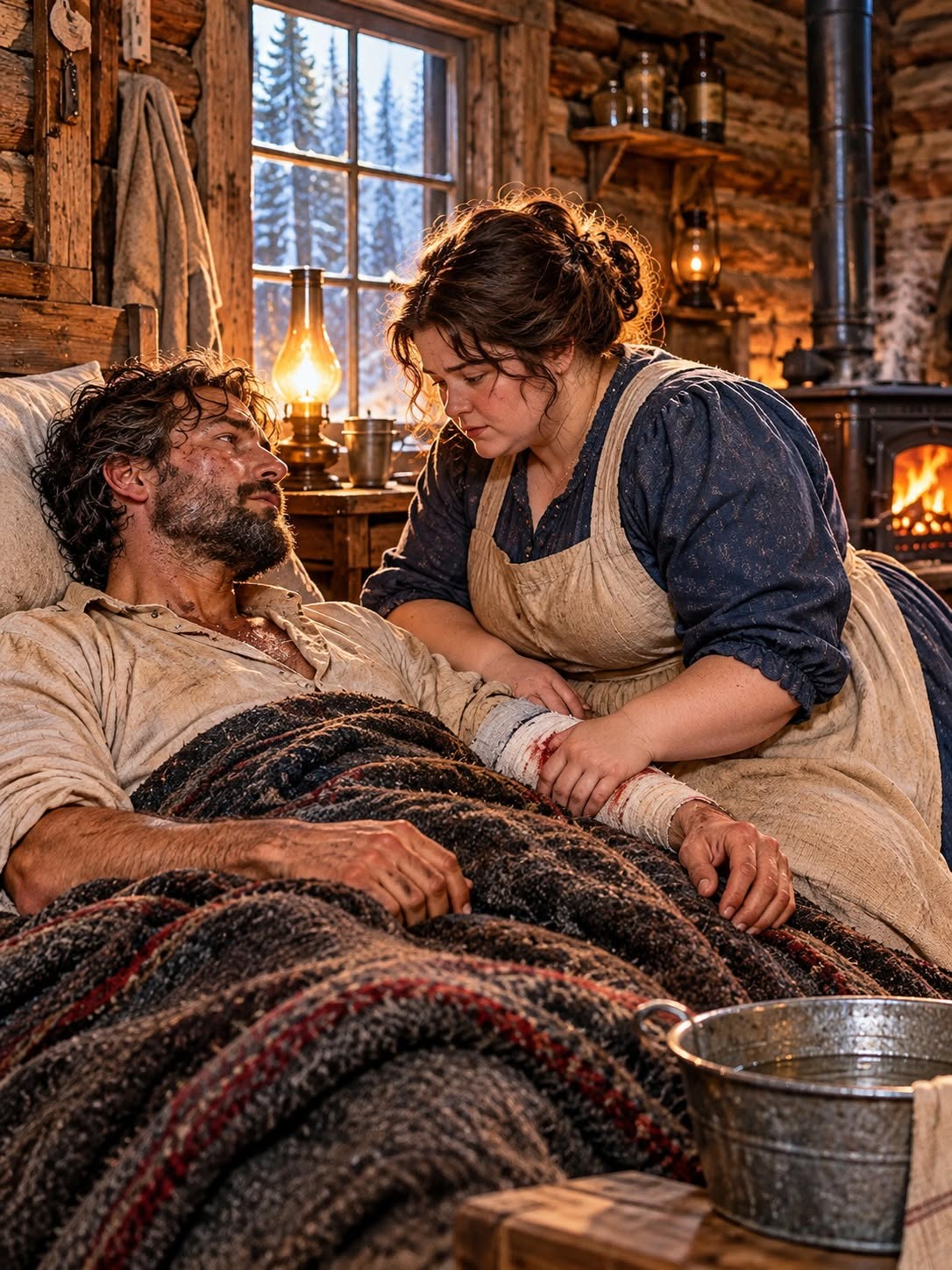
ABANDONED BY HER MAIL-ORDER GROOM, SHE FOUND SHELTER WITH A BROKEN COWBOY WHO HAD LOST EVERYTHING. SHE SLOWLY HEALED HIS WOUNDED HEART, NEVER ASKING FOR ANYTHING IN RETURN. BUT WHEN HE DISCOVERED HER SACRIFICES, HE GAVE HER SOMETHING SHE NEVER EXPECTED: A HOME OF HER OWN.
PART 3 — THE GIFT NO ONE COULD TAKE AWAY
By the middle of October, Noah could stand with the help of a walking stick.
By the end of the month, he could cross the kitchen without ᴀssistance.
And by the first week of November, he made the mistake of believing he was ready to return to work.
Ella found him attempting to saddle his horse before breakfast.
“Absolutely not.”
Noah froze with one hand on the saddle.
“Good morning to you, too.”
“You were told to rest another two weeks.”
“I’ve rested for two months.”
“Then you have two more weeks to become very good at it.”
“I have cattle to tend.”
“And you have a leg that still swells by evening.”
He turned toward her, frustration written across his face.
“Miss Jessop, I appreciate what you’ve done. But I won’t spend the rest of my life being treated like a helpless old man.”
Ella stepped closer.
“Then don’t behave like one.”
He stared at her.
For a moment, neither spoke.
Then Noah laughed.
It was sudden and rusty, as though the sound had been locked away for years.
Ella smiled, and something in his chest shifted.
He had forgotten how beautiful a smile could be when it was given without fear.
That afternoon, Hollis returned from town carrying a newspaper and a letter.
The letter was from the bank.
The ᴅᴇᴀᴅline had been moved forward. Unless Noah paid the outstanding balance within ten days, the bank would begin foreclosure proceedings.
Noah read it twice.
Then he folded it carefully and put it in his pocket.
He did not tell Ella.
Instead, he called Hollis into the barn and gave him instructions to sell twenty head of cattle.
It would not be enough.
He knew that.
But it was all he had left.
The next morning, Ella noticed that the small gold locket she had worn around her neck since arriving at the ranch was gone.
She said nothing when Annie asked about it.
She only kissed the child’s forehead and told her that some things were meant to be traded for something more important.
Two days later, Hollis rode into town with a sealed envelope.
When he returned, he found Ella scrubbing the kitchen floor.
“Miss Jessop,” he said slowly, “what have you done?”
She looked up.
“Nothing.”
He held out a receipt.
It was from the jeweler in Ellensburg.
The locket had been sold for forty-two dollars.
Hollis looked at her with disbelief.
“That belonged to your mother, didn’t it?”
Ella took the receipt from his hand.
“It was the only thing of value I owned.”
“And you sold it?”
“The ranch needs money.”
“Young lady, that ain’t your responsibility.”
“No,” she said quietly. “But these people have become important to me.”
Hollis shook his head.
“Does Noah know?”
“Please don’t tell him.”
But Hollis was not the only one who had heard.
Noah stood just outside the kitchen door.
He had come looking for Ella.
Now he stood perfectly still, one hand gripping his walking stick.
He had spent his whole life believing a person should never owe anyone more than they could repay.
And here was a woman who had given away the last thing connecting her to the mother she had loved, simply because she wanted his family to keep its home.
That evening, he confronted her.
“Where is your locket?”
Ella stopped folding laundry.
“Mr. Larkin—”
“Don’t lie to me.”
She set the clothes aside.
“I sold it.”
“Why?”
“You know why.”
“I didn’t ask what you bought with it. I asked why you thought you had the right to sacrifice something that belonged to you for my debts.”
Her eyes filled, though she fought to keep her voice steady.
“Because Annie deserves to grow up in the only home she remembers. Because Hollis has spent eleven years keeping this place alive. Because you have worked your entire life to build something, and I couldn’t stand to watch a bank take it away.”
Noah’s face тιԍнтened.
“You should have told me.”
“You would have refused.”
“Of course I would have!”
“Then you understand.”
He looked at her as if she had struck him.
Ella took a breath.
“I know what it is to arrive somewhere believing you might finally belong, only to discover that the promise was never real. I won’t let another person lose their home if I can help it.”
Noah’s anger disappeared.
“What happened to you, Ella?”
For the first time, she told him.
She told him about Wendell Greer, the five-dollar gold piece, and the letter that had ended her engagement before it began. She told him about the long journey west and the humiliation of sitting alone at Cold Creek Station while strangers carried a bleeding man through the door.
“I thought I was coming here to begin a life,” she whispered. “Instead, I found out that the man I had trusted with my future had already chosen someone else.”
Noah listened without interrupting.
“And now?” he asked.
Ella looked toward the window.
“Now I have work. I have a room with a lock. I have Annie, who makes me paper birds. And I have people who need me.”
She smiled faintly.
“That’s more than I expected to find.”
Noah reached for her hand.
She let him take it.
 “You deserve more than being needed,” he said.
Before she could answer, he released her hand and walked out.
For the next three days, Noah was strangely quiet.
He rode into town with Hollis, visited the bank, and spent hours in his late brother’s old office. He returned each evening with mud on his boots and a thoughtful expression.
Ella ᴀssumed he was preparing to sell the ranch.
She began packing her trunk.
She had saved enough of her wages to buy a train ticket east. There was a teaching position advertised in Spokane, and she could start over there. She would not stay where she was no longer wanted.
On the morning she planned to leave, Annie found her folding a dress.
“Are you going away?”
Ella stopped.
“Just for a little while, sweetheart.”
Annie’s eyes filled.
“Did I do something wrong?”
Ella dropped to her knees.
“Oh, darling. No. Never.”
“Then why can’t you stay?”
Ella hugged her тιԍнтly.
“I wish I could explain.”
A voice came from the doorway.
“Then let me.”
Noah stood there, holding a leather folder.
He had dressed carefully, in his best shirt and clean trousers. His walking stick rested against the doorframe.
“Miss Jessop,” he said, “would you come outside with me?”
She hesitated.
“Mr. Larkin, I was just leaving.”
“I know.”
He stepped aside.
“Please. Just five minutes.”
Outside, the autumn sun lay across the fields. Beyond the barn stood a small white house with a red roof, surrounded by a few old apple trees.
Ella had seen it before, from a distance.
It had belonged to Noah’s parents and had been empty for years.
Noah held out the leather folder.
“That house belonged to my mother. The land around it is forty acres. It has its own well, a garden, a barn, and a clear тιтle.”
Ella stared at him.
“What does this have to do with me?”
“Everything.”
He opened the folder.
Inside was a deed bearing her name.
Ella Jessop.
The property had been transferred to her legally, without debt or obligation.
She looked from the paper to Noah.
“I don’t understand.”
“I bought out the bank’s claim against the ranch yesterday. The cattle sale helped, but it wasn’t enough. Hollis and I found another way to settle the balance.”
He paused.
“And the house?”
“I’ve put it in your name.”
Ella shook her head.
“I can’t accept this.”
“You can.”
“Noah, it’s too much.”
“No. It’s a home.”
His voice grew softer.
“Not a room you can be dismissed from. Not a place where you have to earn your right to stay. A home that belongs to you, whether you work for me or never set foot on this ranch again.”
Tears slipped down Ella’s cheeks.
“Why would you do this?”
Noah looked toward the house.
“Because when I was lying in that bed, I thought my life was over. I had lost my brother, my strength, and nearly my land. I believed there was nothing left worth holding on to.”
He looked back at her.
“Then you came along. You saved my leg, but you did something more important. You taught Annie to laugh again. You made this house feel like a home. And when you thought nobody was watching, you gave up the one thing you had left to help us.”
He swallowed.
“I cannot give you back your mother. I cannot erase what that man did to you. But I can make certain you never have to depend on the kindness of a stranger for a roof over your head again.”
Ella pressed the deed against her chest.
For years, she had dreamed of a door she could close without asking permission.
A garden she could plant without fearing someone would claim it.
A place where she could leave her shoes by the fire and know she would still be welcome in the morning.
Now it stood before her.
A home of her own.
“There’s one more thing,” Noah said.
She looked up.
“I don’t want you to stay because you feel indebted to me. I don’t want you to stay because Annie needs you. And I don’t want you to stay because you think you have nowhere else to go.”
He took a careful breath.
“I want you to stay because I love you, Ella. And if you can ever find it in your heart to love a stubborn, half-broken cowboy, I’d like to spend the rest of my life proving that you were never a burden to me.”
Ella began to cry in earnest.
“I don’t need you to prove anything.”
“Then let me ask.”
He held out his hand.
“Will you build a life with me?”
She looked at his hand, then at the house, then at Annie watching from the porch with both hands clasped beneath her chin.
“Yes,” Ella whispered. “But I want to plant roses by the front door.”
Noah smiled.
“Then we’ll plant roses.”
“And a vegetable garden.”
“Whatever you like.”
“And Annie gets to choose the curtains.”
From the porch came a delighted squeal.
Noah laughed and pulled Ella gently into his arms.
The wedding took place in spring beneath the old apple trees. Hollis stood beside Noah, while Annie carried a basket of wildflowers and scattered them along the path.
There were no grand speeches and no expensive gifts.
Only a small gathering of friends, warm sunlight, and two people who had learned that love was not a bargain struck between strangers.
It was a choice made freely, day after day.
Ella moved into the little white house, but she never stopped helping at the ranch. She opened a small room beside the kitchen where she treated injured neighbors and taught Annie to read, sew, and keep a garden.
Noah built her a proper porch, with wide steps and a swing overlooking the valley.
One evening, months later, he found her sitting there with a small wooden box in her lap.
Inside lay the gold locket she had sold.
Noah had bought it back from the jeweler.
Ella touched its worn surface, unable to speak.
“I thought you might want it returned,” he said.
She closed the box and leaned against him.
“I thought I had lost everything when that letter came.”
Noah kissed her hair.
“So did I, once.”
She looked toward the little house, its windows glowing in the dusk.
“But we didn’t.”
“No,” he said. “We found something better.”
And as the evening wind moved gently through the apple trees, Ella understood what she had spent so many years searching for.
A home was not simply four walls and a roof.
It was a place where nobody could make you feel unwanted.
A place where your name belonged on the deed, your voice mattered at the table, and your heart could finally rest.
The man she had once saved had given her a home.
But the greatest gift he had given her was the certainty that she would never again have to beg anyone to let her stay.