PART 2 — The Woman With the Briefcase Revealed My Husband’s Final Secret
If anything happens, make sure Emily receives everything.
Beneath the sentence was a phone number and a name.
Laura Bennett, Estate Attorney.
I had never heard Daniel mention her.
For several minutes, I sat on the folding bed, listening to the house slowly come alive. Water ran through the kitchen pipes. A cupboard slammed. Ashley laughed at something Brandon said.
They were having breakfast.
Inside a warm house.
While I sat in an unheated garage, pregnant with Daniel’s child, still wearing the black dress I had buried him in.
I looked at the phone number again.
Then I made the call.
A woman answered after two rings.
“Bennett Law Office. This is Laura.”
“My name is Emily Carter. My husband was Daniel Carter. I found a note with your name in his papers.”
The silence that followed was immediate.
“Oh,” she whispered. “Emily.”
Something in her voice made my heart race.
“You knew my husband?”
“Yes. And I’ve been waiting for you to contact me.”
I gripped the edge of the bed.
“Why? What did Daniel leave behind?”
“I can’t discuss the details over the telephone. But I need to ask you something first. Are you somewhere safe?”
The question nearly broke me.
I looked at the garage door, the cold concrete, and the thin quilt wrapped around my shoulders.
“Not particularly.”
“Where are you?”
I told her.
“Emily, please stay there for the moment. I’m going to come to you. And I want you to bring every document Daniel left you.”
I hesitated.
“Is something wrong?”
“No,” Laura said carefully. “But your husband made very specific arrangements, and I believe it’s time you understood them.”
She paused.
“Did Daniel ever tell you about a trust he established before his last deployment?”
“No.”
“Then we have a great deal to discuss.”
The call ended.
I sat motionless for several seconds.
A trust?
Daniel had never been a man who flaunted money. He bought practical things, repaired what he could, and saved for the future. We had been planning to purchase a small house with a yard where our child could play.
We had discussed everything from paint colors to nursery furniture.
But he’d never mentioned a trust.
I gathered his folder and slipped it into my handbag.
Then I walked to the kitchen.
My mother stood at the counter, pouring coffee. Ashley sat at the table wearing my old university sweatshirt, while Brandon scrolled through his phone.
Mom glanced at me.
“Oh, you’re up. Good. There’s some toast left if you want it.”
I looked at the warm kitchen.
“Mom, I need to ask you something.”
She sighed before I had even finished speaking.
“What now, Emily?”
“Why did you put me in the garage?”
Ashley rolled her eyes.
“Are we still talking about this?”
I turned toward her.
“Yes, Ashley. We are.”
Mom placed her coffee cup down.
“We’ve already explained the situation. Ashley and Brandon need a room. You were only going to be here temporarily.”
“I’m pregnant. My husband died three days ago. You promised I could stay here while I recovered.”
“And you can,” she replied sharply. “Nobody told you to leave.”
“You told me to sleep in an unheated garage.”
“You had blankets!”
I stared at her.
For a moment, I couldn’t understand how a mother could say those words to her own daughter without hearing the cruelty in them.
Then Ashley leaned back in her chair.
“Honestly, Emily, you’re making everyone uncomfortable. Brandon and I have been trying to settle in, and all you’ve done since you arrived is cry.”
My throat тιԍнтened.
“Daniel was my husband.”
“And we’re sorry,” Ashley said, with a shrug that made the apology feel meaningless. “But life has to go on.”
I looked at my sister, then at my mother.
“You’re right,” I said quietly. “It does.”
Neither of them seemed to know what to do with that answer.
I turned toward the door.
Mom called after me.
“Where are you going?”
“To meet someone.”
“Who?”
“Daniel’s attorney.”
My father’s voice came from the hallway.
“What attorney?”
He had just entered the kitchen, fastening the ʙuттons of his cardigan.
I watched his expression change when I mentioned Laura Bennett.
It was quick.
A flicker of recognition, followed by something that looked remarkably like fear.
“Laura Bennett?” he repeated.
“Yes.”
Dad set his newspaper down.
“Why would Daniel’s attorney be coming here?”
“I don’t know, Dad. Perhaps she can explain.”
For the first time since I had arrived, nobody had an immediate answer.
And that was when I began to suspect that Daniel’s note was about much more than money.
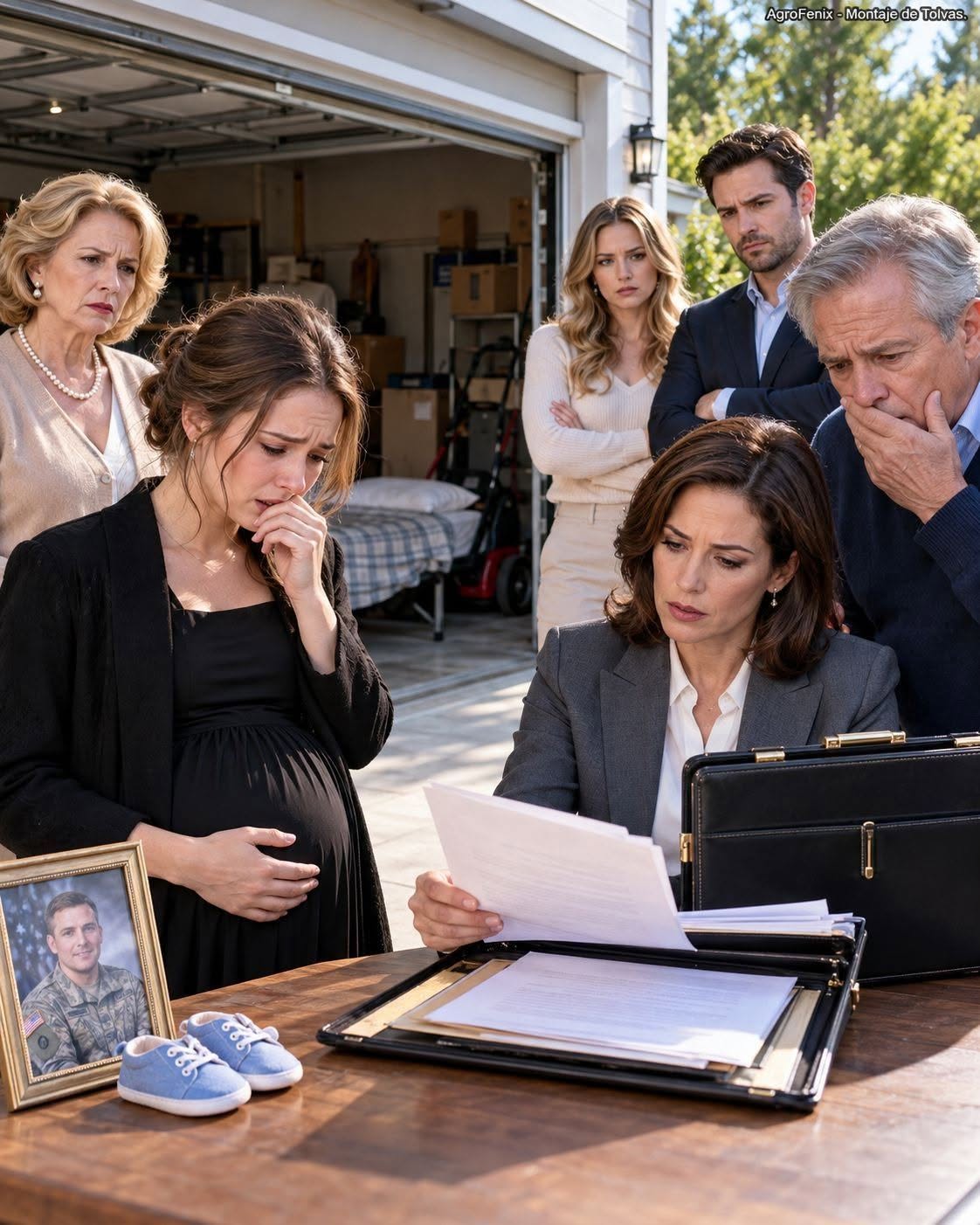
Laura arrived at ten thirty.
She drove a dark blue sedan and carried a structured leather briefcase. She was in her early fifties, with silver threaded through her dark hair and the kind of composed expression that suggested she rarely entered a room without knowing exactly why she was there.
I met her at the front door.
“Emily?”
“Yes.”
She looked at my face, then at the black dress I was still wearing.
Her expression softened.
“I’m very sorry about Daniel.”
The simple sincerity of those words almost brought me to tears.
“Thank you.”
She stepped inside.
My mother hurried into the hallway, suddenly wearing her most welcoming smile.
“Oh, you must be Laura! I’m Emily’s mother. Please, come in. We were just about to make more coffee.”
Laura acknowledged her politely but didn’t return the smile.
“Thank you. I’d prefer somewhere private where I can speak with Emily.”
Mom’s smile faltered.
“Of course. We can use the dining room.”
We entered together.
Dad followed us, and Ashley appeared moments later, apparently unwilling to miss whatever was about to happen.
Laura placed her briefcase on the dining table and removed several documents.
Then she looked directly at me.
“Before we begin, I need to verify your idenтιтy and confirm a few details. Daniel asked me to make sure that certain arrangements would be handled personally with you.”
I nodded.
She reviewed my identification, asked me to confirm our wedding date, and checked the details of Daniel’s service records.
Then she opened a thick folder.
“Daniel first contacted my office eighteen months ago,” she explained. “He wanted to establish a protected financial arrangement for you and any children you might have together.”
My breath caught.
“Any children?”
“Yes. He specifically asked that the arrangements account for the possibility of becoming a father.”
Tears filled my eyes.
That was Daniel.
Even when he was preparing for deployments, he had been thinking about the family we hoped to build.
Laura continued.
“He established a trust funded through a combination of personal savings, investments, and life-insurance benefits. He also arranged for a separate portion of his estate to be reserved for your child’s future.”
I stared at her.
“How much?”
She turned a page.
“Based on the current statements and the benefits payable under his policies, the ᴀssets designated for you and your child total approximately $1.8 million.”
The room went silent.
Ashley lowered her coffee cup so quickly that it struck the saucer.
My mother stared at Laura.
Dad’s face went completely pale.
“That’s impossible,” he whispered.
Laura slowly turned toward him.
“I’m sorry. Do you have some reason to believe the documentation is inaccurate, Mr. Carter?”
Dad swallowed.
“No. I just… Daniel never had that kind of money.”
“He was careful with his finances,” Laura replied. “And he made several investments before his final deployment. His estate documents are in order.”
I barely heard the rest.
One point eight million dollars.
Daniel had built a safety net for us while I was still comparing prices on baby cribs and wondering whether we could afford a house with an extra bedroom.
I pressed a hand to my stomach.
“Why didn’t he tell me?”
Laura’s expression grew gentle.
“He intended to tell you after his return. He wanted it to be a surprise, but he also wanted you to understand that the money was meant to give you choices—not to dictate how you lived.”
I began to cry.
For the first time since Daniel’s death, the tears weren’t only grief.
They were the painful realization that even in the middle of his own dangerous world, my husband had been thinking about how to protect us.
Laura slid a sealed envelope across the table.
“He left this for you.”
My name was written on the front in Daniel’s familiar handwriting.
I opened it with trembling fingers.
My Emily,
If you’re reading this, something has happened that I hoped we would never have to face.
First, I need you to know that none of this is your fault. Whatever happens, please don’t spend your life wondering whether you could have done something differently.
You and our child are my greatest joy. I don’t know what the future holds, but I know I want you to have the freedom to build a good life, even if I’m not there to see it.
Laura knows what I’ve arranged. Trust her to help you understand it.
And please remember this: you are stronger than you realize, but you don’t have to prove your strength by suffering alone.
I love you, always.
Daniel.
I pressed the letter to my chest.
The room blurred through my tears.
Then my father spoke.
“Emily, perhaps we should discuss this as a family.”
I looked up.
Only moments earlier, he had seemed unable to believe the money existed. Now he had moved his chair closer to the table.
“Discuss what?” I asked.
“Well, this is a substantial amount. You’re grieving, you’re pregnant, and you shouldn’t have to make financial decisions on your own.”
Laura closed the folder.
“Mr. Carter, the trust has an established administrator, and Emily has independent legal representation available through my office. There is no need for her to make any immediate decisions.”
Dad ignored her.
“I’m her father. I can help her manage things.”
I stared at him.
“Where was that concern last night?”
His mouth opened, then closed.
“Emily, don’t be unreasonable.”
“Unreasonable?”
My voice trembled, but I didn’t look away.
“I was sleeping on a folding bed beside a lawn mower. You knew I was pregnant. You knew I had just buried my husband. And you didn’t say a word.”
Dad’s face reddened.
“Your mother made the sleeping arrangements.”
“And you let her.”
The words settled heavily over the table.
For once, he had no excuse.
Then Laura removed one final document from her briefcase.
“I believe there’s something else Emily needs to see.”
She placed it on the table.
It was a notarized declaration bearing Daniel’s signature, dated several months before his final deployment.
At the top were the words:
NOTICE OF UNAUTHORIZED ESTATE INQUIRY
My stomach тιԍнтened.
“What is this?”
Laura looked at my father.
“Mr. Carter, I think you should explain.”
Dad went completely still.
My mother turned toward him.
“Explain what?”
He stared at the document as though it might disappear if he refused to acknowledge it.
Laura continued.
“Daniel discovered that someone had contacted a financial adviser seeking information about his ᴀssets and potential beneficiaries. The inquiry was made without his permission and included personal information that wasn’t publicly available.”
I looked at my father.
“Who made the inquiry?”
Laura placed another page beside the first.
The name was printed clearly.
Richard Carter.
My father.
For several seconds, I couldn’t breathe.
“Dad?”
He stood abruptly.
“This is being taken out of context.”
“What context?”
He looked at Laura, then at my mother.
“Daniel misunderstood what I was doing.”
Laura remained composed.
“Daniel documented the inquiry and instructed my office to preserve the records. He did not authorize you to act on his behalf, and he specifically instructed that no estate information be released to you without Emily’s written consent.”
My father’s hands began to shake.
I stared at him, searching for some explanation that could make the page in front of me less devastating.
“Why would you do that?”
He sank back into his chair.
“I was trying to help.”
“By asking about my husband’s money without telling either of us?”
“I wanted to make sure you would be taken care of!”
“Then why didn’t you ask Daniel? Why didn’t you ask me?”
Dad rubbed his forehead.
“I thought there might be complications. You were young, Daniel was deployed, and your mother and I were worried about the future.”
“Worried about what?”
He didn’t answer.
Laura spoke quietly.
“Daniel was concerned that his financial arrangements might become a source of pressure on Emily. That’s why he documented his wishes and established safeguards.”
I felt sick.
Daniel had known there was a reason to protect our future from people who might try to control it.
But I hadn’t understood what he meant.
Not until that morning.
My mother stared at my father.
“Richard, you told me you were helping Daniel organize his finances.”
Dad looked at her.
“I was trying to understand the situation.”
“Did you contact someone about his money?”
He didn’t respond.
Mom slowly stepped away from him.
For the first time, I saw her looking at my father the way I had looked at her when she sent me to the garage.
As though she were finally seeing something she had spent years refusing to acknowledge.
Laura stayed for another hour.
She explained the trust, the insurance benefits, and the protections Daniel had put in place. She made it clear that the money belonged to the designated beneficiaries under the governing documents, not to my parents, and that any questions about the unauthorized inquiry would be handled through the appropriate legal channels.
She also arranged for me to meet privately with an independent financial adviser.
“You don’t need to make any major decisions today,” she told me. “Your first priority is your health and your child. We’ll handle the paperwork one step at a time.”
I nodded.
For the first time since Daniel died, I felt as though someone was protecting me without expecting anything in return.
Before Laura left, she handed me her card.
“Call me if you need anything, Emily. Anything at all.”
I hugged her.
“Thank you for keeping your promise to him.”
She returned the embrace.
“He loved you very much.”
Then she picked up her briefcase and walked out.
I remained at the table, surrounded by documents that had changed everything I thought I knew about my future.
My father sat opposite me.
My mother stood near the window.
Ashley had disappeared upstairs.
Nobody spoke until Dad finally cleared his throat.
“Emily, I hope you understand that your mother and I were under a lot of pressure.”
I looked at him.
“Pressure from whom?”
He rubbed his hands together.
“We’ve had financial difficulties.”
I waited.
He looked toward the floor.
“Brandon’s business hasn’t been doing well. Ashley and he needed somewhere to stay. We’ve been helping them, and things have become more expensive than we expected.”
I felt a chill move through me.
“Are you saying you needed my husband’s money?”
“No!” Dad protested. “Not exactly.”
“Then what are you saying?”
He swallowed.
“I thought if we understood the estate, we might be able to plan for everyone.”
I stared at him.
“Everyone?”
“Your mother, me, your sister…”
“And me?”
He looked up.
“Of course you.”
I shook my head slowly.
“You didn’t even give me a warm bed.”
He flinched.
“You let me sleep in the garage while I was carrying your grandchild. And now that you know Daniel left us money, suddenly you’re worried about my future.”
“That’s not fair.”
“Then tell me what is fair, Dad.”
He had no answer.
I stood and gathered Daniel’s letter and the documents Laura had given me.
“I need some time away from this house.”
My mother hurried toward me.
“Emily, don’t leave like this.”
I looked at her.
“Where would you like me to sleep tonight?”
She froze.
I didn’t wait for an answer.
I carried my bags upstairs, packed the few things I’d brought, and returned to the kitchen.
Mom followed me to the front door.
“Please,” she whispered. “We can work this out.”
I looked at her tired face.
For a moment, I remembered the mother who had sat beside my bed when I was sick as a child. The woman who had once braided my hair before school and packed lunches when I forgot.
I didn’t hate her.
But I couldn’t pretend that the woman standing before me had treated me with love during the worst week of my life.
“I need you to understand something,” I said. “I don’t need you to give me a bedroom because Daniel left money. I needed you to give me a bedroom because I’m your daughter.”
Her eyes filled with tears.
“I know.”
“I don’t think you do. Not yet.”
Then I walked out.
Laura helped me find a quiet furnished apartment near a medical clinic.
It wasn’t extravagant. It had a small kitchen, a bedroom with sunlight in the morning, and enough space for a crib.
For the first time in weeks, I slept in a warm bed.
I placed Daniel’s letter in the bedside drawer and set his identification tags beside it.
Every night, I talked to our baby.
I told the little one about Daniel’s kindness, his terrible jokes, and the way he used to sing off-key while cooking dinner.
I promised our child that even though their father wouldn’t be there to hold them, they would grow up knowing exactly who he was.
The months that followed weren’t easy.
Grief still arrived unexpectedly. Some mornings I woke up reaching for Daniel before remembering that he was gone. Other days, the baby’s movements reminded me that a part of our future was still unfolding.
But I began rebuilding my life.
I attended my prenatal appointments. I met with Laura and the financial adviser. I made a budget that would allow me to raise my child without depending on my parents.
And I learned that security wasn’t only about money.
It was about having choices.
It was about knowing I could walk away from a situation that hurt me without wondering where I would sleep.
My father sent several messages asking to meet.
I didn’t answer immediately.
My mother sent an apology that began with I’m sorry you felt hurt.
I told her that I needed an apology for what she had actually done, not for how I had reacted.
She didn’t respond for several days.
Then, one evening, a message arrived.
Emily, I was cruel to you. You came home grieving, and I sent you to the garage because I didn’t want to inconvenience Ashley. There is no excuse for that. I’m sorry.
I read it twice.
It wasn’t enough to erase what happened.
But it was the first time she had named her own actions without blaming me.
I replied:
Thank you for acknowledging it. I need time, but I’m willing to talk when I’m ready.
Then I put my phone away.
I didn’t owe anyone instant forgiveness.
And I didn’t have to choose between protecting myself and leaving the door open to a better relationship.
Four months later, my daughter was born.
I named her Grace.
She arrived just after sunrise, with a furious cry and a head full of dark hair.
When the nurse placed her in my arms, I began to sob.
“Your daddy would have loved you so much,” I whispered.
Grace opened her eyes briefly, then settled against my chest.
For the first time since Daniel’s death, I could imagine a future that contained joy without feeling guilty for it.
Laura visited a few days later, bringing flowers and a small envelope.
“Daniel asked me to give you this if you had a child together,” she explained.
Inside was a pH๏τograph of Daniel holding the tiny blue baby shoes he’d bought months before his death.
On the back, he had written:
For Grace, whenever she arrives. Daddy can’t wait to meet you.
I pressed the pH๏τograph against my heart.
He had known our daughter might arrive without him.
And he had still found a way to leave her something filled with love.
That evening, I placed the pH๏τograph in a frame beside Grace’s crib.
Then I called my mother.
She answered almost immediately.
“Emily?”
“Grace is here,” I said.
My mother began crying.
“Can I see her?”
I looked down at my daughter.
“Not today. I need a little time to recover, and I want our first visit to happen when I’m ready.”
There was a pause.
Then Mom whispered, “All right.”
No argument.
No accusation.
No demand that I make her feel better.
It was a small change, but I noticed it.
My father came to see me three weeks later.
He arrived alone and waited in the lobby until I agreed to meet him.
When he entered my apartment, he carried no gifts and made no attempt to hug me.
He simply sat down and looked at Grace sleeping in her bᴀssinet.
“She looks like Daniel,” he whispered.
“She does.”
He watched her for a long moment.
Then he turned toward me.
“I owe you an apology.”
I said nothing.
He took a breath.
“I was wrong to interfere with Daniel’s financial arrangements. I had no right to seek information about his estate without his permission. And I was wrong to stand by while your mother sent you to the garage.”
His voice cracked.
“I told myself I was keeping the peace. But I was really avoiding an argument with your mother and Ashley. I let you pay the price because I thought you would endure it.”
I felt tears prick my eyes.
He continued.
“When Laura showed me Daniel’s documents, I realized how much I had failed you. Not because of the money. Because Daniel had made arrangements to protect you, and I had been more concerned about what the estate might mean for everyone else than about what you needed that night.”
For a long time, neither of us spoke.
Then I asked, “Why didn’t you just give me your bedroom?”
He lowered his head.
“I should have.”
It was such a simple answer.
No excuses.
No explanation about family pressure.
No attempt to make me responsible for his decision.
Just an admission.
“I can’t promise that I can forgive you right now,” I said.
“I understand.”
“And Daniel’s estate is not available to the family. The trust is for Grace and me. That isn’t going to change.”
Dad nodded.
“I won’t ask you for money.”
“Good.”
He looked at his granddaughter again.
“May I hold her?”
I considered the question.
Then I lifted Grace from the bᴀssinet and placed her carefully in his arms.
He held her as though he were afraid to breathe too hard.
“Hello, little one,” he whispered. “I’m your grandfather.”
Grace stirred.
My father began to cry.
I didn’t rush to comfort him. His remorse was his to carry, just as my grief was mine.
But I let him hold her.
It was not a declaration that everything was forgiven.
It was simply a chance to begin behaving differently.
And that was enough for one afternoon.
A year later, I still remembered the cold garage.
I remembered the concrete floor, the thin quilt, and the laughter coming through the wall while I sat alone with my husband’s identification tags.
I remembered the way my father had gone pale when Laura placed that final document on the table.
But those memories no longer controlled my life.
Grace was thriving. I had built a stable home for us, and the trust Daniel established ensured that we had the resources to plan for her future. I continued to work with Laura, making careful decisions rather than rushing into anything because I felt frightened or pressured.
My relationship with my parents remained complicated.
My mother was making an effort, though trust returned slowly. My father continued to show up for visits, and over time, his actions began to match his apologies.
Ashley never fully admitted what she had done. I stopped waiting for her to become someone she wasn’t ready to be.
I learned that family relationships could change, but only when people were willing to take responsibility for their choices.
And I learned something else.
Daniel’s greatest gift hadn’t been the money.
It had been the freedom to make decisions without fear of becoming homeless, the ability to protect Grace from financial uncertainty, and the knowledge that I could build a future without begging anyone to make room for us.
One evening, as I tucked Grace into bed, she pointed toward the pH๏τograph of Daniel holding the blue baby shoes.
“Daddy?” she asked.
I kissed her forehead.
“Yes, sweetheart. That’s Daddy.”
I told her about the man who had loved her before she was born. The man who had planned for her future, written letters he hoped he would never need to leave, and made sure we would have choices even if he couldn’t be there.
Then I turned off the light.
Standing in the doorway, I thought about the woman I’d been the morning after Daniel’s funeral: exhausted, frightened, pregnant, and convinced that losing her husband meant losing her entire world.
I wished I could reach back through time and tell her something.
That the garage wasn’t the end of her story.
That she would find people who honored her grief rather than treating it as an inconvenience.
That her daughter would be born into a home where warmth wasn’t something she had to earn.
And that one day, she would understand the difference between being tolerated and being loved.
My mother had sent me to an unheated garage because my sister wanted my bedroom.
She thought I had nowhere else to turn.
She was wrong.
Daniel had left me more than a financial inheritance. He had left me the means to stand on my own, the freedom to choose who could be part of our lives, and a final reminder that love should protect—not humiliate.
I had buried my husband, but I hadn’t buried my future. And when I finally walked out of that house, I stopped asking my family to give me a place to belong. I built one for myself and my daughter.