PART 2: THE WOMAN HE LEFT TO DIE
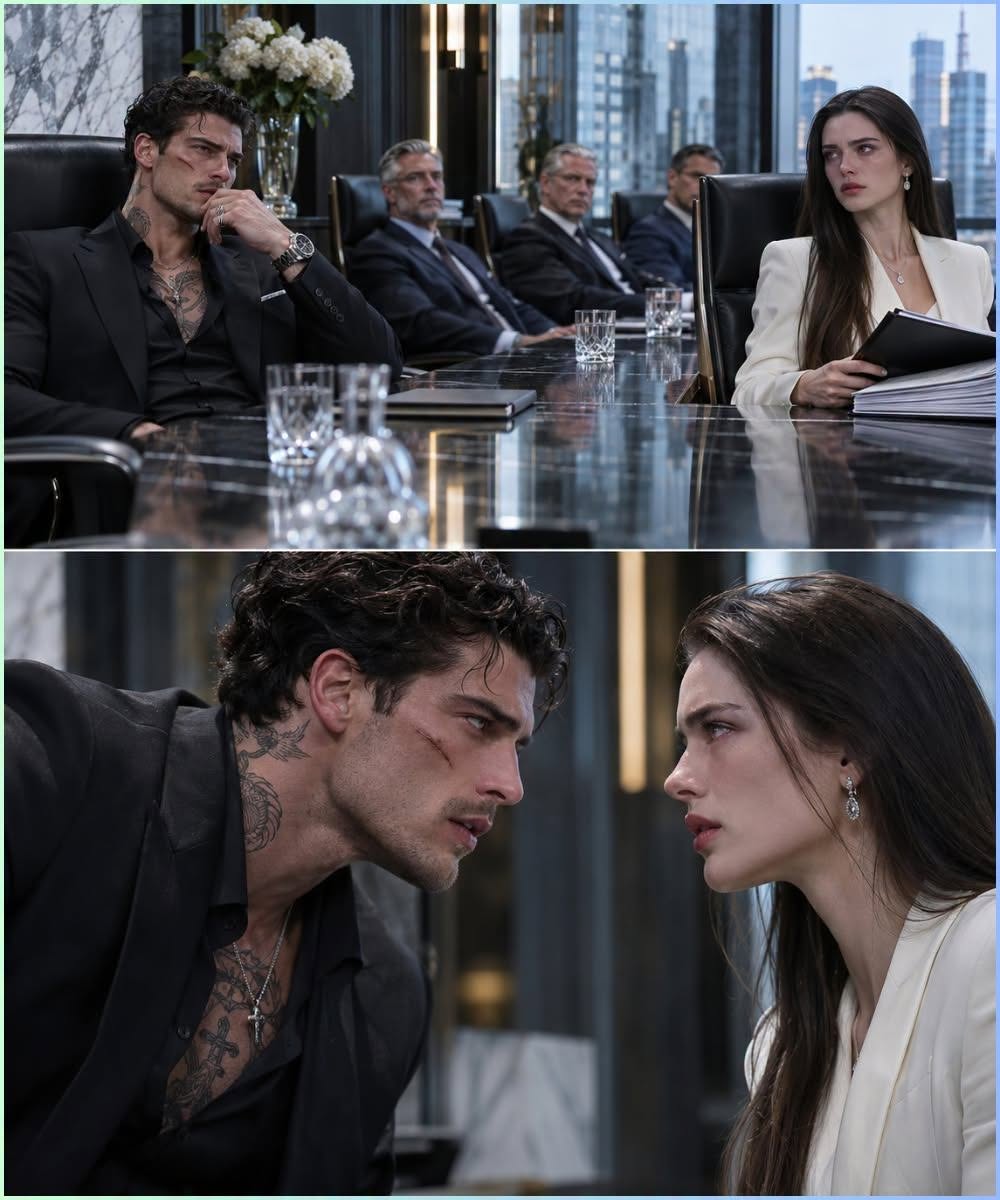
Vincent looked toward the window.
“Claire, this isn’t the time.”
I almost smiled.
“You’re right. The time was last night, when I was asking you to call an ambulance.”
His jaw тιԍнтened.
“Six months.”
The answer landed harder than I expected.
“Six months?”
“It wasn’t supposed to happen.”
“That’s what everyone says when they get caught.”
He pulled a chair closer to my bed.
“Evelyn and I became involved during the refinancing negotiations. It was complicated.”
I looked at him.
“She is our outside attorney.”
“I know.”
“She handled our contracts. She attended our family dinners. She stood beside me at my mother’s funeral.”
“I know, Claire.”
“And you slept with her?”
He rubbed his forehead.
“Yes.”
I turned my face toward the window.
For fifteen years, I had believed I knew the man sitting beside me. I knew how he took his coffee, how he folded his shirts, how he preferred the bedroom temperature. I knew the sound of his footsteps when he came home late.
But I had never known the man who could watch his wife suffocate and walk away.
“Why did you come here?” I asked.
“To make sure you’re all right.”
“No. You came because you want me to wait.”
He didn’t answer.
I looked back at him.
“You said not to make any permanent decisions until we talked. What decision are you afraid I’ll make?”
“Claire, we have a marriage. Fifteen years. A business. A life.”
“You had an affair.”
“I can explain.”
“Then explain why you left me on the floor.”
His expression hardened.
“I thought you were having a panic attack.”
“The chef knew I was having an allergic reaction. The server knew. The security guard knew. Why didn’t you?”
“You were upset. You’d been drinking.”
“I had one glᴀss of wine.”
“You were confronting me.”
“And that made it acceptable to leave me?”
He stood.
“I’m not going to sit here and be accused of trying to kill you.”
I stared at him.
“I didn’t accuse you of that.”
“Then stop looking at me like I did.”
I took a slow breath.
“Vincent, I almost died. I don’t have the energy to comfort you about how uncomfortable that makes you feel.”
He looked at me for a long moment.
Then his phone vibrated.
He glanced at the screen.
I saw Evelyn’s name.
He turned the phone over.
That small movement told me more than his explanation had.
“Go,” I said.
“Claire—”
“Go.”
He left.
This time, I didn’t ask him to turn around.
At 10:40 that morning, a nurse brought me a folder containing the results of the emergency tests and a note from the hospital physician.
The reaction had been severe. The swelling in my throat had restricted my airway. The medical team believed that a delay of several more minutes could have had catastrophic consequences.
I read the note twice.
Then I called my sister, Natalie.
She arrived less than an hour later.
When she saw me, she covered her mouth.
“Oh, Claire.”
I tried to smile.
“I’m okay.”
She pulled a chair beside the bed.
“Vincent called me last night.”
I looked at her.
“What did he say?”
“He said you’d had an allergic reaction, but that everything was under control.”
“Did he tell you he left?”
Natalie’s expression changed.
“No.”
I looked down at my hands.
“He didn’t call an ambulance.”
She went very still.
“What?”
“He looked at me. He knew I couldn’t breathe. He told everyone not to make a scene, then left with Evelyn.”
Natalie gripped the side of the bed.
“I’m going to kill him.”
“Please don’t. I don’t want to spend the rest of my life explaining why my sister attacked my husband.”
She sat down again, but her face remained pale.
“Claire, you need to get away from him.”
“I know.”
“Do you?”
I looked at her.
For the first time, I didn’t defend Vincent.
“I think I finally do.”
Natalie reached for my hand.
“Then we’ll figure everything out together.”
I was discharged two days later.
Vincent sent a driver.
I refused.
Natalie picked me up and took me to her apartment.
I wanted to go home, but the thought of entering the house where Vincent and I had lived for fifteen years made my chest тιԍнтen.
That afternoon, I called Margaret Ellis, our family’s attorney.
She arrived carrying a leather briefcase and a concerned expression.
“Claire, I heard what happened.”
“I need your help.”
“Of course.”
“I want to know exactly what Vincent has been doing with the company.”
Margaret opened her briefcase.
“Your husband has been working on the refinancing agreement for nearly a year. The two H๏τels in question are facing serious financial pressure.”
“I know that.”
“Do you know that the refinancing agreement includes a personal guarantee from the Bennett family holding company?”
I frowned.
“No.”
Margaret took out a document.
“Your signature appears here.”
I stared at it.
The signature looked like mine.
Almost.
But I had never signed that agreement.
“What is this?”
“A guarantee that would make certain family ᴀssets available if the refinancing failed.”
I looked up.
“Who submitted it?”
“Vincent’s office.”
“Was it witnessed?”
“Yes. Evelyn Cross.”
The room seemed to tilt.
Margaret continued carefully.
“I have not concluded that the document is fraudulent. But there are irregularities. Your signature appears to have been digitally reproduced from an earlier agreement.”
I stared at the page.
“So they used my name to secure the loan?”
“Possibly. We need the original records and the lender’s submission history.”
I looked at the date.
It was three weeks before the dinner.
Three weeks before Vincent had left me struggling to breathe.
“Margaret, I need you to investigate everything. The refinancing, the H๏τel accounts, Evelyn’s legal work, and every document carrying my signature.”
She nodded.
“Your husband may have a problem with that.”
I looked at her.
“Then he can explain it to the investigators.”
The next morning, Vincent arrived at Natalie’s apartment.
He had flowers.
A box of my favorite chocolates.
And the expression of a man who expected a difficult conversation to end in forgiveness.
Natalie opened the door.
“You have five minutes,” she said.
“I need to speak to my wife.”
“She doesn’t need to speak to you.”
“Please, Natalie.”
I appeared in the hallway.
“Let him in.”
Vincent entered.
He placed the flowers on the table.
“I’ve been worried about you.”
I looked at the flowers.
“You remembered.”
“What?”
“My favorite flowers.”
He frowned.
“Of course I remember.”
“It’s interesting. You remembered the flowers, but not how to call an ambulance.”
He closed his eyes briefly.
“Claire, I came to apologize.”
“Then apologize.”
He took a breath.
“I’m sorry I left you that night.”
“Why?”
“Because I handled the situation badly.”
“No. Why did you leave?”
His eyes moved toward Natalie.
“Can we speak privately?”
“No.”
He looked back at me.
“Evelyn was under pressure. The lender had called an emergency meeting. If we missed it, the refinancing could collapse.”
“And?”
“I believed you were going to be taken care of.”
“By whom?”
“My security chief.”
“The man you handed your phone to?”
Vincent said nothing.
I continued.
“You knew I couldn’t breathe. You knew I needed medical help. Why didn’t you tell him to call an ambulance?”
He lowered his voice.
“I didn’t think it was that serious.”
“You watched my face swell.”
“I know.”
“You heard me asking for help.”
“I know, Claire.”
“And you walked away.”
His expression broke slightly.
“I’ve replayed it a hundred times.”
“Good. I hope you never stop.”
He looked at the floor.
Then he noticed the folder on the table.
“What is that?”
“Documents.”
“What documents?”
“Company records.”
His eyes narrowed.
“Why do you have company records?”
“Because my signature appears on a refinancing guarantee I never signed.”
Vincent froze.
Only for a second.
But I saw it.
“Who told you that?”
“Does it matter?”
“Claire, those documents are confidential.”
“Then you should have been more careful about using my name.”
He took a step closer.
“You don’t understand the financial situation.”
“Then explain it.”
“Not here.”
“Why not?”
He looked toward Natalie.
“Because this is a private business matter.”
I smiled without humor.
“Then perhaps you should have discussed it with me before submitting a document bearing my signature.”
Vincent’s face changed.
“Don’t make accusations you can’t prove.”
I looked directly at him.
“That’s exactly what Margaret is trying to do.”
He picked up his flowers.
Then he put them down again.
“Claire, you’re making a terrible mistake.”
“No, Vincent. I’m finally checking the facts.”
He walked out.
Natalie locked the door behind him.
Neither of us spoke for several seconds.
Then she whispered:
“Who is this man?”
I looked at the closed door.
“I’ve been asking myself the same question.”
That evening, Margaret called.
She had found something.
The refinancing agreement had been submitted through an account belonging to Evelyn Cross’s law office.
More troubling, an internal email showed that Evelyn had asked Vincent whether I had approved the personal guarantee.
His response was short.
Claire knows enough. We can get the formal authorization after the lender releases the funds.
Evelyn replied:
That isn’t how this works. I need something that protects the firm.
Vincent answered:
You have my word.
Margaret paused.
“There is more.”
“What?”
“The lender received a second document. It contains your electronic signature and a statement confirming that you had reviewed the guarantee.”
“I never saw it.”
“I believe you. But we need to establish who created it.”
I closed my eyes.
“Margaret, was the refinancing going to benefit Vincent personally?”
There was a pause.
“Yes.”
“How?”
“Some of the funds were scheduled to repay loans to companies controlled by Vincent. Those loans were not clearly disclosed in the initial financial statements.”
I sat down.
“So he was using the refinancing to pay himself.”
“That’s one possibility the audit is examining.”
“And Evelyn?”
“Her firm would receive a substantial success fee if the refinancing closed.”
I looked toward the dark window.
The affair was one betrayal.
The financial documents were another.
But the most disturbing discovery was that the two were connected.
Vincent hadn’t simply been hiding a relationship.
He had been building a financial arrangement that required my name, my ᴀssets, and my silence.
And Evelyn had been helping him.
The next day, Margaret asked me to meet her at her office.
She had received a message from someone inside the H๏τel.
The executive chef.
His name was Thomas Reed.
He had asked to speak with me privately.
I arrived at 2:00 p.m.
Thomas was already waiting.
He looked uncomfortable.
“Mrs. Hale, I’m glad you’re recovering.”
“Thank you, Thomas.”
He glanced at Margaret.
Then he placed a small envelope on the table.
“I thought you should see this.”
Inside was a printed kitchen order from the night of the dinner.
It listed the ingredients used in the meal.
The lamb had been prepared with walnut oil.
My allergy was not listed anywhere on the reservation.
But beneath the printed order was a handwritten note.
Use the walnut oil. Do not subsтιтute.
I stared at it.
“Who wrote this?”
Thomas swallowed.
“Evelyn Cross.”
I looked up.
“Are you certain?”
“I saw her leave the note with the kitchen manager. She said the dish was part of a special menu.”
“Did she know about my allergy?”
Thomas nodded.
“She asked me two weeks earlier whether you still carried your emergency medication. I told her I didn’t know.”
Margaret leaned forward.
“Did you tell Vincent?”
“Yes. Before dinner, I told his security chief that the meal contained walnut oil. He said he would inform Mr. Hale.”
My stomach тιԍнтened.
“Did he?”
Thomas hesitated.
“I don’t know. But I heard Mr. Hale say something in the corridor.”
“What?”
Thomas looked down.
“He said, ‘She’ll be fine. Just keep the meeting moving.’”
I felt the blood drain from my face.
Margaret closed the envelope.
“Thomas, are you willing to provide a formal statement?”
He nodded.
“Yes.”
I looked at the handwritten note again.
This was no longer just an affair.
And it was no longer just a question of Vincent’s indifference.
Someone had knowingly placed an ingredient in my meal that could cause a life-threatening reaction.
Someone had known about my allergy.
And someone had wanted the evening to proceed without interruption.
I looked at Margaret.
“Contact the authorities.”
She nodded.
“I already have.”
PART 3: THE END — THE NIGHT THE TRUTH CAME OUT
The investigation moved quickly after Thomas provided his statement.
The H๏τel preserved its kitchen records, surveillance footage, staff communications, and the original reservation documents.
The police interviewed the kitchen manager and the security chief.
Evelyn Cross was asked to provide a formal account of her involvement.
Vincent was contacted through his attorney.
For the first time in fifteen years, he could not control who spoke to whom, what documents were examined, or which questions were asked.
But he still believed he could control me.
On Friday afternoon, he sent a message.
Come home. We need to settle this privately.
I stared at it for a moment.
Then I replied:
I will meet you at the H๏τel conference room. Margaret will be present.
He called immediately.
I declined.
A minute later, another message arrived.
Don’t bring lawyers into our marriage.
I typed:
You brought lawyers into my signature.
The conference room at the Halston Lake H๏τel was the same room where Vincent had abandoned me.
The chandelier still hung above the table.
The same dark wood panels lined the walls.
I chose the chair nearest the door.
Margaret sat beside me.
Vincent arrived five minutes late.
He looked at the room, then at Margaret.
“I thought this was supposed to be private.”
“It is,” I said. “There are three people here.”
He pulled out a chair.
“Claire, this has become ridiculous.”
Margaret placed a folder on the table.
“Before we discuss the marriage, we need to discuss the refinancing agreement.”
Vincent ignored her.
He looked at me.
“Do you understand what you’re doing? You’re putting two H๏τels and hundreds of employees at risk.”
I stared at him.
“Are you still using employees as an excuse?”
“I’m trying to protect them.”
“By using my signature without permission?”
“That document was part of a standard financing process.”
“Did I sign it?”
He looked at Margaret.
“Your attorney can answer that.”
Margaret opened the folder.
“We have the original electronic submission records. The signature was copied from an earlier document. The verification statement was entered through Evelyn Cross’s office.”
Vincent’s face hardened.
“That’s not proof of wrongdoing.”
“No,” Margaret said. “It’s evidence requiring investigation.”
He turned toward me.
“Claire, you know I would never steal from you.”
I looked at him.
“You already did.”
He exhaled sharply.
“Enough.”
“No. I spent fifteen years letting you decide when a conversation was over. That ends today.”
For a moment, he looked almost frightened.
Then he lowered his voice.
“I loved you.”
I felt the words pᴀss through me without finding anywhere to land.
“Did you?”
“Yes.”
“Then why did you leave me dying?”
He closed his eyes.
“I’ve explained that.”
“No. You’ve explained why the meeting mattered. You’ve explained why the H๏τel mattered. You’ve explained why the refinancing mattered. You have never explained why I didn’t.”
He looked at me.
“I panicked.”
“You looked at your watch.”
He said nothing.
“You told the staff not to make a scene.”
His jaw тιԍнтened.
“You walked out with Evelyn.”
“I thought you were going to be fine.”
“And if Thomas hadn’t called the ambulance?”
His expression changed.
I leaned forward.
“Would you have come back?”
He didn’t answer.
“Would you have even known?”
“Claire, please.”
I shook my head.
“You don’t get to ask me for mercy when you never gave me the chance to survive.”
Evelyn Cross arrived twenty minutes later.
She entered with her attorney and sat opposite Vincent.
For a moment, she looked at me.
Then she looked away.
Vincent leaned toward her.
“Why are you here?”
“My attorney advised me to cooperate.”
“Evelyn.”
She placed a folder on the table.
“I have documents.”
Vincent’s expression darkened.
“What documents?”
“Copies of the kitchen instruction, the reservation notes, and messages between you and the H๏τel manager.”
He stared at her.
“You told me those had been deleted.”
Evelyn looked at him.
“I never said that.”
Margaret opened the folder.
Inside were messages discussing the dinner menu.
One message from Evelyn read:
Claire’s allergy is severe. Are you certain you want the walnut oil used?
Vincent’s reply followed.
The dinner needs to proceed. Don’t create complications.
Another message came later.
If she reacts, call the H๏τel medical team. I cannot have the meeting delayed.
Evelyn had responded:
You need to understand what could happen.
Vincent’s final reply was:
I understand perfectly.
I stared at the screen.
The room seemed to become very small.
“You knew,” I whispered.
Vincent looked at me.
“Claire—”
“You knew the oil could trigger an allergic reaction.”
“I didn’t know it would be that severe.”
“You knew I was allergic.”
He rubbed his forehead.
“I thought the H๏τel had medication available.”
“You thought?”
His voice rose.
“I was trying to save the company!”
I looked at him.
“And what was I?”
He had no answer.
Evelyn began crying.
“I never wanted you to die.”
I turned toward her.
“Then why did you write the instruction?”
“I was under pressure. Vincent told me the kitchen had everything under control.”
“You were the attorney. You knew the risk.”
“I know.”
“You knew I could have died.”
She lowered her head.
“Yes.”
I looked at both of them.
For months, I had wondered whether I had been imagining the affair.
Whether I had been too suspicious.
Whether Vincent’s late meetings had innocent explanations.
But the truth was worse than anything I had imagined.
They had been discussing my health as an inconvenience to their financial plans.
They had treated my safety as something that could be managed after the meeting.
Margaret closed the folder.
“This meeting is over. Any further questions will be handled through the appropriate legal channels.”
Vincent stood.
“Claire, don’t do this.”
I looked at him.
“It’s already done.”
He moved toward me.
I stepped back.
“Don’t touch me.”
He stopped.
For the first time, I saw him understand that the woman standing in front of him was no longer waiting for him to choose her.
She had chosen herself.
The legal consequences unfolded over the following months.
The investigation established that the refinancing documents had been submitted using an unauthorized reproduction of my signature.
The financial audit also identified undisclosed transactions benefiting companies connected to Vincent.
The authorities examined the circumstances surrounding the dinner, including the kitchen instruction and the messages exchanged before the meal.
Evelyn’s professional conduct was referred to the appropriate legal and professional authorities.
Vincent was removed from his leadership position while the company underwent restructuring.
The refinancing agreement was suspended.
The H๏τels entered a supervised recovery process, and an independent management team was appointed to protect employees and creditors.
The criminal investigation into the deliberate use of the allergen continued separately.
I did not control its outcome.
I did not need to.
For the first time, the truth was no longer dependent on whether Vincent wanted it heard.
My divorce was finalized eight months later.
I moved into a smaller apartment overlooking Lake Michigan.
It had two bedrooms, a bright kitchen, and a balcony where I could sit with my morning coffee.
There were no security guards outside.
No staff waiting for instructions.
No one deciding which restaurant I was allowed to visit.
I learned to cook again.
I started walking along the lake every morning.
I returned to work, but this time I chose projects that mattered to me rather than simply supporting Vincent’s decisions.
The company survived, although it was smaller and no longer controlled by the man whose name had once been on every office door.
Some employees thanked me for cooperating with the investigation.
Others blamed me for the financial collapse.
I accepted both reactions.
I had not created the problems.
I had simply stopped hiding them.
Nearly a year after the dinner, I received a letter from Vincent.
It was handwritten.
No legal language.
No company letterhead.
Just my name.
Claire,
I know an apology cannot undo what happened. I know you may never forgive me.
I have spent months thinking about that night. I keep remembering the way you looked at me when you asked me to call an ambulance.
I should have called.
I should have stayed.
I should have chosen you.
I don’t expect you to come back. I only want you to know that I understand what I did.
Vincent.
I read it once.
Then I placed it inside a drawer.
I didn’t feel angry.
I didn’t feel relieved.
I felt nothing close to what I had once believed love was supposed to feel like.
And that was enough.
One year and three months after the dinner, I returned to the Halston Lake H๏τel.
Not for Vincent.
Not for a legal meeting.
Not for an anniversary.
The H๏τel had invited several former employees and local business owners to a reopening celebration after completing its restructuring.
Thomas Reed was there.
He had been promoted to executive chef.
When he saw me, he crossed the room.
“Mrs. Hale.”
“Thomas.”
He smiled.
“It’s good to see you looking well.”
“Thank you. And congratulations.”
He looked toward the kitchen.
“Would you like to see what we’ve changed?”
I followed him.
The kitchen was bright, busy, and full of life.
On the wall near the entrance was a framed notice about food allergies and emergency procedures.
Every member of staff was required to receive training.
I stood there for a long moment.
Thomas noticed.
“We changed the entire system after what happened.”
“I’m glad.”
He hesitated.
“I never told you this, but I was afraid that night.”
“Of Vincent?”
“Of losing my job. Of making a powerful man angry. I nearly listened when someone told me not to create a scene.”
I looked at him.
“But you called for help.”
He nodded.
“I’m glad I did.”
I placed a hand on his arm.
“So am I.”
That evening, I stood outside on the H๏τel terrace.
The lake stretched beneath the fading sunlight.
A gentle wind moved through my hair.
For a moment, I remembered the dining room.
The overturned glᴀss.
The swelling in my throat.
Vincent checking his watch.
I remembered how desperately I had wanted him to turn around.
I had once believed that the worst thing a husband could do was betray his wife’s trust.
I was wrong.
The worst thing was to watch her suffer, understand that she needed help, and decide that her pain was less important than his plans.
But I had survived.
Not because Vincent came back.
Not because he apologized.
Not because someone powerful decided I deserved to live.
I survived because a chef ignored an order to remain silent.
Because a stranger recognized an emergency.
Because someone chose to act when my own husband chose to walk away.
And because, eventually, I stopped waiting for Vincent Hale to decide that my life mattered.
I looked across the water and took a slow breath.
For fifteen years, I had believed Vincent was the person who would always protect me.
Now I understood something far more important.
I could protect myself.
And I would never again mistake control for love, silence for loyalty, or a beautiful marriage for a safe one.
The first thing my husband did when he realized I couldn’t breathe was look at his watch.
The last thing I did when I finally understood who he was…
Was stop looking back.
THE END.