PART 2 The Tin That Belonged to Their Mother — And the Memory the Hartwell Children Had Buried
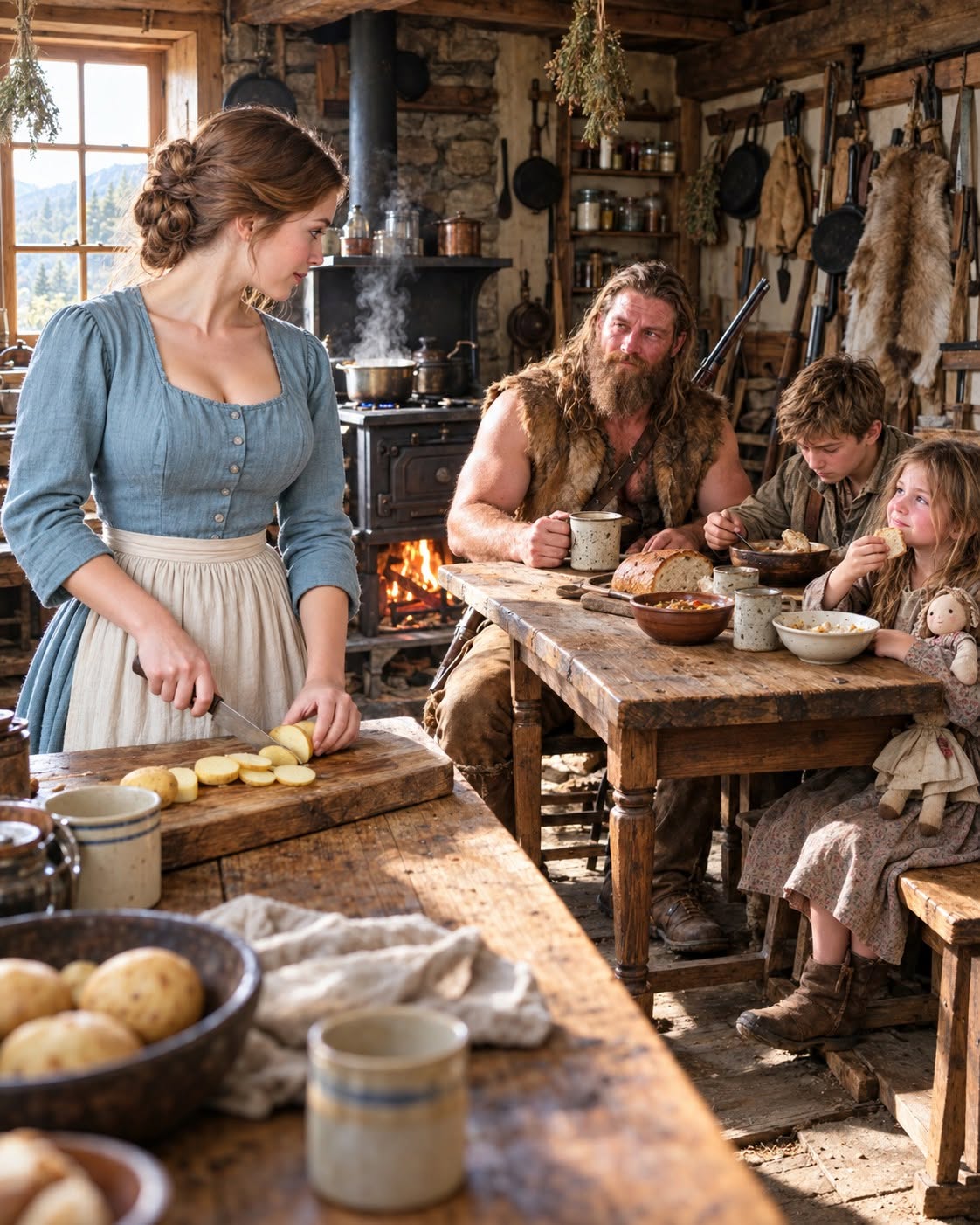
PART 2
The Tin That Belonged to Their Mother — And the Memory the Hartwell Children Had Buried
Elias looked down into his bowl.
For a long moment, he said nothing.
Maggie stood beside the stove with both hands clasped тιԍнтly in front of her.
She was already preparing herself to leave.
She had lied about knowing how to cook.
She had nearly burned the stew.
She had probably used some old herb that belonged to the family.
Whatever had happened at that table, she was certain she had ruined her one chance.
Then Elias lifted his eyes.
“Where did you find it?”
“The tin?”
He nodded.
“Behind the flour jar.”
His gaze dropped to the bowl.
“Did you open the lid yourself?”
“Yes.”
“What did it smell like?”
Maggie frowned.
“Garlic. Sage. Juniper. Something sweet.”
Jonah suddenly stood.
The chair scraped hard against the floor.
“That’s enough.”
Elias looked at him.
“Jonah.”
“I said enough.”
The nineteen-year-old’s face had gone pale.
Micah was still crying silently.
Pearl had stopped eating.
Maggie looked from one brother to the other.
“I didn’t mean to upset anyone.”
Jonah turned away.
“You didn’t.”
His voice cracked.
“You just reminded us.”
Elias closed his eyes.
For several seconds, he looked like a man trying to hold back something far heavier than grief.
Then he pushed his chair away.
“Give me the tin.”
Maggie retrieved it from the shelf.
Elias took it from her.
His thumb brushed across the rusted lid.
A tiny engraving was visible beneath the grime.
A flower.
Three leaves.
And one letter.
H.
Maggie noticed it.
“H?”
Elias didn’t answer.
He opened the tin.
Inside, there was almost nothing left.
A pinch of dried herbs.
A scrap of faded cloth.
And beneath them, a small silver thimble.
Maggie stared.
“What is that?”
“My mother’s.”
Her breath caught.
“You mean…”
Elias nodded.
“She made that seasoning.”
Jonah’s face тιԍнтened.
“She used it in everything.”
Micah whispered:
“Chicken.”
Jonah looked at him.
Micah wiped his eyes.
“Chicken stew.”
His voice broke.
“She made it when it snowed.”
Elias sat down again.
For the first time, Maggie understood.
This wasn’t about the stew.
It wasn’t even about the herbs.
She had accidentally recreated the last meal their mother had made before winter fever took her.
A meal they hadn’t tasted in four years.
A memory they had buried because remembering hurt too much.
Pearl slowly climbed down from her chair.
She walked toward Maggie.
The little girl stopped directly in front of her.
Maggie knelt.
“Hello.”
Pearl stared at her.
Then, without a word, she reached for Maggie’s hand.
Maggie’s throat тιԍнтened.
Pearl’s fingers were freezing.
Maggie gently enclosed them in both of hers.
“You’re cold.”
Pearl nodded.
“I can fix that.”
She guided Pearl toward the fire.
Behind them, Jonah whispered:
“She hasn’t let anyone touch her since Mama died.”
Maggie looked over her shoulder.
“Maybe she was waiting for someone to ask.”
Jonah’s expression softened.
Only slightly.
But enough.
Elias watched the exchange.
Then he looked at Maggie.
“You lied to me.”
Maggie’s heart dropped.
“Yes.”
“You can’t cook.”
“No.”
“You’ve never cooked a proper meal in your life.”
“No.”
 “And yet you managed to make something my family hasn’t eaten in four years.”
Maggie swallowed.
“I remembered things.”
“What things?”
She looked down.
“People.”
Elias frowned.
“In Chicago, the women at the boardinghouse cooked from whatever they had. Some knew recipes. Some didn’t. But every woman knew one thing.”
“What?”
“How to make food taste like home.”
Silence.
Elias looked at the stew.
Then at her.
“Why did you lie?”
Maggie’s fingers тιԍнтened around the hem of her dress.
“Because I needed the job.”
“You could have told the truth.”
“No.”
“Why?”
“Because men don’t hire women who say they can’t do the thing they’re asking for.”
Elias studied her.
Then he said quietly:
“You could have died up here.”
“I nearly did in Chicago.”
He looked at her sharply.
Maggie continued.
“The factory burned.”
Jonah’s eyes narrowed.
“You worked in a factory?”
“Textiles.”
“How long?”
“Five years.”
“And then?”
“Nothing.”
She tried to smile.
“Turns out an unemployed woman without family isn’t very valuable.”
Elias said nothing.
Maggie looked toward the window.
“So I came west.”
“You came here because of my advertisement?”
“Yes.”
“And you have no family?”
“No.”
“No money?”
“No.”
“No way home?”
Maggie shook her head.
Elias leaned back.
For the first time, something changed in his expression.
He wasn’t looking at her like a hired wife anymore.
He was looking at her like someone who understood what it meant to have nowhere left to go.
“Then you’re staying.”
Maggie blinked.
“What?”
“You heard me.”
“But I lied.”
“You did.”
“And I can’t cook.”
“I know.”
“You still want me here?”
Elias glanced at the three children.
Jonah was staring at the floor.
Micah was eating the stew again.
And Pearl was sitting beside Maggie at the fire.
Elias exhaled.
“I hired a wife because I thought this house needed a pair of hands.”
His eyes met Maggie’s.
“I was wrong.”
Maggie’s heart stumbled.
“What does it need?”
Elias looked at his siblings.
“A reason to feel alive again.”
She didn’t know what to say.
Then Elias stood.
“Tomorrow morning, I’ll take you to town.”
“For what?”
“A proper coat.”
“I can’t afford—”
“I didn’t ask you to.”
He walked toward the door.
Then stopped.
“And Maggie?”
“Yes?”
“Don’t ever tell my brothers you’re their mother.”
She looked at Pearl.
“I wouldn’t.”
“Good.”
His hand rested on the door.
“They already lost one.”
The door closed behind him.
Maggie stood by the fire, watching snow gather on the window.
She thought the hardest part of coming to the mountains was surviving the cold.
She was wrong.
Because that night, after everyone had gone to bed, Maggie returned to the larder to put the tin away.
And something inside caught her eye.
The cloth beneath the herbs had shifted.
She pulled it free.
There was a folded piece of paper underneath.
Yellow with age.
She opened it.
Only six words were written across the page.
Elias must never know what happened.
Maggie’s blood turned cold.
Then she saw the signature.
Catherine Hartwell.
Elias’s mother.
The woman whose funeral had brought Maggie to this house.
Except the date on the paper was four years after Catherine Hartwell was supposed to have died.
Maggie stared at the writing.
Then footsteps sounded behind her.
She turned.
Elias stood in the doorway.
His eyes dropped to the paper in her hand.
His face changed completely.
“Maggie.”
She swallowed.
“Yes?”
“Where did you get that?”
And for the first time since she arrived at the Hartwell cabin—
Elias looked afraid.