Part 2- The Seven Words That Should Have Buried Me
The Seven Words That Should Have Buried Me
She pressed her mouth to my ear. Warm. Small. Certain.
“Nonna Rosa says come home.”
The hallway went quiet in a way rain cannot touch.
Rosa.
My mother’s name had not been spoken inside these walls in eleven years. Not by the men who still crossed themselves when they left my table. Not by the priest who buried an empty coffin because the river never gave her back. Not by me.
A three-year-old should not have known it.
My hands stayed on her back. I did not set her down.
Elena made a sound like something tearing. “Mia, no. We don’t—”
“Who taught her that?” I asked.
Elena’s mouth opened. Nothing came out. Her eyes cut toward the servants’ corridor, then to Salvatore, then to the floor.
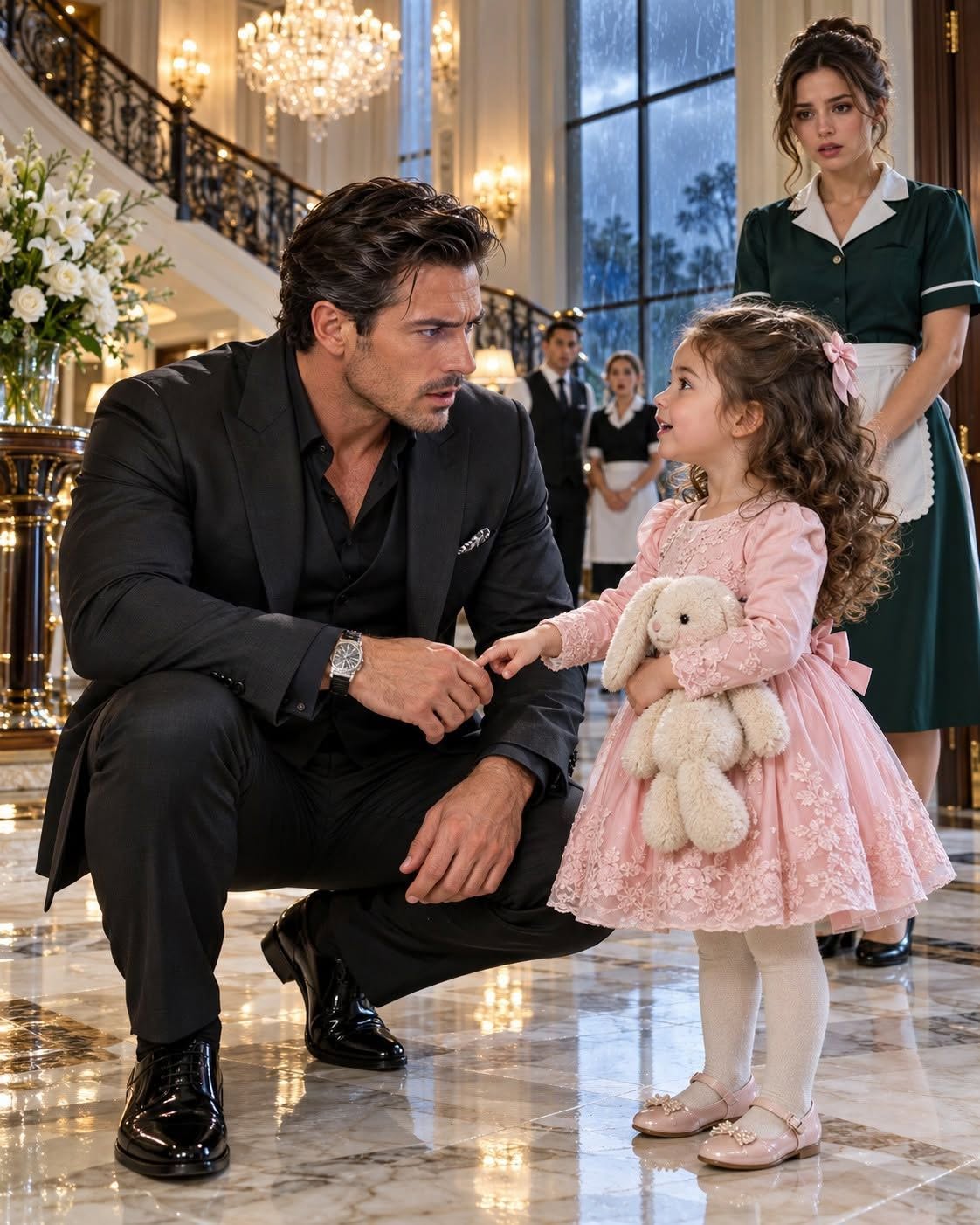
 The girl, Mia, leaned back to look at me. One sock still around her ankle. She touched the scar at my jaw with two fingers, the way a child touches a crack in a wall.
“She has your eyes,” she said. “The green ones. Not the angry ones.”
Salvatore took one step. I lifted a hand without looking at him. He stopped.
“Elena.” My voice was the one I used when twenty million dollars changed owners. “Stand up.”
She stood. Her knees left wet marks on the marble.
“Who is Nonna Rosa to her?”
“No one,” Elena said. Too fast. “A story. I tell her stories so she sleeps. Old names. Nothing.”
Mia shook her head against my shoulder. “Not a story. She sings in the kitchen when the bad men leave. She burns the bread on purpose so you’ll smell it.”
The bread.
My mother burned the ends of every loaf. She said a house should smell like someone was careless with love. I had not thought of that in a decade. I had paid a cook never to burn anything.
“Salvatore,” I said. “Clear the hall.”
He did not move at once. That was new. Then he did. Boots. Doors. The rain took the rest.
I carried the child into the west study and set her on the leather chair that had held worse men than me. Elena followed and shut the door herself.
“Talk,” I said.
Elena’s hands shook, then stopped. The fear rearranged itself into something older.
“Your mother isn’t in the river,” she said.
Twist one landed clean.
I laughed once. It did not sound like the laugh in the hallway. “I watched them put the stones in the coffin.”
“You watched them put stones in a coffin,” Elena said. “Rosa Moretti walked out of a clinic in Gary three weeks after the funeral. Burned face. New papers. A debt she couldn’t pay the Russians who pulled her out of the water. She has been paying it in kitchens ever since. Last month the debt came due in this house.”
Mia swung her feet. They did not reach the floor.
“She said if I brought Mia to you on a night you signed something big, you would listen,” Elena said. “She said you only hear people when the numbers are still on the table.”
“You’re lying.”
“Look at her hands.”
I looked. Mia’s left palm had a pale crescent scar, thin as a thread. My mother had the same mark from a pot handle when I was six. I had forgotten the shape until it was sitting in my chair.
Twist two.
Elena swallowed. “She’s not my daughter.”
The room tilted.
“She’s yours.”
I did not reach for the pistol. That was the third thing that surprised me.
“Mine,” I repeated.
“The winter you vanished for six weeks after the port war,” Elena said. “There was a nurse at St. Catherine’s. You don’t remember her. She remembers you. Rosa found the birth record before the Russians did. She hid the girl with me because a Moretti daughter in a maid’s room is invisible, and a Moretti daughter in your nursery is a target. Tonight was the night Rosa decided invisible had run out.”
Mia looked between us, bored with adult weather. “Are we playing still?”
I knelt. The marble was cold through my trousers. Up close she had my mother’s mouth and none of my patience.
“What else did she tell you to say?” I asked.
Mia brightened, proud of the rest of her job.
“She said the man who signed the port papers tonight already sold you. Uncle Sal keeps the second copy in his shoe. And she said if you chase me, you’re still her boy.”
Salvatore’s shoe.
The fourth twist did not feel like a twist. It felt like a door I had locked from the inside.
From the corridor came the soft sound of a man shifting his weight. Salvatore had not gone as far as I ordered.
Elena’s eyes filled, but her voice stayed level. “Rosa is in the kitchen. She burned the bread twenty minutes ago. She told me if you hurt Mia, she would walk into this study and finish what the river started. If you don’t, she wants five minutes and a car that isn’t yours.”
Mia slid off the chair and took my hand again, impatient as before.
“Come on,” she said. “Nonna’s waiting. She said you walk too slow when you’re scared.”
Somewhere beneath the rain, the smell of scorched crust reached the study.
I had signed away twenty million dollars without blinking.
I had not yet decided what I would do with the man in the hall, the woman who had hidden my blood in a pink dress, or the mother who had been ᴅᴇᴀᴅ until a child said her name.
Mia tugged.
“Catch me,” she whispered, “or she’ll think you forgot how.”
I opened the door.