PART 2 — THE FARM EVERYONE THOUGHT WAS ᴅᴇᴀᴅ
HE NEEDED A WIFE TO FEED THE PIGS—SHE MADE HIS FAILING FARM THE PRIDE OF THE COUNTY
PART 2 — THE FARM EVERYONE THOUGHT WAS ᴅᴇᴀᴅ
The word spread through Brier Hollow faster than a summer fire.
The Treadwell farm was producing again.
Corn stood waist-high in the south field.
The milk cow gave nearly three gallons a day.
The hens filled their nesting boxes.
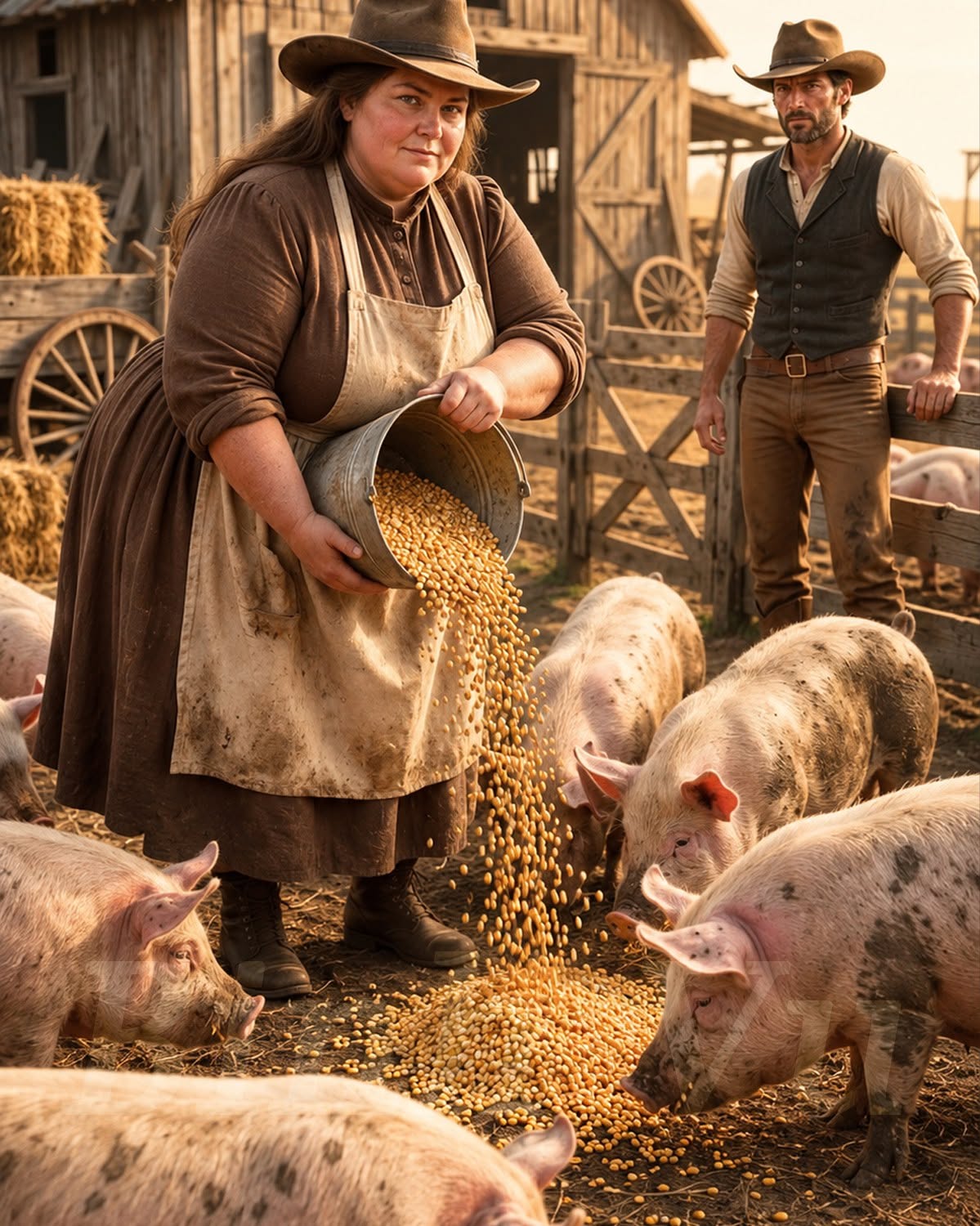
And the pigs—once thin and sickly—were growing so quickly that Silas had started worrying they would eat him out of house and home.
But the strangest thing wasn’t the farm.
It was Mabel.
Farmers began stopping by the gate.
At first, they pretended to be pᴀssing through.
Then they started asking questions.
“How much lime did you use?”
“Where’d you get that seed?”
“How did you stop the hens from pecking their own eggs?”
Mabel answered every question.
She never laughed at anyone.
Never made them feel foolish.
She simply explained.
Soon, women came too.
They brought notebooks.
They brought children.
They brought problems.
Mabel listened.
Then she taught them.
Silas watched all of it from the porch.
One evening, he found her sitting at the kitchen table surrounded by papers.
“You’ve been working since dawn.”
“So have you.”
“I’m not the one with three ledgers open.”
“I’m trying to figure out whether we can afford a second plow.”
Silas sat down.
“We can.”
Mabel looked up.
“Are you sure?”
“Yes.”
“Don’t say yes because you want to impress me.”
“I’m not.”
He pushed a ledger toward her.
“I’ve been learning.”
She blinked.
“Learning what?”
“How to read my own numbers.”
Mabel smiled.
“That’s dangerous.”
Silas smiled back.
“I figured if I’m going to keep you around, I ought to understand what you’re doing.”
She raised an eyebrow.
“Keep me around?”
His expression changed.
“I didn’t mean—”
“I know.”
But she smiled.
And Silas realized he had been staring.
He looked away.
“I’ll fix the fence tomorrow.”
“You’ve been saying that for three days.”
“I’ll fix it tomorrow.”
“Tomorrow isn’t a day on the calendar, Silas.”
He laughed.
It was becoming a habit.
Laughing around her.
Talking around her.
Wanting to tell her things he hadn’t told anyone in years.
Then, one afternoon, a man arrived in a black wagon.
Mabel recognized him immediately.
Harold Crane.
A land buyer from St. Louis.
He had purchased struggling farms all over Missouri.
Crane stepped down.
“Mr. Treadwell.”
Silas nodded.
“What do you want?”
“I’ve heard your farm has improved.”
“It has.”
Crane looked across the fields.
“Which means it’s worth more now.”
Silas said nothing.
Crane removed a folded paper.
“I’d like to make you an offer.”
Mabel stepped onto the porch.
“How much?”
Crane looked at her.
“Who are you?”
“Mabel Ror.”
His eyes narrowed.
“The widow?”
She nodded.
Crane smiled.
“Then you know what I’m about to offer is generous.”
He named the price.
Silas stared at him.
It was more money than the farm had ever been worth.
Mabel watched Silas carefully.
“We’re not selling.”
Crane looked at her.
“I wasn’t asking you.”
Silas stepped forward.
“You are now.”
Crane’s smile disappeared.
“Mr. Treadwell, you have debts.”
“Not anymore.”
“Everyone has debts.”
“Not the ones you know about.”
Crane folded the paper.
“Think carefully.”
He climbed into the wagon.
Before leaving, he looked toward Mabel.
“You should understand something.”
“What?”
“Land attracts attention once it starts producing.”
Then he drove away.
That night, Mabel found Silas in the barn.
He was repairing a harness.
“You’re worried.”
“No.”
“Silas.”
He sighed.
“Maybe.”
She sat beside him.
“What is he after?”
“The south field.”
“Why?”
“Because of the creek.”
Mabel frowned.
“What about it?”
“There’s a proposed railroad spur.”
She looked at him.
“If the railway comes through here, the south field becomes valuable.”
“Very.”
“How valuable?”
Silas hesitated.
“Enough to make men dishonest.”
Mabel thought about Crane.
Then about the old drainage channel.
“Do you think he could force us to sell?”
Silas looked at her.
“Not if we stay together.”
The words hung between them.
Together.
Mabel looked away.
“You keep saying things like that.”
“What things?”
“Like we’re more than business partners.”
Silas set down the harness.
“We are.”
Mabel’s heart began beating faster.
“Silas…”
“I know what you came here for.”
“A job.”
“I know.”
“And what you needed was a wife.”
“I know.”
“But somewhere along the way…”
He stopped.
Mabel waited.
Silas looked at her.
“I stopped wanting a wife.”
Her breath caught.
“What do you want?”
“You.”
Mabel looked away.
“You don’t know me well enough.”
“I know you wake before sunrise.”
He stepped closer.
“I know you sing when you’re kneading dough.”
 Another step.
“I know you talk to the hens like they’re children.”
She smiled despite herself.
“I know you pretend not to care when someone insults you.”
His voice softened.
“And I know you care about everyone.”
Mabel swallowed.
“You don’t know everything.”
“Then tell me.”
She looked at him.
“My husband used to.”
Silas froze.
Mabel’s eyes filled.
“He wasn’t cruel.”
“Just weak.”
“He drank away what we had.”
“He sold things without telling me.”
“Then one winter, he disappeared.”
Silas said nothing.
“I spent years believing it was my fault.”
“It wasn’t.”
“I know that now.”
She wiped her cheek.
“But I learned never to depend on someone else’s promise.”
Silas stepped closer.
“Then don’t.”
She looked at him.
“Depend on yourself.”
His voice was quiet.
“And let me earn the rest.”
Mabel couldn’t answer.
So she walked away.
The next morning, Silas found a note beside his coffee.
The fence still needs fixing.
He smiled.
Underneath it, she had written:
And so do you.
But before he could laugh, a rider came racing up the lane.
“Silas!”
He ran outside.
“What happened?”
“The south field.”
Silas went pale.
“What’s wrong?”
“Someone opened the drainage gate.”
Silas stared toward the fields.
Water was already pouring across the corn.
Mabel ran out behind him.
“No.”
The water rose higher.
Within minutes, half the young crop was underwater.
Silas grabbed a shovel.
“Get the workers.”
Mabel was already running.
They worked until sunset.
But the damage was enormous.
Hundreds of dollars in crops were destroyed.
The next morning, the sheriff arrived.
He had found the gate open.
And beside it—
a boot print.
A man’s boot.
With a distinctive iron heel.
Silas recognized it.
Harold Crane.
But there was something worse.
The sheriff handed Mabel a folded paper.
“Someone filed a complaint.”
She opened it.
It claimed she had intentionally damaged the irrigation system.
Mabel stared at the accusation.
Silas took the paper.
His face hardened.
“They’re trying to blame you.”
Mabel looked toward the ruined field.
“They’re trying to make me leave.”
Silas folded the paper.
“Then they picked the wrong woman.”
Mabel looked at him.
“What are you going to do?”
He met her eyes.
“Stand beside you.”
And for the first time, Mabel believed him.