Lisa Montgomery’s Final Word Before Execution for the Murder of a Pregnant Woman and Taking of Her Newborn

On January 13, 2021, Lisa Montgomery was executed by lethal injection at the federal prison in Terre Haute, Indiana. She became the first woman put to death by the United States government in nearly 70 years. When officials asked if she had any last words, she answered with a single word: “No.”
Montgomery had been convicted of the December 16, 2004, murder of Bobbie Jo Stinnett, a 23-year-old woman living in the small town of Skidmore, Missouri. Stinnett was eight months pregnant with her first child. The two women had become acquainted online through their shared interest in dogs. Montgomery contacted Stinnett and arranged to visit her home under the pretext of wanting to purchase a puppy. Once inside, she attacked Stinnett, strangled her, and removed the unborn baby from her body. She then attempted to present the newborn as her own child.

The following day, law enforcement located Montgomery and recovered the infant, who was returned to her father and raised by him. Montgomery was charged with kidnapping resulting in death. In 2007 a federal jury found her guilty, and she was sentenced to death.
Years later, as appeals progressed, a more detailed picture of Montgomery’s background emerged. Defense experts and relatives described a childhood marked by extreme and prolonged physical and Sєxual violence. Her stepfather subjected her to repeated abuse over many years, and other adults in the household were also alleged to have participated in or enabled the mistreatment. Mental-health professionals who examined her concluded that she suffered from serious conditions including post-traumatic stress disorder, bipolar disorder, depression, and other psychiatric disorders that they linked to the trauma she had endured. Some evaluators described the level of violence she experienced in childhood as comparable to the torture suffered by child soldiers or prisoners of war.
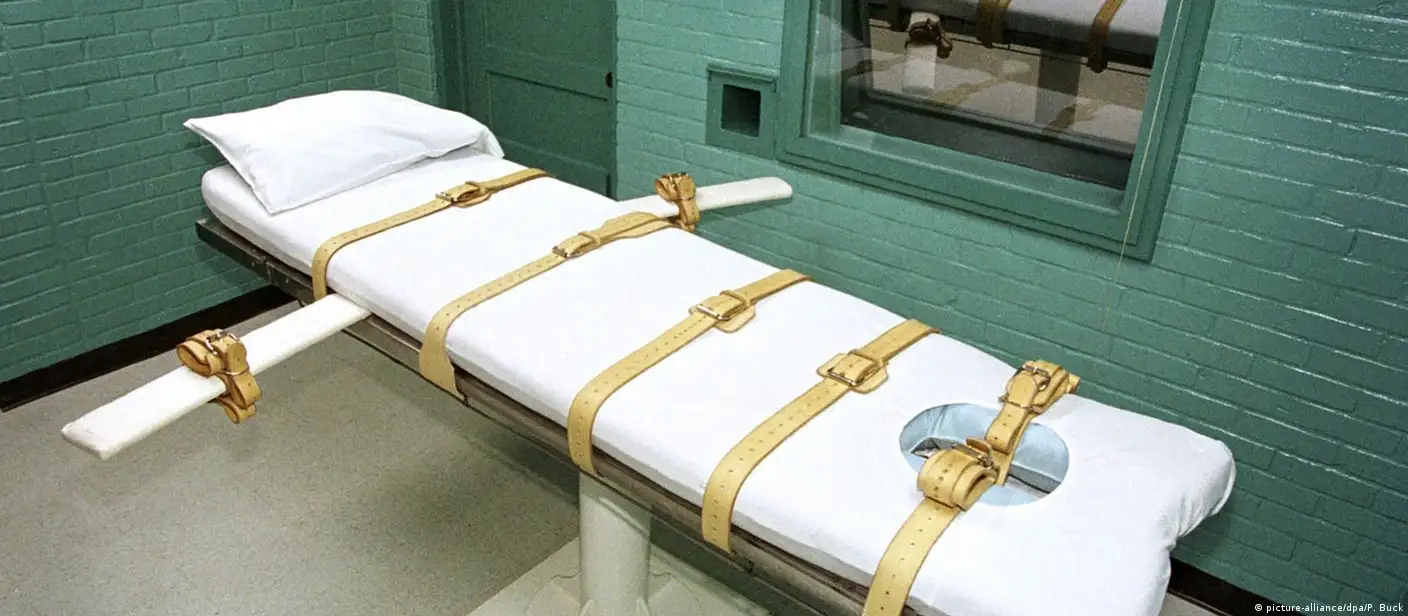
Montgomery’s legal team argued that the full extent of her mental illness and history of abuse had not been adequately presented during her original trial. They maintained that she was a profoundly damaged person whose actions could not be understood without taking into account decades of severe trauma. Supporters of the death sentence, however, emphasized the deliberate planning of the crime and the devastating loss inflicted on Bobbie Jo Stinnett and her family.
The case generated significant public debate both before and after the execution. Advocates against the death penalty pointed to Montgomery’s documented history of childhood torture and untreated mental illness as reasons the sentence should not have been carried out. Others focused on the calculated nature of the attack and the irreversible harm done to the victim. Montgomery’s abusers were never held criminally accountable for the violence she suffered as a child.
At the time of her death, Montgomery was 52 years old. Her brief final response of “No” became one of the most widely noted details of the proceedings. The case continues to be discussed in conversations about capital punishment, childhood trauma, and the treatment of mental illness within the criminal-justice system.
Sources : The Mirror