Huikang: The Boy Born With a Rare Facial Deformity That Made Him Known as the “Mask Boy”
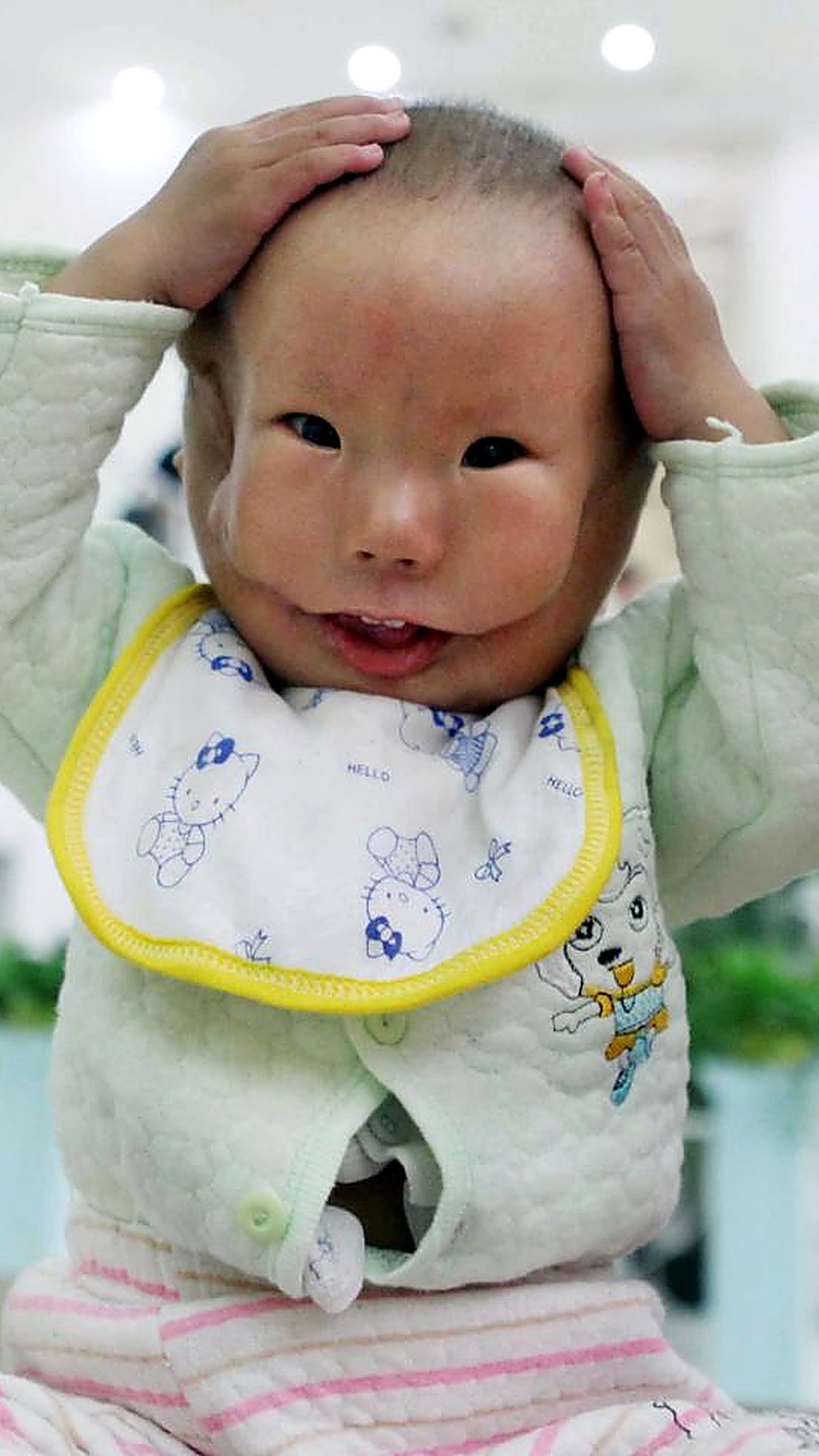
Huikang was born in Hunan Province, China, with an extremely rare congenital abnormality affecting the structure of his face.
From birth, the most noticeable feature was the unusual appearance of the skin on both sides of his mouth. Instead of having normally formed corners of the mouth that smoothly connected with the surrounding cheeks, Huikang had large abnormal openings extending outward from both sides.
The unusual arrangement of the facial tissues made it appear as though two layers of skin were overlapping across his face.
His appearance was so distinctive that many people began referring to him as the “Mask Boy.”
Behind this unusual facial appearance was a congenital developmental abnormality that affected the formation of the mouth and surrounding facial structures.
A Rare Abnormality Affecting the Corners of the Mouth
Huikang’s described facial features resemble a condition known as bilateral macrostomia, also called bilateral transverse facial cleft.
Macrostomia is a rare congenital condition in which the mouth is abnormally wide because one or both corners of the mouth extend farther toward the cheeks than usual.
In typical fetal development, the structures that form the upper and lower portions of the face gradually grow and join together.
However, when the tissues responsible for forming the corners of the mouth do not fuse completely, an abnormal opening may remain between the mouth and the surrounding cheek tissues.
When this occurs on both sides, the condition is described as bilateral macrostomia.
The resulting openings can vary considerably in size. In mild cases, the mouth may simply appear wider than normal. In more severe cases, the separation can extend toward the cheeks, creating a significant facial deformity.
Why Does the Face Appear to Have Two Layers of Skin?
One of the most unusual features described in Huikang’s case is the appearance of overlapping facial skin.
This appearance can occur when the tissues around the mouth and cheeks develop abnormally, leaving an unusual separation along the sides of the mouth.
Instead of forming a continuous facial structure, the affected tissues may create an irregular opening extending from the mouth toward the cheeks.
Depending on the extent of the cleft, the surrounding skin, muscles, and soft tissues may also be affected.
The condition can therefore change not only the external appearance of the face but also the normal structure and function of the mouth.
It is important to distinguish between the visible appearance and the underlying anatomy. A medical examination is necessary to determine the exact type and extent of Huikang’s abnormality.
How Can This Condition Affect a Child?
Although the most obvious consequence of macrostomia is its effect on facial appearance, the condition can also create functional difficulties.
The muscles around the mouth play an important role in eating, drinking, speaking, and controlling facial expressions.
When these muscles and surrounding tissues develop abnormally, children may experience difficulties with several everyday activities.
Depending on the severity, possible complications include:
Difficulty closing the mouth completely.
Problems controlling food and liquids while eating.
Reduced coordination of the muscles around the lips.
Difficulties with certain speech sounds.
Abnormal facial expressions caused by altered muscle attachments.
Dental or jaw abnormalities in some children.
Not every child experiences all these problems. The impact depends on the size of the cleft and whether other facial structures are involved.
Can This Rare Facial Deformity Be Treated?
Unlike some complex genetic conditions, macrostomia can often be treated through reconstructive surgery.
The main objective is to restore the normal position of the corners of the mouth and reconstruct the surrounding tissues.
During surgery, specialists carefully reposition the affected tissues and repair the underlying muscles to create a more natural mouth shape.
The procedure is not simply about closing the visible opening. Surgeons must also restore the functional arrangement of the muscles around the mouth so that the child can eat, speak, and move the lips as normally as possible.
In more complex cases, additional procedures may be necessary as the child grows.
Treatment may involve pediatric plastic surgeons, craniofacial specialists, speech therapists, and other healthcare professionals.
The timing and complexity of surgery depend on the child’s anatomy, overall health, and individual needs.
Growing Up With an Unusual Facial Appearance
For a child like Huikang, growing up with a rare facial abnormality can involve challenges that extend beyond medical treatment.
Children naturally want to play with friends, attend school, and feel accepted by the people around them.
However, a visibly different facial appearance can attract unwanted attention, questions, or misunderstanding.
These experiences may affect a child’s confidence and emotional development, particularly as they grow older and become more aware of their appearance.
This is why family support and an accepting environment are just as important as medical treatment.
Huikang should not be defined by the unusual appearance of his mouth or the nickname people have given him.
He is a child who deserves the same opportunities, education, friendship, and affection as everyone else.
More Than the Face People See
Huikang’s story highlights the difficulties faced by children born with rare craniofacial abnormalities.
What makes his appearance unusual is a developmental condition that formed before he was born. It is not something he chose, and it should never become a reason for rejection or discrimination.
With appropriate medical ᴀssessment, reconstructive treatment, and continued support, children with macrostomia may have opportunities to improve both facial function and appearance.
Behind the nickname “Mask Boy” is a young child who deserves to be known for much more than his physical differences.
Every child deserves to grow up feeling loved, protected, and accepted, regardless of the face they were born with.