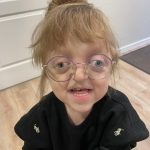
Her World Was Different, But Every Little Achievement Was a Celebration
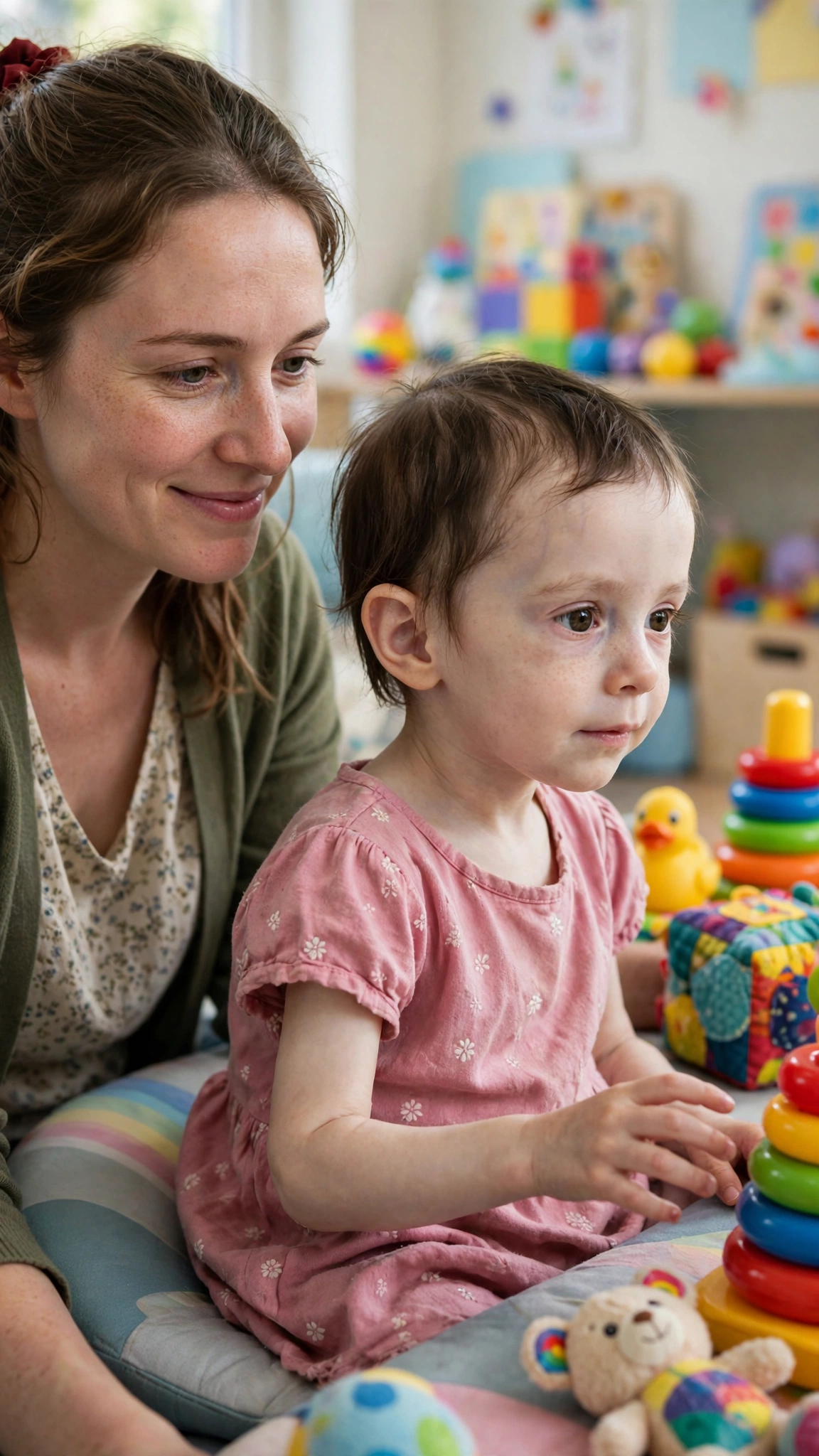
At three years old, Anna was beginning to experience the world in her own unique way. Her childhood looked different from that of many other children her age, and her parents were gradually learning that her developmental journey would require patience, understanding, and additional support.
While other toddlers were quickly learning new words, taking their first independent steps, exploring playgrounds, and becoming increasingly curious about everything around them, Anna needed more time to develop certain skills.
She had been born with microcephaly, a neurological condition characterized by a smaller-than-expected head circumference. Depending on its underlying cause and severity, the condition can be ᴀssociated with differences in brain development and may affect a child’s physical, cognitive, or developmental abilities.
For Anna’s parents, understanding what this meant for their daughter was an emotional journey of its own.
As the months pᴀssed, they began noticing that some developmental milestones were taking longer than expected. Activities that seemed natural for other children sometimes presented significant challenges for Anna.
She needed ᴀssistance with certain everyday tasks and sometimes found it difficult to communicate what she wanted or how she was feeling.
Her parents learned to pay attention to the smallest details: the direction of her eyes, the movement of her hands, the expressions on her face, and the sounds she made when trying to communicate.
Every little gesture became an opportunity to understand her better.
Her childhood also involved additional medical attention, developmental ᴀssessments, and regular monitoring. Her family worked to provide the support she needed while creating an environment where she could feel comfortable, secure, and encouraged to explore the world at her own pace.
There were moments of uncertainty, and there were days when her parents worried about what the future might hold.
But gradually, they came to understand something important.
Anna did not need to follow the same timeline as every other child. Her achievements did not have to look the same as anyone else’s.
They decided to celebrate her progress, no matter how small it might appear to someone else.
One afternoon, Anna was sitting on a soft play mat in the living room. Her mother placed a brightly colored toy in front of her, hoping to encourage her to interact with it.
Anna looked at the toy for a while.
Then, with a slow and careful movement, she began extending her little arm toward it.
Her fingers moved closer, and although the movement required effort, she continued trying.
Her mother watched with excitement.
When Anna finally reached toward the colorful toy, her mother’s face filled with happiness. She praised her daughter, smiled warmly, and gently encouraged her to keep exploring.
For someone who did not know Anna’s journey, it might have looked like a very ordinary moment.
For her mother, it was unforgettable.
On another day, Anna was listening to a familiar song that her parents often played for her.
As the music filled the room, she responded with a small movement.
Her father noticed immediately.
He picked up his phone and began recording, hoping to preserve that precious moment. He knew that one day, they would look back at the video and remember how meaningful that little response had been.
It was not about expecting Anna to perform or reach a particular milestone. It was about appreciating the ways she was discovering and responding to the world around her.
Then came another special morning.
Anna was sitting on her soft play mat while her mother sat nearby. The room was quiet, and the sunlight gently entered through the window.
Her mother looked at her daughter and softly called her name.
“Anna, sweetheart!”
At first, Anna remained focused on what was in front of her.
Her mother called again.
This time, Anna slowly shifted her eyes toward the sound of her mother’s voice.
Her mother immediately smiled.
“That’s my girl!”
She moved closer, gently held Anna’s little hand, and expressed how proud she was.
It was a brief interaction, but it meant so much to the family.
Moments like these reminded them that progress could take many different forms. Sometimes it was reaching toward a toy. Sometimes it was responding to music. Other times, it was simply making eye contact or showing a little more awareness of the people and surroundings around her.
Anna’s journey was not always easy.
She still needed ᴀssistance with certain activities, continued to require developmental support, and faced challenges that other children might never experience.
But her parents refused to let those challenges define the entirety of her childhood.
They wanted her to experience happiness, comfort, affection, and the freedom to explore in ways that worked for her.
They learned to celebrate the little things instead of constantly worrying about the milestones that had not yet arrived.
They no longer compared Anna with other children or measured her progress against someone else’s expectations.
Instead, they focused on helping her feel loved, supported, and understood.
For them, every new response was meaningful. Every attempt to communicate was precious. Every little movement toward independence was a reason to smile.
Anna’s world might be different, but it is no less valuable.
Her story reminds us that every child develops in their own way, and that progress should never be measured by a single timeline.
Sometimes, the most beautiful achievements are the ones that others might overlook.
A little hand reaching toward a toy. A gentle movement in response to music. A pair of eyes slowly turning toward the voice of someone who loves her.
For Anna and her family, these are not ordinary moments.
They are memories worth celebrating, reminders of love, and beautiful milestones in a journey that belongs entirely to her.
Because every child deserves to be celebrated, not for how closely they follow someone else’s path, but for who they are and every little step they take along the way.