Gobi Desert Shockwave: Perfect Swimmer Dinosaurs Discovered – Real Sea Monsters?lh
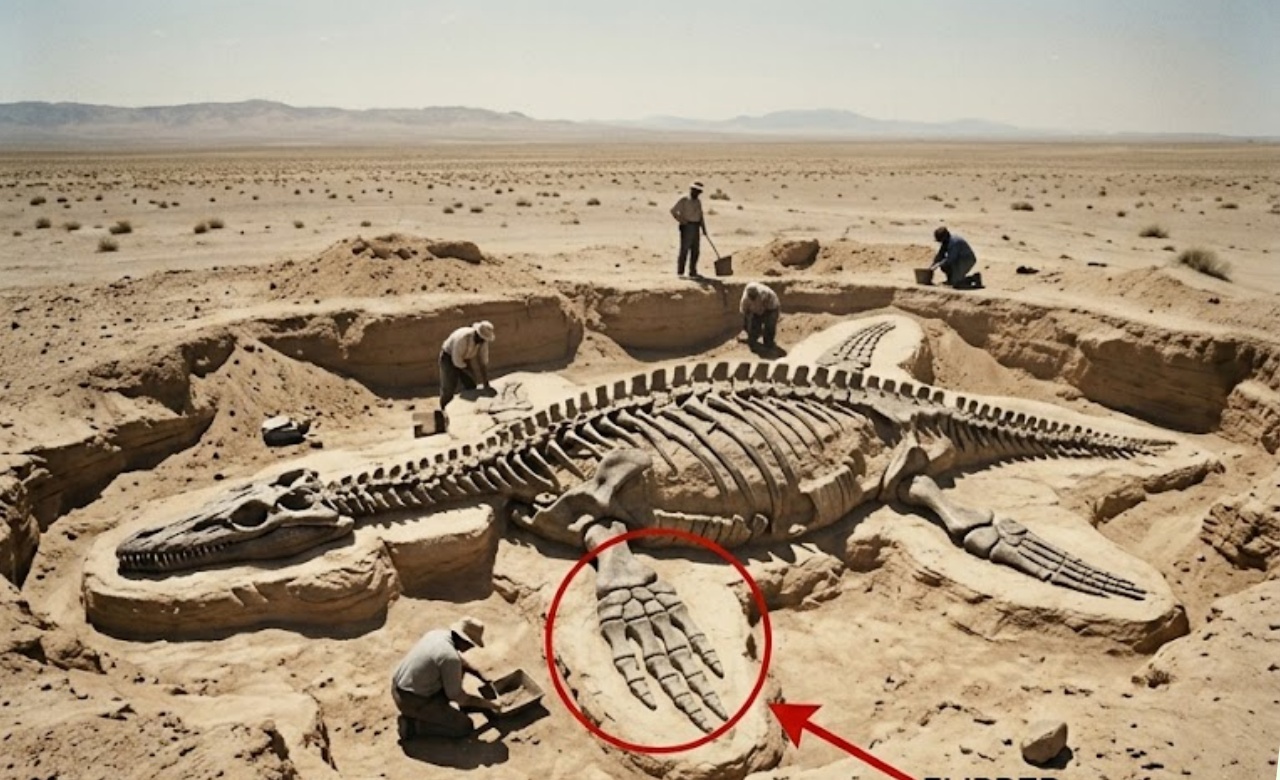
In the windswept badlands of Mongolia’s Gobi Desert—long famous for Velociraptor, fighting dinosaurs, and brooding nests—a discovery has shattered the terrestrial stereotype of non-avian dinosaurs. Paleontologists have described Natovenator polydontus, the “many-toothed swimming hunter,” whose exquisitely preserved skeleton reveals a capable aquatic predator. Far from arid-land exclusives, these theropods invaded water, turning ancient oases and lakes into hunting grounds. Real mini sea monsters lurking in desert sands? The evidence says yes.
Unearthed at Hermiin Tsav in the Baruungoyot Formation and dating to roughly 71 million years ago in the Late Cretaceous, Natovenator was small—approximately 30 cm in preserved length, comparable to a large diving bird. Its standout feature is a suite of posterolaterally oriented dorsal ribs that create a dorsoventrally compressed, streamlined ribcage strikingly similar to those of modern diving birds such as cormorants, auks, and penguins. This anatomy reduces drag and enhances buoyancy control, providing the first compelling evidence of a truly hydrodynamic body plan in a non-avian theropod. Long cervical vertebrae supported an extended, swan-like neck for striking at prey, while jaws packed with numerous small, sharp teeth (hence polydontus) were perfect for snatching fish, tadpoles, and aquatic invertebrates.
Lead researcher Sungjin Lee noted the specimen’s beautifully preserved skull and neck immediately signaled something special. The rib configuration is no coincidence; it mirrors convergent solutions seen in birds that pursue prey underwater. Powerful forelimbs likely provided propulsion in strokes reminiscent of primitive penguins. This builds directly on the 2017 discovery of Halszkaraptor escuilliei, another Gobi halszkaraptorine dromaeosaurid with flipper-like arms and a duck-like posture. While Halszkaraptor sparked debate, Natovenator’s articulated torso supplies sharper, quantifiable proof of semiaquatic adaptation within the clade.
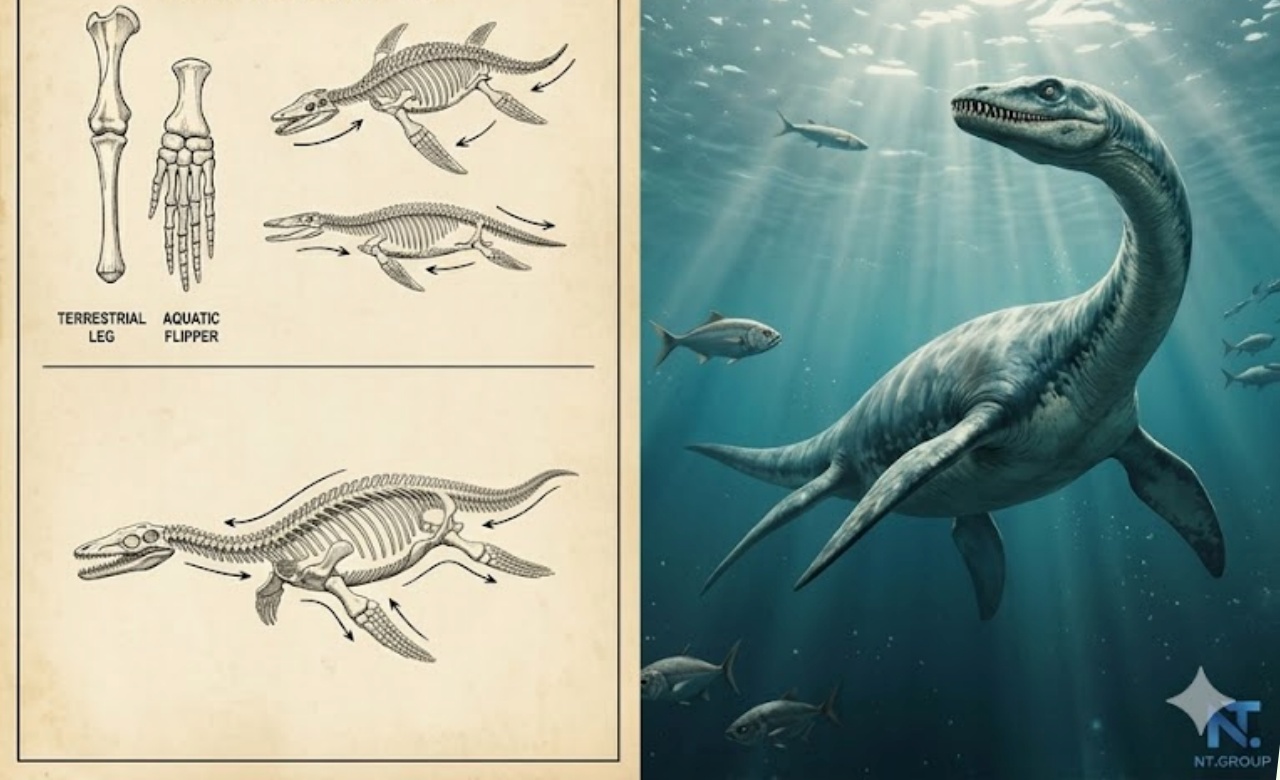
The implications are sharp and far-reaching. For decades, paleontology emphasized dinosaurs’ dominance of land and, via birds, air. Natovenator demonstrates that maniraptoran theropods independently evolved sophisticated swimming capabilities, distinct from the controversial aquatic habits of North Africa’s Spinosaurus (more likely a wader and ambush hunter than a sustained swimmer). In the Late Cretaceous Gobi, a mosaic of dunes and water bodies created rich ecosystems where these feathered “water raptors” thrived, expanding dinosaurian niche diversity beyond what fossils in purely terrestrial settings suggested.
Critics might scoff that these were no colossal marine reptiles like mosasaurs or plesiosaurs—the true “sea monsters” of the oceans. That objection misses the revolutionary point. Natovenator and its relatives were precision predators exploiting freshwater and coastal niches, likely competing with crocodyliforms and turtles. Their existence implies other undiscovered aquatic dinosaurs await recognition; re-examination of fragmentary halszkaraptorine material (such as Hulsanpes or Mahakala) is now urgent. As Federico Agnolin observed, specific anatomical details strongly support an aquatic lifestyle.
The Gobi shockwave is therefore twofold. First, it rewrites paleoecology: the “desert of dinosaurs” was once far wetter and more biologically complex. Second, it underscores convergent evolution’s power—streamlining for swimming evolved separately in birds and these Cretaceous cousins. The fossil record, long biased toward terrestrial preservation, had simply hidden this chapter.
These perfect swimmers may not star in blockbuster films, but their discovery is more thrilling than fiction. It proves dinosaurs were vastly more adaptable than our ᴀssumptions allowed. In the harsh modern Gobi, the sands still guard aquatic marvels from 71 million years ago—reminders that the most shocking monsters were the limited pictures we once painted of the past. As more fossils emerge, expect further waves from this desert revolution.