Giant Rescue Operation for 30-Ton Whale: A Critical Mission for Timmy’s Survival
Giant Rescue Operation for 30-Ton Whale: A Critical Mission for Timmy’s Survival
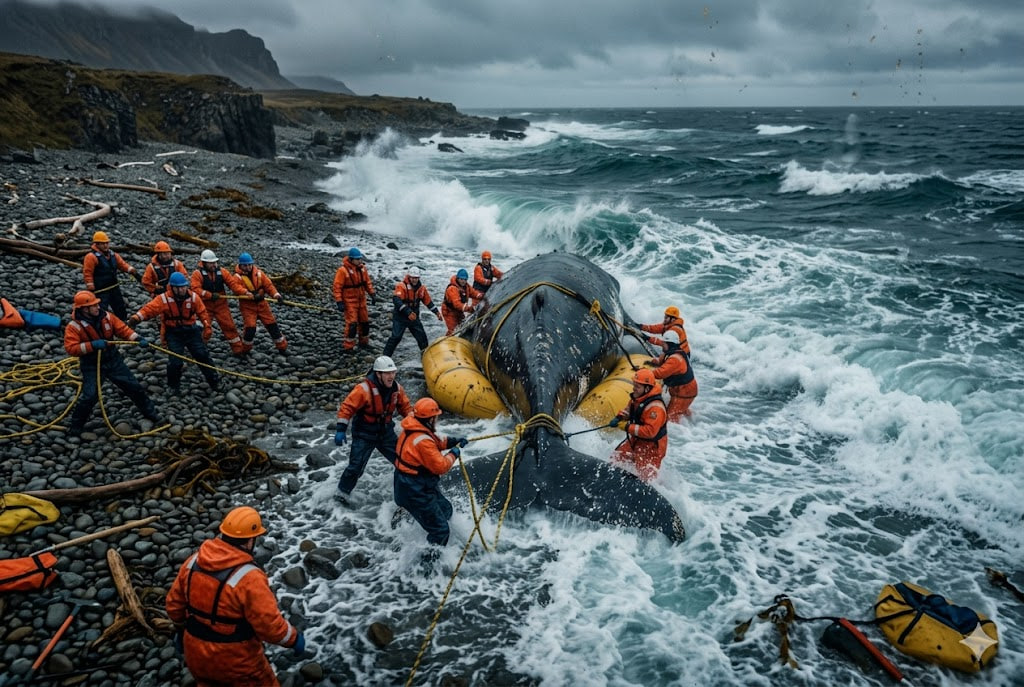
A dramatic and life-or-death rescue operation is underway off the coast of Germany, where a 30-ton humpback whale named Timmy has become stranded in dangerously shallow waters. The enormous mammal, measuring 13.5 meters long, is unable to move, and marine experts have come together to devise an innovative rescue plan — inflating massive airbags beneath his body to lift him back to deeper water.
The Stranding: A Dangerous Situation
Timmy’s plight began when he wandered too close to the coast, becoming trapped in the shallow waters near Wismar, Germany. The whale, known for its remarkable size and strength, has been unable to free itself from the perilous position. As time passed, the risk of serious internal damage increased, with his massive weight pressing down on his body without the buoyancy of the deep ocean.
For marine mammals like Timmy, stranding is an incredibly dangerous situation. Without the support of water, their own body weight can cause extreme internal stress, leading to organ failure, dehydration, and potentially fatal injuries. The longer a whale remains stranded, the less chance it has for survival. That’s why experts have turned to an untested, but promising, rescue technique to give Timmy a fighting chance.
The Breakthrough Rescue: Inflatable Airbags
The rescue mission has become a race against time, as marine biologists, engineers, and animal rescue specialists prepare to deploy an innovative method — inflating giant airbags beneath Timmy’s body to lift him. The airbags, large enough to support the whale’s immense weight, will be inflated gradually and carefully to redistribute the pressure on Timmy’s body. The goal is to lift the whale gently off the seafloor and provide just enough buoyancy for him to float again.
Once the whale is lifted, specialized pontoons will be attached to Timmy, and tugboats will carefully guide him toward deeper, safer waters. This would allow Timmy to return to the North Sea, eventually making his way back to the Atlantic Ocean where he belongs.
This rescue technique has never been tried on such a large scale, making it a groundbreaking operation in the world of marine mammal conservation. If successful, it could become a game-changer for whale rescue efforts, offering a safer and more effective method for saving stranded marine giants without causing further harm.
The Risks: A High-Risk, High-Reward Operation
While the innovative airbag method offers hope, it comes with significant risks. The operation is complex, requiring precise timing and coordination. If the airbags fail to lift Timmy properly, it could worsen his condition, leading to further injury or even death. Marine experts have expressed concerns over Timmy’s already fragile state — stress, dehydration, and internal damage could make his chances of survival much slimmer if the rescue operation doesn’t succeed.
Furthermore, the team must carefully monitor Timmy’s vital signs throughout the entire process. With such a large animal in such a delicate state, any misstep could prove disastrous. The success of this mission relies not only on the airbags but also on the skilled team managing the rescue.
The Clock Is Ticking: Will Timmy Make It?
The fate of Timmy rests in the balance. The next few hours are critical in determining whether this unprecedented rescue will succeed. With every minute that passes, the stakes grow higher. If the rescue fails, Timmy could succumb to the weight of his own body, resulting in catastrophic internal injuries. If the operation succeeds, Timmy will be safely returned to the deep waters of the North Sea, where he can continue his journey in the vast ocean.
Millions of people around the world are following Timmy’s story with bated breath. His plight has highlighted the importance of marine mammal rescue efforts and the lengths to which people are willing to go to protect our oceans’ most vulnerable creatures. Timmy’s rescue could not only save his life but also set a precedent for future whale rescue operations, offering new hope for other stranded marine mammals in need of urgent help.
The Bigger Picture: Why This Rescue Matters
Timmy’s rescue is not just about saving one whale; it’s a reminder of the challenges that marine life faces in a rapidly changing world. Stranded whales are often a symptom of broader environmental issues, such as changes in ocean currents, pollution, or the impact of climate change on marine ecosystems.
The effort to rescue Timmy is a testament to human innovation, collaboration, and compassion for ocean life. If successful, it will show the world that with the right expertise, resources, and determination, even the most difficult and high-risk operations can be accomplished. It also highlights the importance of conservation efforts, as every marine mammal plays a crucial role in maintaining the delicate balance of ocean ecosystems.
What’s Next for Timmy?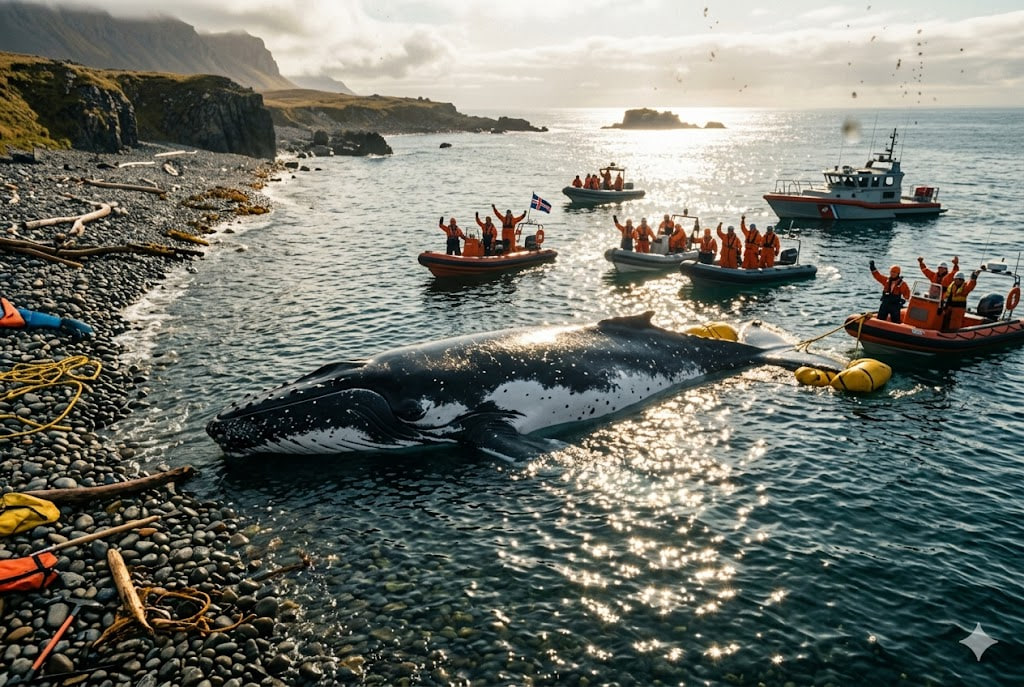
As the rescue operation progresses, the world is watching. Will the airbags successfully lift Timmy and guide him back to safety? Or will the clock run out before the team can get him to deeper waters?
For now, the experts are working tirelessly to execute the plan and give Timmy a fighting chance. The operation will serve as a crucial learning experience for future marine rescue missions, and regardless of the outcome, it will contribute valuable insights into the care and conservation of ocean life.
The next few hours could determine everything for Timmy. As millions of people anxiously wait, the hope is that this giant whale will soon be swimming freely in the vast ocean once again.