Digital Echoes: Resurfaced Evidence and Streaming Documentaries Reignite True Crime Debate Over the 2022 Strongsville Crash
Digital Echoes: Resurfaced Evidence and Streaming Documentaries Reignite True Crime Debate Over the 2022 Strongsville Crash
THE DIGITAL AFTERLIFE — The advent of modern true-crime streaming has altered how the public processes high-profile legal cases. Long after a gavel falls, algorithmic content cycles can thrust closed cases back into the public consciousness, creating a secondary court of public opinion.
In May 2026, this phenomenon has centered firmly on the case of Mackenzie Shirilla. Following the mid-month release of Netflix’s compelling documentary The Crash, millions of viewers have begun dissecting the tragic 2022 auto accident that claimed the lives of 20-year-old Dominic Russo and 19-year-old Davion Flanagan in Strongsville, Ohio.
As the documentary trends globally, a wave of resurfaced text messages, legal timelines, and secondary investigations—including independent coverage on platforms like Tubi and YouTube—have flooded social media, reigniting fierce debate regarding intent, relationship toxicity, and the reliability of digital evidence.
Text Messages Under Scrutiny
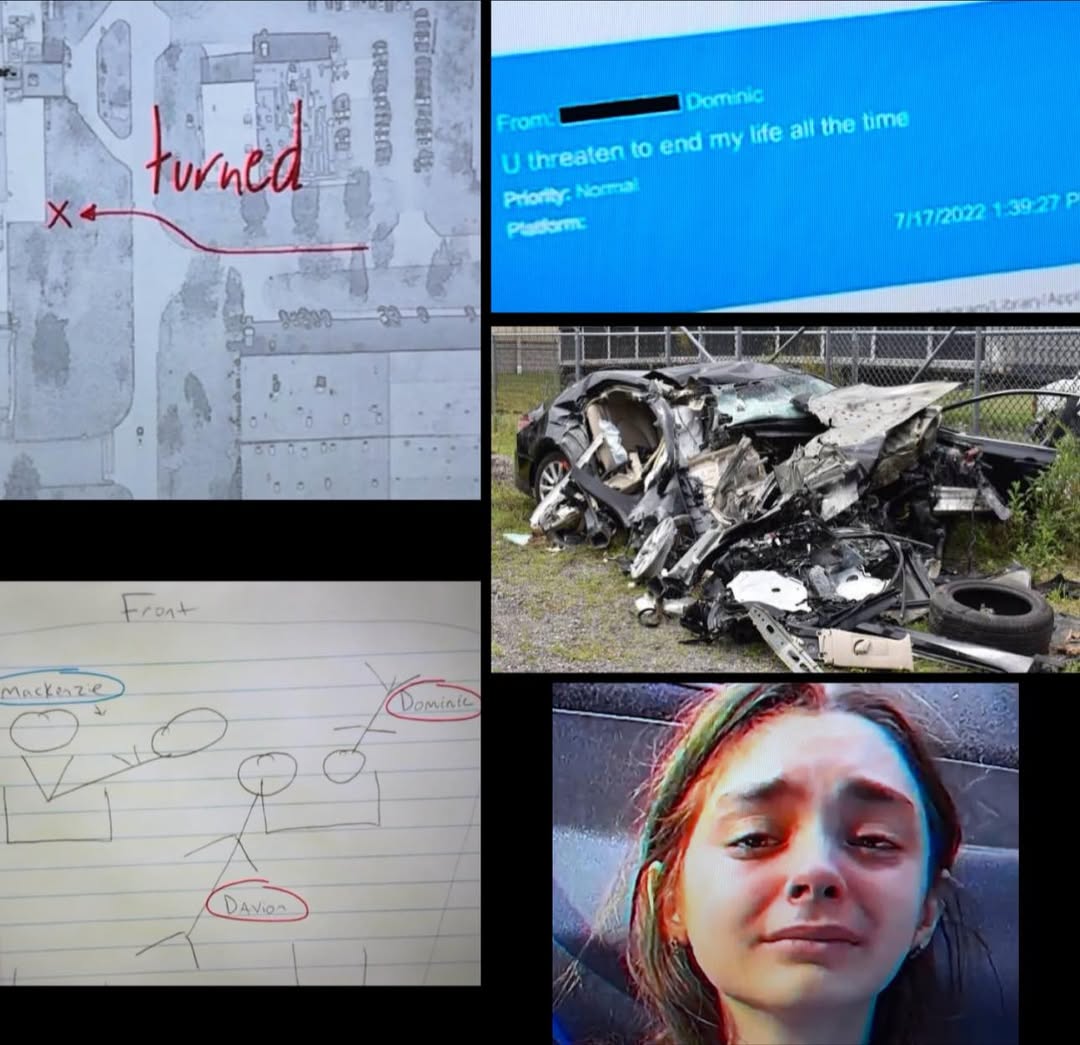
At the center of the current viral discourse is a series of volatile text messages and digital files retrieved by investigators from the couple’s mobile devices. During the original trial, prosecutors argued that the relationship between Shirilla and Russo had devolved into an increasingly toxic dynamic, suggesting that Russo had attempted to sever ties weeks prior to the fatal collision.
Recently leaked logs and trial records highlight intense arguments, including instances where Shirilla sent alarming statements such as, “I’m gonna kill someone, I just want to bang my head on the wall till I’m ᴅᴇᴀᴅ.”
Furthermore, witness testimony reintroduced by streaming audiences recalls a chilling incident just two weeks prior to the crash. According to court records, Russo had placed a frantic call to his mother regarding Shirilla’s erratic driving on a freeway. A family friend dispatched to retrieve Russo reported hearing Shirilla scream, “I’m going to wreck this car right now!” while physically striking Russo.
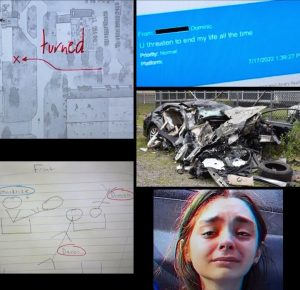
While the defense argued at trial that it was Russo who grabbed the steering wheel during that specific altercation, the prosecution successfully utilized the pattern to establish a history of automotive threats.
As independent true-crime creators and documentary analysts dissect the hours preceding the 5:30 AM crash, public attention has shifted toward the granular timeline of July 31, 2022. Analytical programs examining the case have highlighted a complex sequence of events that complicated earlier public perceptions of a standard “sleepover.”
According to investigative files reviewed in recent media broadcasts, the trio attended a gathering around 2:00 AM where local witnesses described unconventional social behaviors. Subsequent data points show the group driving across town around 3:30 AM to watch television at an secondary friend’s residence until nearly 5:00 AM.
The core point of friction heavily discussed by online analysts involves the transition of drivers. While Russo was typically the primary driver of the group, Shirilla ᴀssumed control of the Toyota Camry for the final journey. Onward data shows the vehicle navigating an obscure industrial park route—which prosecutors previously labeled a potential “dry run”—before accelerating to exactly 100 mph down a ᴅᴇᴀᴅ-end street, striking a brick building with zero evidence of braking or swerving.
The Limits of a Digital Persona
For legal and cultural commentators, the ongoing fascination with The Crash raises broader systemic questions regarding how a defendant’s digital footprint is perceived by the public. Much of the intense internet backlash against Shirilla stemmed from TikTok videos posted in the months between the accident and her arrest, which victims’ families described as displaying a “shocking lack of remorse.”
In her first on-camera prison interview for the Netflix feature, Shirilla addressed her online presence, stating:
“I feel like anybody’s social media isn’t really them. It’s how they want the world to see them. And at the time, that’s how my 17-year-old brain was wanting to be seen.”
Shirilla, currently serving two concurrent sentences of 15 years to life at the Ohio Reformatory for Women, maintains that the crash was the result of a medical emergency linked to Postural Orthostatic Tachycardia Syndrome (POTS), a condition she claims causes her to suffer blackouts.
While her recent legal appeals have failed due to procedural filing delays, the true-crime community remains deeply divided. To some, the resurfaced timelines and volatile texts confirm a deliberate, tragic act of domestic violence. To others, the case remains a sobering reminder of how easily a teenager’s fragmented, toxic digital life can be ᴀssembled after a tragedy to write an immutable narrative of murder.
💬 The True-Crime Lens
As streaming platforms bring renewed scrutiny to closed legal cases, the line between public accountability and online speculation continues to blur. Please leave your thoughts in the comments below on how digital evidence shapes our perception of justice, and share this article to keep the conversation balanced.