Daniel’s Extraordinary Journey: Growing Up with Proteus Syndrome
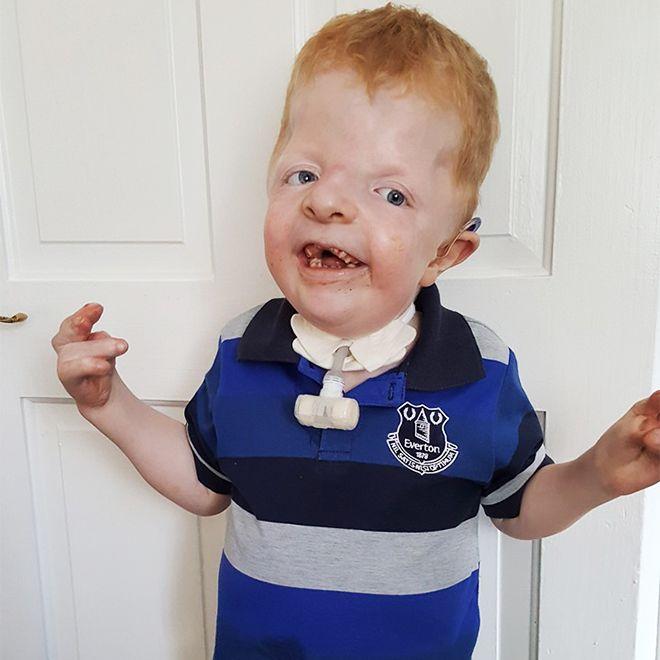
At just eight years old, little Daniel was living with one of the rarest and most unusual medical conditions in the world: Proteus Syndrome.
While most children his age were growing and developing in relatively predictable ways, Daniel’s body experienced a very different process. His condition caused certain tissues and body structures to grow disproportionately, resulting in noticeable differences in the size, shape, and development of particular parts of his body.
Proteus Syndrome is an extremely rare genetic disorder characterized by progressive, irregular overgrowth of bones, skin, fatty tissues, and other structures. The condition can affect different parts of the body, and its symptoms vary considerably from one individual to another.
For Daniel, these changes were particularly noticeable in his limbs. Some areas developed larger than expected, creating differences in their overall proportions and making certain everyday activities more challenging.
As he continued growing, his family and doctors paid close attention to every change in his physical development.
His medical team regularly monitored his bones, joints, muscles, and soft tissues. These examinations helped specialists evaluate the progression of the condition and identify potential complications that might affect his mobility or general well-being.
Walking was not always easy for Daniel. Depending on his comfort and physical condition, moving around for extended periods could require additional effort and support. Finding comfortable clothing was another everyday challenge because the unusual proportions of his body made ordinary sizes and designs difficult to fit properly.
Simple childhood routines sometimes demanded more patience, preparation, and ᴀssistance than most people would imagine.
His family understood that Daniel needed more than medical appointments and physical support. He also needed opportunities to enjoy childhood, explore his interests, and develop confidence in himself.
Despite everything he was experiencing, Daniel remained a curious and imaginative little boy.
His favorite toys were miniature trains. He loved arranging railway tracks across the floor, connecting tiny train carriages, and creating elaborate routes that stretched between imaginary towns.
He also enjoyed building miniature cities. Using small building blocks and model houses, he carefully designed streets, railway stations, bridges, and entire neighborhoods. He often spent long periods concentrating on the smallest details, imagining how people and trains would move through the world he had created.
There was something special about watching Daniel play. While his medical condition sometimes made physical activities difficult, his imagination seemed to have no boundaries.
He dreamed of becoming an engineer when he grew up.
He wanted to design bridges, build railway systems, and create structures that could connect distant places. His fascination with miniature trains had gradually developed into a genuine interest in engineering and construction.
His parents encouraged his curiosity, supporting his interests and reminding him that his future could hold many possibilities.
Growing up with Proteus Syndrome meant Daniel faced challenges that many children would never experience. His medical journey required ongoing attention, regular monitoring, and support from the people around him.
Yet his condition did not define everything about who he was.
He was still an eight-year-old boy who loved playing, building things, imagining new worlds, and dreaming about the future.
And whenever he placed another tiny train on its tracks, Daniel was one step closer to the extraordinary world he hoped to build someday.
His story reminds us that a child’s dreams should never be measured by their physical appearance or medical diagnosis. Every child deserves the opportunity to learn, explore, feel loved, and imagine a future filled with possibilities.