Beyond the Monster Zone: When a City Is Torn Away from the World and People Must Step into the Forbidden Zone
Beyond the Monster Zone: When a City Is Torn Away from the World and People Must Step into the Forbidden Zone
The moment the spatial rift appears, an entire city is completely isolated. There is no way back. No signals. Only the familiar streets that suddenly become a labyrinth, and from the cracks in reality, predatory creatures pour out. Beyond the Monster Zone does not open with explosions or grand chase sequences. It begins with the unnatural silence of a living city, then slowly reveals that this silence is being consumed from within.
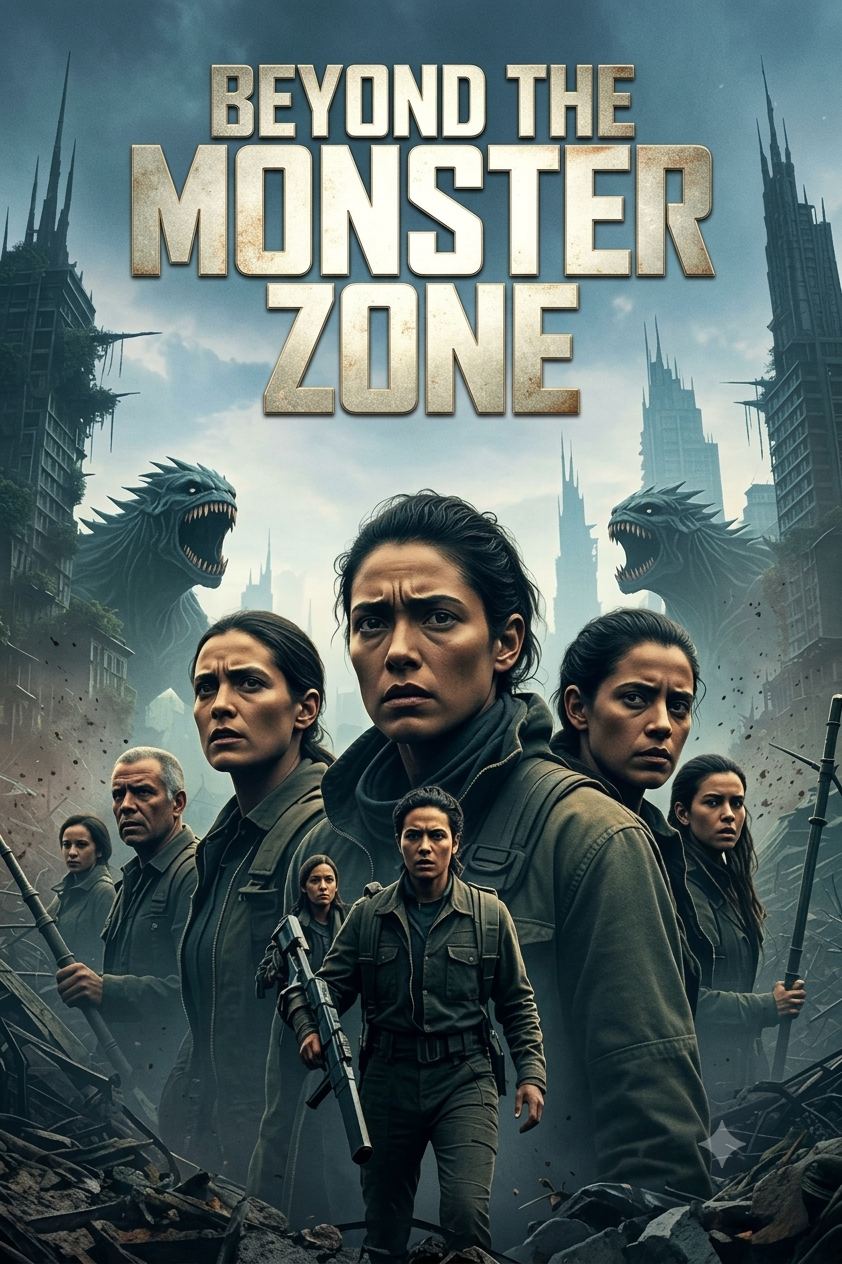
The film’s premise is fairly straightforward. After a spatial rift appears, the entire city becomes trapped within a territory teeming with predatory creatures. A group of people decides to risk everything and venture into the heart of the forbidden zone in search of a way home. It sounds simple, but the film’s power lies in how it gradually makes the audience realize that “going home” is no longer merely a physical place. When space itself is bent, the concepts of home, streets, and even memories of where one once belonged begin to distort as well.
What sets Beyond the Monster Zone apart from many other creature-survival films is that it does not rush its characters into nonstop action. Instead, it spends considerable time observing how people adapt to a transformed environment. Streets that were once noisy are now deserted, yet traces of ordinary life remain: a bicycle leaning against a wall, traffic lights still blinking meaninglessly, a café sign flapping in the wind. These small details create a feeling that is both familiar and alien, constantly reminding the audience that they are standing on the boundary between the real world and something entirely different.

When the group decides to go deeper, the film’s rhythm shifts noticeably. The “forbidden zone” is not portrayed as a hell where monsters leap out from every corner. It is designed as a space with its own rules—sometimes brutal, sometimes almost terrifyingly quiet. The predatory creatures are not merely direct threats; they also embody how the environment has been overturned. At times they attack by instinct, but there are also moments when they simply “exist”—standing still, watching, or moving along trajectories humans cannot comprehend. This approach creates tension that comes not only from being chased, but from the feeling of intruding into an ecosystem that was never meant for them.
One of the film’s strengths is how it builds its group of characters. They are not specially skilled heroes. One person carries knowledge of the city’s layout, another simply wants to find a loved one, and another has already lost nearly all hope and is left only with a cold curiosity. Their differing motives mean their decisions are never fully aligned. The film does not shy away from small conflicts among the members, and these conflicts become a source of tension no less intense than the creatures themselves. When people begin to distrust one another in an environment where a single wrong step can mean death, the line between “surviving together” and “sacrificing others to survive” grows dangerously thin.
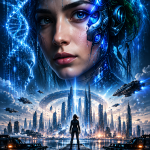
Visually, Beyond the Monster Zone knows how to use light and empty space effectively. Many sH๏τs are captured with natural light distorted by the influence of the spatial rift—colors sometimes shift into an unnatural cold tone, and shadows stretch in illogical directions. Wide frames showing the isolated city create a sensation that is both vast and claustrophobic. The audience can still clearly see familiar buildings, yet they are cut by invisible “cracks,” making the space feel as if it is being folded. This effect does not need to be overly flashy; the slight discrepancy between what the eye sees and what is actually happening is enough to keep the audience constantly uneasy.
Sound design also plays an important role. Many sequences have almost no background music, leaving only the sound of wind blowing through abandoned buildings and indistinct noises echoing from afar. When creatures appear, their sounds often arrive before their images—a soft scraping, a heavy breath, or the sudden silence of the surrounding environment. This treatment forces the audience to constantly guess where the danger lies, rather than simply waiting for it to appear on screen.
Of course, the film is not entirely free from the limitations of the genre. In some sections, the characters’ motivations are pushed forward a bit too quickly, making a few important decisions feel underdeveloped. Additionally, the film’s attempt to balance sustained tension with reflections on “home” and “belonging” occasionally causes the narrative pace to stall. However, the moments when the film slows down are precisely when it leaves a longer-lasting impression. It does not try to explain everything about the spatial rift or the origin of the creatures. Instead, it allows the audience to feel that some things lie beyond human understanding, and that sometimes trying to comprehend everything is less important than simply finding a way to survive within it.
Beyond the Monster Zone is not a film meant to be watched casually and then forgotten. It is a story about a city—the symbol of civilization and human control—suddenly being placed in a vulnerable position before an unpredictable force. When the group ventures into the heart of the forbidden zone, they are not only searching for a way home. They are confronting the question: if home is no longer there, or if the very concept of “home” has changed, what exactly are they still trying to return to?
The film ends not with a clear resolution, but with a chaotic yet deliberate feeling. Audiences leave the theater (or turn off the screen) with more questions than answers. And perhaps that is what Beyond the Monster Zone intends to leave behind: in a world where space can be torn open at any moment, the most terrifying thing is not the predatory creatures outside, but humanity’s helplessness in the face of laws it no longer controls.
Content created by AI and for entertainment purposes only.