Anabelle, 7 Years Old: The Heartbreaking Story of a Little Girl Living With Crouzon Syndrome in the Philippines
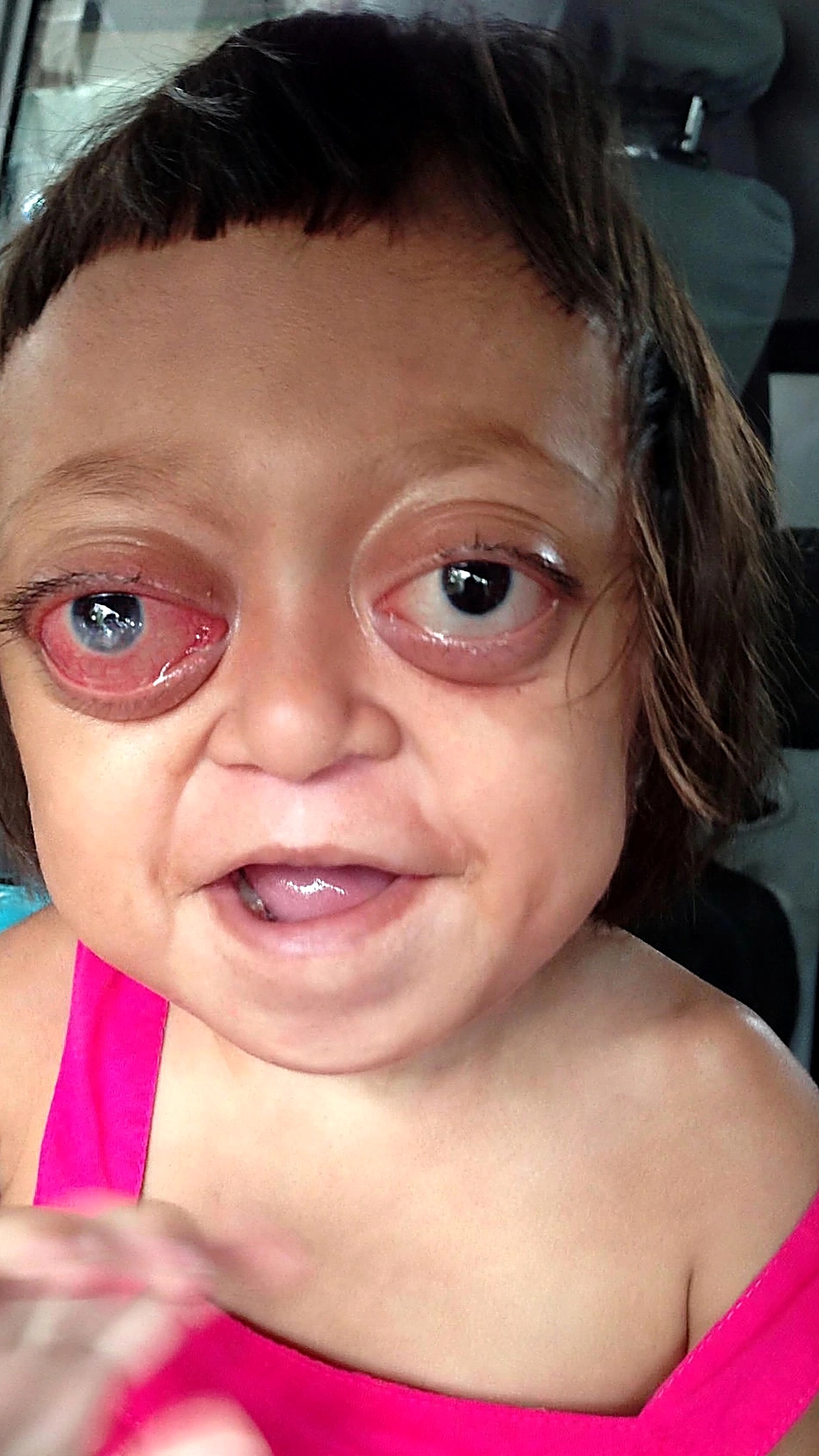
Anabelle is only seven years old, but her childhood has been shaped by a rare genetic condition that has significantly affected the development of her skull and facial features.
She is the youngest of seven children in a poor family living in the Philippines. For her parents, raising such a large family already comes with considerable financial challenges. However, Anabelle’s medical condition has brought additional worries and difficulties into their lives.
The little girl was diagnosed with Crouzon syndrome, a rare congenital genetic disorder that affects the normal development of the skull and facial bones.
One of the most noticeable features ᴀssociated with her condition is the unusual appearance of her eyes, which can protrude significantly because of abnormalities in the development of the skull and eye sockets.
Behind her distinctive facial appearance is a complex medical condition that can affect not only how a child’s face develops but also their vision, breathing, hearing, and overall health.
What Is Crouzon Syndrome?
Crouzon syndrome, medically known as craniofacial dysostosis, is a rare genetic disorder that affects the development of the bones of the skull and face.
The condition is most commonly ᴀssociated with mutations in the FGFR2 gene, which plays an important role in regulating bone development.
During normal development, the bones of a baby’s skull are separated by flexible fibrous joints called cranial sutures. These joints allow the skull to expand as the brain grows.
In children with Crouzon syndrome, some of these sutures fuse prematurely, before the brain has completed its normal growth.
This process is known as craniosynostosis.
When the skull bones fuse too early, the skull cannot expand normally in the affected directions. As a result, the growing brain must develop within a skull with restricted space, potentially causing an abnormal head shape and increased pressure inside the skull.
At the same time, the bones of the middle face and eye sockets may not develop normally, creating the distinctive facial characteristics ᴀssociated with the condition.
Why Do the Eyes Appear to Bulge Outward?
One of the most recognizable features of Crouzon syndrome is proptosis, a medical term describing the abnormal protrusion of the eyeballs.
In a normally developing child, the eye sockets provide sufficient space and support for the eyes.
However, in children with Crouzon syndrome, the bones surrounding the eyes may develop abnormally. The eye sockets can be unusually shallow, leaving the eyes appearing more prominent and pushed forward.
This can create a striking difference in facial appearance.
In some children, the eyes may appear significantly enlarged or unusually exposed, even though the eyeballs themselves are not necessarily larger than normal.
This abnormal positioning can also create medical risks.
Because the eyes may not close completely, some children experience excessive dryness, irritation, or damage to the cornea. In severe cases, vision may be threatened.
For this reason, regular ophthalmological examinations are particularly important.
Other Facial and Physical Characteristics
Crouzon syndrome can affect several structures of the face and skull.
Children with the condition may develop a shallow eye socket, an underdeveloped middle portion of the face, a flattened midface, and a relatively prominent lower jaw.
The upper jaw may also be smaller than normal, resulting in dental and bite abnormalities.
Some children have a beaked or unusually shaped nose because of the differences in facial bone development.
Other possible complications include:
Abnormal head shape caused by premature fusion of skull sutures.
Increased pressure inside the skull.
Vision problems ᴀssociated with prominent eyes.
Hearing difficulties caused by abnormalities of the middle ear.
Dental crowding and problems with the alignment of the teeth.
Breathing difficulties related to an underdeveloped midface and narrow upper airway.
Not every child experiences all these complications. The severity varies considerably from one individual to another.
Growing Up With Crouzon Syndrome
For a seven-year-old girl like Anabelle, living with a visible craniofacial condition can bring challenges that extend beyond physical health.
Childhood is an important period for developing confidence, forming friendships, and discovering the world.
However, children whose facial features look different may attract unwanted attention, questions, or misunderstanding from others.
These experiences can affect their emotional well-being and make social interactions more difficult.
For Anabelle, the challenges of growing up with a rare genetic condition are compounded by her family’s financial circumstances.
As the youngest of seven children in a poor household in the Philippines, obtaining specialized medical care may be particularly difficult.
Children with Crouzon syndrome often need care from several medical specialists, including craniofacial surgeons, neurosurgeons, ophthalmologists, orthodontists, and hearing specialists.
Depending on the severity of the condition, treatment may involve multiple procedures over several years.
Can Crouzon Syndrome Be Treated?
Although Crouzon syndrome is a genetic condition that cannot currently be permanently cured, modern medical treatments can significantly improve the health and quality of life of affected children.
Treatment depends on the child’s individual condition and the complications that develop.
In some cases, surgeons perform cranial vault remodeling or cranial expansion procedures to create additional space for the growing brain and correct abnormal skull development.
When the middle portion of the face is significantly underdeveloped, specialists may consider midface advancement surgery to improve facial structure, breathing, and the position of the eyes.
Children with severe eye protrusion may also need treatment to protect their corneas and preserve their vision.
Dental treatment, orthodontic care, hearing ᴀssessments, and long-term developmental monitoring may also be necessary.
Early diagnosis and coordinated treatment are important because some complications can become more serious as the child grows.
Anabelle Is More Than Her Diagnosis
At seven years old, Anabelle should be enjoying the simple happiness of childhood.
She should have opportunities to attend school, make friends, play with her siblings, and dream about her future.
Her diagnosis of Crouzon syndrome may have changed the way her skull and face developed, but it does not change who she is as a person.
For her family, the journey may involve difficult decisions, medical expenses, and years of specialized care.
Yet Anabelle deserves every opportunity to receive treatment, protect her health, and grow up with confidence.
Her story is a reminder that children